- Autoplay NEXT:



Mother Ganga -- Best Spiritual Documentary on The Ganges River -- 1080p HD

- Holy Places
- ''Mother Ganga'' is a unique documentary about the Ganges river based on ''Our merciful Mother Ganga,'' a book by Jay Vijay Das, filmed on location in April and March of 2003.
"Mother Ganga" portrays a pilgrimage, starting at the Bay of Bengal where the Ganges enters the sea (Ganga Sagar), to Gangotri and Gomukh in the Himalayan Mountains where the Ganges appears.
Along the journey, one can see images from significant places of pilgrimage such as Mayapur, Jaipur, Varanasi, Bodgaya, Haridwar, Rishikesh, Gangotri, and others.
"Mother Ganga" depicts the love and devotion the people of India have been exhibiting for thousands of years in the worship of Gangamayi.
The commentary consists of narratives and related stories found in the Vedas describing the Ganges' spiritual origin, purifying power, descent to the material world, personal feature, etc.
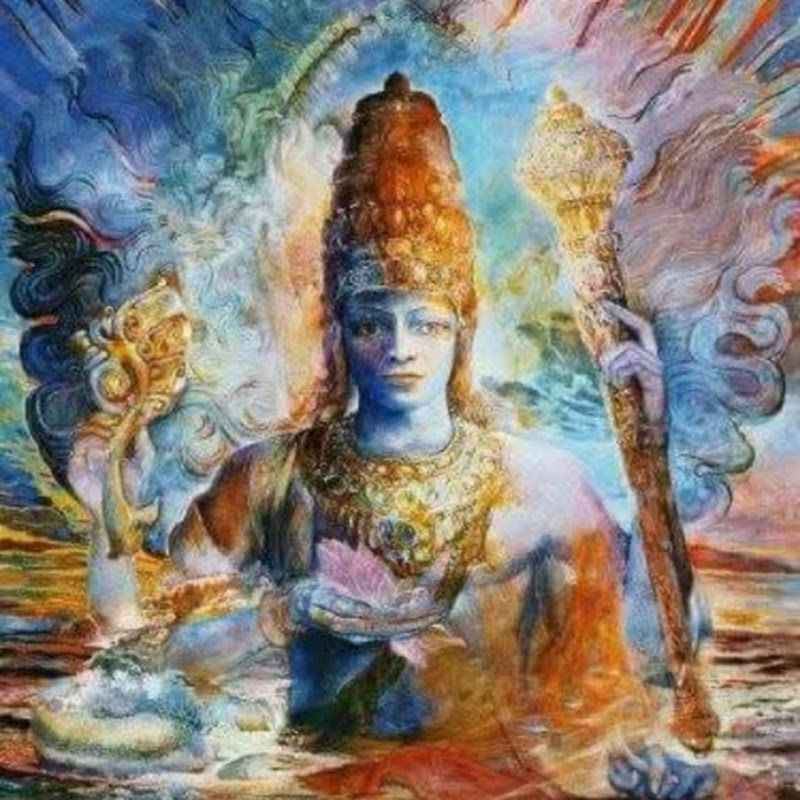
"Mother Ganga" also contains footage capturing the atmosphere of ancient worship ceremonies, magnificent temples, impressive mystic yoga practice, etc. The soundtrack for the film, recorded with particular shots in mind, is an interesting combination of traditional ragas and modern acoustic elements.The Ganges River, or Mother Ganga, as she is known to her people, inseparably bound to India's culture and religion, worshipped by a billion people as a mother who sustains life, a goddess who cleanses sins. The timeless Vedic scriptures tell of her origin. From the divine waters in the spiritual realm, Ganga entered the universe and washed the lotus feet of the Supreme Lord Vishnu before descending to earth. Thus, her inexplicably pure water.
At her shores, humble pilgrims pray that her purity wash away their impurity. Join them, along with saints and heroes, gods and goddesses past and present, who have been cleansed by her mercy. Dive deeply. Allow your heart to be carried away by the waters of Mother Ganga.
Ganga Sagar, the end of Mother Ganga's 1,600-mile course, where she meets the Bay of Bengal. Pilgrims come here annually to worship her. The scriptures describe her. Sri Ganga Devi has a complexion as white as the champak flower.
White garments and jeweled ornaments adorn her body and millions of moons shower their effulgence upon her smiling face. She is the ever-youthful, ever-fortunate beloved of Lord Vishnu who can remove everyone's sins. Age long past, the great ascetic Kapila Muni traveled the entire length of the river to this place where he practiced penance and austerity. He wrote, rises from the sandy banks of the Ganga this magnificent complex commemorates one of the greatest events of the last millennium the appearance of Sri Chaitanya Mahaprabhu Sri Chaitanya who is considered Lord Krishna or God Himself descended from the spiritual world to spread the glories of chanting the holy names of God here also is a memorial for AC Bhaktivedanta Swami, founder and leader of the International Society for Krishna Consciousness, who in 1965, at the age of 70, took the teachings and practice of Sri Chaitanya outside the shores of India and distributed them throughout the world.
March 2004, devotees from many nations gather at the installation of the world's largest deities of Śrī Caitanya and His closest associates known as the Pañca-tattva. Śrī Caitanya expresses His love for Mother Ganga. O Ganga Devi, Your waters are the ambrosia of love of Godhead. The utterance of Your name invokes devotional service to the Supreme Lord. By Your mercy, the living entities acquire a taste for chanting Lord Krishna's holy name.
Slightly south of the Ganga is the town of Gaya in Bihar state. Here in the ancient Vishnupada temple, Lord Vishnu's right footprint is embedded in a stone called the Dharmashila. Pilgrims mourning for lost relatives worship the Dharmashila with prayers, milk and flower garlands. A family in mourning is bound by scripture to make such offerings to Lord Viṣṇu for the protection and elevation of the soul of the deceased.
Nearby lies Bodhgaya. As they have for centuries, Buddhists visit Lord Buddha's majestic gilded deity seated below the soaring tower of the Mahabodhi Temple. Two thousand five hundred years ago, below this bodhi, or banyan tree, Prince Siddhartha sat on a mat made from kusa grass, entered into deep silent meditation, and resolved not to move until he achieved enlightenment. During his meditation, Mara, the god of death, attacked him, and a terrible internal battle overtook the prince.
But his spotless purity destroyed Mara's illusory armies. Thus, Prince Siddhartha became Lord Buddha. The Enlightened One. Reading from ancient texts, monks from all parts of the world glorify Lord Buddha.
These songs have been handed down from generation to generation. Each note is carefully sung to increase the quality of meditation. Nearby the Mahabodhi Temple is Ratnagar, where various Buddhist denominations have erected monasteries in their native architectural style. is one of the Dasavatar, or Ten Principal Incarnations of Lord Krishna. For 45 years, Lord Buddha walked along the banks of the Ganga, teaching ahimsa, non-violence, and compassion for all living creatures.
In the old days, also known as Varanasi, one of the oldest cities on earth, famous for its scholarship and artistry, Pilgrims believe that by bathing in the Ganga at this spot, they will perceive the everlasting soul, the eternal living force within the body. Bhagavad Gita, the essence of all Vedic knowledge, declares, For the soul, there is never birth nor death. As a person puts on new garments, giving up old ones, The soul, similarly, accepts new material bodies, giving up the old and useless ones. It is unborn, eternal.
The pilgrims gather nightly at Dashashvamedha Ghat for Ganga Puja, the worship of Mother Ganga. Water, fire, and air for the pleasure of Ganga. Ganga is pleased, she happily bestows her blessings, and eventually brings us to our Father in the spiritual world. Prayag, site of the famous Kumbh Mela festival, often called the world's largest act of faith.
Once every 12 years, these peaceful sands host a tent city, populated by millions of pilgrims and sadhus, or holy men. The name Kumbh Mela refers to an epic battle fought long ago by the demigods and demons for control of the nectar of immortality. The demons stole this nectar from the demigods. Siding with the demigods, Lord Vishnu, appearing as the goddess Mohini Murti, the embodiment of sensual beauty, tricked the demons into giving her the nectar.
When Mohini Murti then gave that nectar to the demigods, a struggle ensued. Drops of the precious nectar spilled and landed at the Triveni. The confluence of the rivers Ganga, Yamuna and Sarasvati that abath at this spot during the sacred day of Makara Sandranti during the Kumbh Mela festival gives one the result of performing unlimited pious activity. Jaipur, the pink city, built according to Shilpa Shastra, a section of the Vedas which teach architecture and city planning in harmony with universal design.
Though Jaipur lies far from her banks, Ganga's influence flows here too. The largest silver containers in the world designed to carry Ganga's waters overseas rest in Jaipur's city museum. In the late 1800s, Queen Victoria, the Empress of India, invited Madho Singh, the King of Jaipur, to England. Madho Singh reluctantly agreed on the condition that he could carry enough Ganga water for bathing and drinking to last his entire trip.
He was convinced that her waters would keep him spiritually and physically healthy. At the heart of Jaipur is City Palace, inspired by both Mogul and Vedic architecture. The spiritual heart of Jaipur beats vibrantly within this temple, where the deities of Radha Govindaji, Lord Krishna, and his eternal consort Radharani reside. 4,500 years ago, the grandson of Lord Krishna commissioned the carving of these deities, which were installed in a temple in Vrindavan.
Then, five centuries ago, they were carried two hundred miles from Vrindavan to Jaipur to protect them from invaders. Here bhakti, or devotional service to Rādhā and Kṛṣṇa, is practiced by engaging all the senses in the service of the Lord and His divine energy. The eyes for seeing their forms, the nose for smelling the incense and flower garlands offered to them, the voice in singing for their pleasure, and the ears in hearing their glories. Devotees see everything in relation to Krishna.
Their humble devotional attitude transforms ordinary daily activities into sublime, uplifting acts of love. Hari Dvar means gateway to Hari, or Lord Vishnu. Gaining Ganga's mercy here, as she rushes from the mighty mountains, blesses one's pilgrimage to the Himalayas. The Garuda Purana states, anyone who immerses themselves in the waters of Mother Ganga at Hari Dvar does not have to take birth again.
Determined devotees immerse themselves in the purifying but icy cold Ganga. These faithful may appear to face the difficulties of this world as others do, but there is a profound difference. They see tribulations as an opportunity to surrender more deeply to their Lord. As happiness comes and goes, so also distress.
Both are as temporary as a leaf boat floating on the divine waters of Mother Ganga. Since time immemorial, an Abhishek, the bathing ceremony of Ganga, is performed each evening. Although offerings differ according to the means of the worshipper, the focus is always on the devotion with which the offerings are made, for this is what Ganga Devi accepts. From the other side of the river, the ceremony appears like birds of fire, dancing for the pleasure of Ganga.
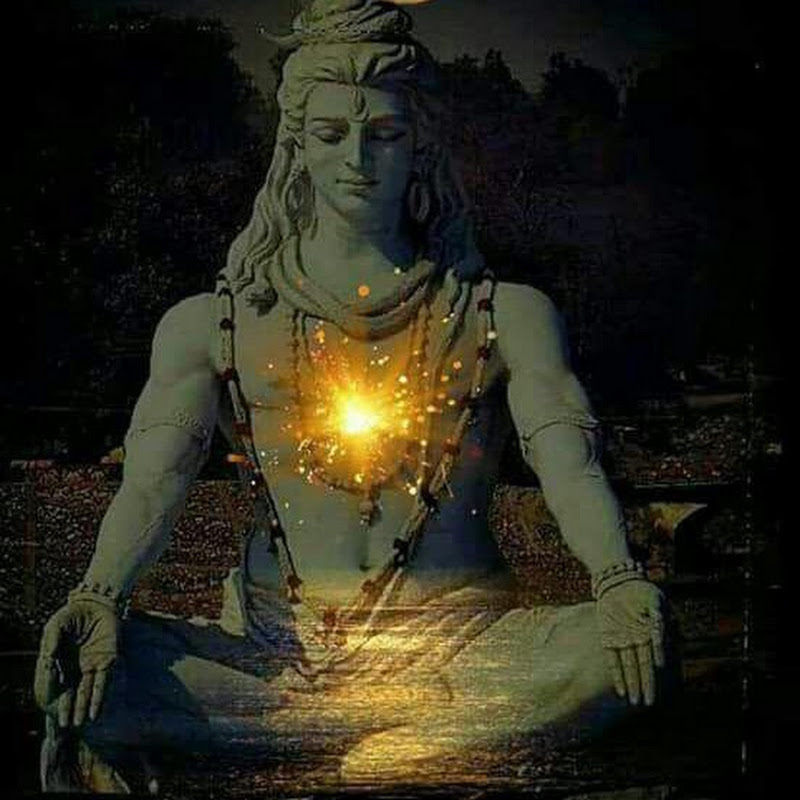
Lord Shiva, the greatest devotee of Lord Vishnu, is present everywhere in this holy city. His legendary power belies his matted hair, ash-covered body, and tiger-skin dress. He is called Nilakant Blue-throated because the poison he drank to save the universe turned his throat blue. Forgoing all bodily comforts, Lord Shiva lives on the peak of Mount Kailash, high in the Himalayas, where he constantly meditates on Lord Vishnu.
Crossing the bridge to Rishikesh, the plains of India give way to foggy hills and lush greenery as we move ever closer to the Himalayas. Here, it is easier to withdraw the senses from worldly distractions and turn them inward toward the eternal self. Yoga, the powerful process of cleansing the consciousness to gradually reveal one's identity as a spiritual being. Yoga can also achieve supernatural powers called siddhis, such as the ability to travel great distances using a sacred river like the Ganga as a conduit.
The Ganga runs from the feet of Lord Vishnu at the topmost point in the universe, down to the lowest planets. Simply by dipping in her water at one point, a yogi can travel thousands of miles to any destination along her course. However, if such yogis do not seek pure devotion to the Supreme Lord Vishnu, their contact with Ganga is compared to the bathing of an elephant. After cleansing, the elephant rolls on the ground and throws dust on his body.
O Ganga removes karma. Yogis seeking only mystic power create new karma, which further binds them to the material world. Rishikesh is the home of many famous yoga ashrams or monasteries, like the enchanting Parmoth Niketan with its orphanage and boys' school. Students here practice yoga, study Sanskrit, and as part of their education, daily worship the Ganga, who from the sanctuary of Parmarth out into the world.
These young men may one day become ambassadors of their ancient tradition. A simple, heartfelt offering of a humble devotee, please Mother Ganga. Just as a small child offers her parents a gift out of love. Although the gift belongs to the parents, so with love pilgrims offer the sacred water of the Ganga, Tuganga.
By gone age, a great yogi named Deva Sharmarishi meditated here to see Lord Vishnu face to face. After Vishnu appeared to the sage and blessed him, many Devas, godly beings, also came seeking benedictions. and so this site was named Devaprayag, the place of godly beings. Devaprayag overlooks the confluence of the blue-green Alakanara River, which flows from Badrinath, and the Bhagarati River, which originates from the Gomukh Glacier. From this point onward, the river is known as Mother Ganga.
Millennia ago, the demon king Ravana kidnapped Lord Rama's wife, Sita Devi. Rama, an incarnation of Lord Krishna, attacked and killed the demon, rescued Sita from Ravana's island fortress, and enthroned a just king to rule in Ravana's place. Rama and his brother Lakshman performed penance and austerities here in Devaprayag. Thus, this holy site is famous as an ideal place for sacrifice and meditation.
The noise and the crowds fade away below as we climb to the mountain paradise of Uttrakashi. With no cars, bikes or even roads, we step back in time to an era of peaceful, simple living. Agavad Gita, Lord Krishna says, Of purifiers, I am the wind. Of the wielders of weapons, I am Rama.
Of fishes, I am the shark. And of flowing rivers, I am the Ganga. The deity of Ganga's summer residence. Altitude, 10,000 feet.
Due to severe weather, this temple is only open six months of the year. Villagers participate in an annual two-day walking festival, carrying the deity from her winter home in Mukva, located thousands of feet below, to Gangotri, her more lofty residence. Local residents help visitors perform puja to enter into the worshipful mood of this sacred place. This young boy shaves his head to invoke the mercy of Ganga.
Seemingly out of place, an Indian army bagpipe band, a local tradition since the days of the British Raj, offer music for the celebration. The enthusiasm of the devotees spreads as they move as close as possible to the deity on her palanquin. The small face of the deity of Mother Ganga smiles at the loving care and attention of her devotees. This deity of King Bhagiratha marks the place where he fasted and prayed for Ganga to descend from heaven to relieve his ancestors of reactions from their past misdeeds.
Mother Ganga, pleased by King Bhagiratha's penance, came before him and asked, When I fall to the surface of the planet Earth, the water will be very forceful. Who will sustain that force? The actual place of the descent of Ganga is an 18-kilometer trek. The Shivalinga mountain thrusts its peaks towards the heavens, hinting at the divine origin of the Ganga.
Bhagavad Gita, Lord Krishna says, of immovable objects and the Himalayas. Treacherous pathways wind along the sides of the frozen landscape. This height, Ganga's majestic force, is divided into many branches. And even the main branch, the Bhagarati, is often only a trickle.
Glacier, 4,000 meters high. Small rivulets bubble up as the pillars of ice slowly melt. Here is the earthly origin of Mother Ganga. Let us go beyond the temporal to hear of her spiritual source.
The great journey of Ganga to the earth began when the dwarf Brahmin boy named Vamana interrupted a sacrifice by King Bali, the ruler of the universe. Bali agreed to give this captivating boy the charity he begged for, only three paces of land by the measurement of his own small steps. What could be the harm? Suddenly, the Brahmin boy grew to immense proportions.
With his first step, he traversed the Earth and the lower planets. And with his second step, he covered the heavens until the toenails of his foot pierced a hole in the covering of the universe. Through that hole, the pure water of the causal ocean began to filter in. Thus, Ganga was born.
Universes float in the causal ocean. Ganga rushes through the hole in our universe made by Lord Vamana's toe. She pierces through the layers of covering, millions of miles of ethereal space, air, fire and water and earth. Across the head of the seven sages, shields the earth from Ganga's forceful fall.
Signs of material contamination by touching the transcendental water of Mother Ganga. and for all they accept her water on their heads. Devotion.