The Spiritual Frontier -- 1976 - Prabhupada's Vision for New Vrindavan Farm Community in West Virginia

- History of Hare Krishna
-
Documentary film telling the story behind ISKCON's New Vrindavan, a spiritual farm community near Moundsville, West Virginia. Produced by ISKCON Cinema in 1976.
Srila Prabhupada's vision for New Vrindavan was to create a spiritual place like Vrindavan in India where Lord Krishna appeared 5,000 years ago, but in the United States of America.
For many in the USA it is not possible for them to go to Vrindavan in India to visit Krishna's birthplace. So Prabhupada wanted to create Vrindavan in the United States.
Prabhupada's vision was a self-sufficient rural community depending on the cows, the land and Krishna.
This film, The Spiritual Frontier, is a very good overview of New Vrindavan.
Vrindavan, India, the land of Krishna, has been famous as a place of pilgrimage for centuries. It was here that Lord Krishna, the Supreme Personality of Godhead, appeared and enacted his divine pastimes as a cowherd boy, sporting in the forests and along the River Yamuna. And it was here, five thousand years later, that great devotees of Krishna erected temples for his glorification. In one of these temples, Radha Damodar, His Divine Grace A.C. Bhaktivedanta Swami Prabhupada lived for 12 years and translated the ancient Vedic scriptures from Sanskrit to English. Then, in 1965, in response to his spiritual master's order, Srila Prabhupada sailed to New York City with his books and the Hare Krishna mantra,
Founding the International Society for Krishna Consciousness and serving as its spiritual master, Srila Prabhupada urged his disciples to establish a community modeled on Vrindavan to practically demonstrate an ideal Krishna conscious society for the Western world. This was a new frontier, a spiritual frontier.
Today, New Vrindavan is one of the largest religious communities in the nation, covering some thousand acres in the foothills of West Virginia.
One of Srila Prabhupada's first disciples, Kirtanananda Swami, was especially charged with the task of building New Vrindavan. "I first came here in 1968. I was alone. I was staying in this little cottage up in what is now the Brahmachari farm. It was almost falling down. I remember you could see through the walls. And then that summer, two or three devotees came and joined me, and we began to reconstruct the place, to plant gardens. At first, of course, we used to have many more devotees in the summer than we did in the winter. Now we don't have that problem. Anyway, our devotees are very steady now. I think everyone can see how New Vrindavan is growing. The fruits of the earlier preparations are now becoming manifest."
"Each day we are blessed by Krishna. We can come to this holy spot, see his transcendental form, and dance in ecstasy."
"This was Prabhupada's idea that we should have a place to celebrate the transcendental activities and pastimes of Lord Krishna."
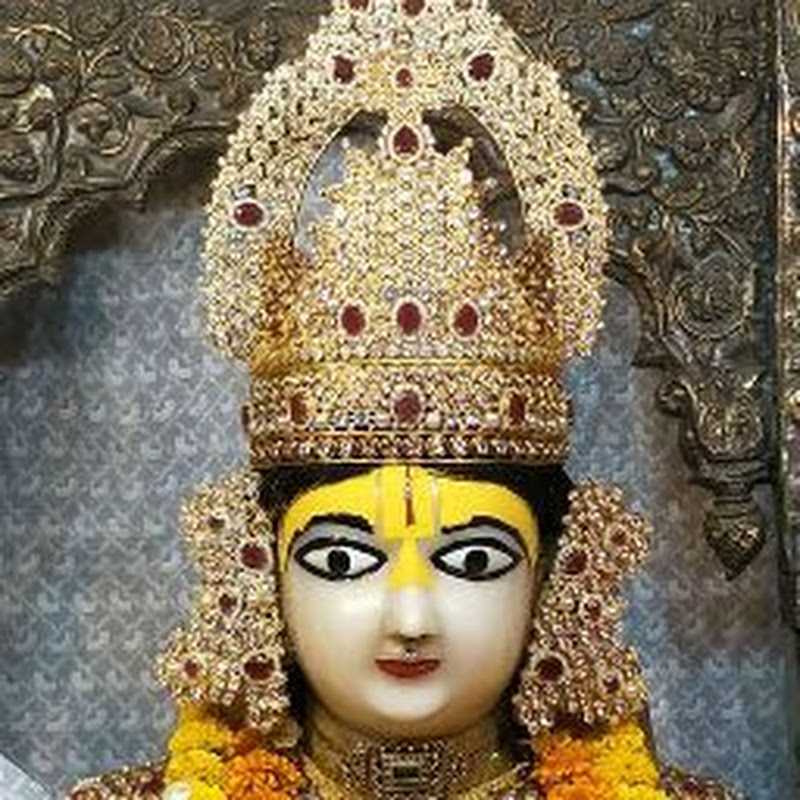
"I've always asked him, 'What do you want us to do there?' And he says, 'I simply want that you should chant Hare Krishna and be happy. You live simply, chant Hare Krishna, have no worries, and be happy.' So by his grace, we are beginning to realize what he meant. The human being is meant for plain living and high thinking. We can see how the devotees live very plainly. Our own homes, they're very simple, just the necessities, whatever is necessary to keep body and soul together. But for the Lord, Sri Sri Radha Vrindavan Chandra, we try to give everything. Whatever there is, it is not too good for Lord Krishna."
The center of the New Vrindavan community is the Supreme Personality of Godhead, Lord Sri Krishna. For his pleasure, the devotees work hard, especially at sowing and reaping the earth. Under spring skies, they plant corn and other grains, and they cultivate the [Applause] fields.
"All living bodies subsist on food grains," Lord Krishna says. So in the fall, everyone lends a hand in harvesting the valuable grain crops. In a year, the devotees harvest about 350 tons of wheat, oats, comfrey, corn, and alfalfa, more than enough to feed themselves and the cows.
Rather than travel many miles to work to make a few dollars and maintain an artificial standard of living, these devotees prefer to live in this God-centered and self-sufficient community. Here, Krishna is the proprietor, and the labor is for Him.
This corn is ground up and air-blown into three huge silos for the coming winter months. Apples, pears, grapes, and other fruits grow wild all over New Vrindavan, but there is never too much. What isn't eaten fresh or cooked in pies is preserved as jam. The devotees find that grains, fruits, vegetables, and milk solve their whole economic problem very simply. Thus, plain living and high thinking is the motto behind the New Vrindavan community. Kirtanananda Swami explains it in this way: "Krishna means for all of us to be happy, to be self-sufficient. So this natural living, living as Krishna intended, just accepting nature's abundance, this automatically puts us in a joyful condition. If we simply depend on the Supreme Lord, and by the natural arrangement he has given us, the cow, the land, and hard work, we're sure to come out successfully."
Krishna has kindly provided everything necessary for a happy life. In gratitude, the devotees offer the gifts of the bountiful earth back to him and chant his transcendental name.
In other Krishna conscious centers throughout the world, Srila Prabhupada has established schools for young devotees. The children learn the basics, as well as Sanskrit and the Vedic scriptures. "The king of knowledge," Lord Krishna says, "is to discriminate between matter and spirit, between what is temporary and what is eternal." So along with learning about material subjects, Srila Prabhupada wants these boys and girls to learn how to love God.
"When Lord Krishna went ahead to a distant place in order to see some species,"
"They were all trying to touch him. 'No, let me be first! Let me be first to touch Krishna! No, no, no, let me be first to touch Krishna!' Like that, they're trying to be the first to touch Krishna because they like him so much. Some of them played on their flutes. Let's hear the power drag." [Music]
"While the birds were flying in the sky, who could imitate the birds flying in the sky? The birds flew very beautifully like [Music] this."
In the forests of New Vrindavan, the children reenact the childhood pastimes of Lord Krishna.
Krishna and his friends joked with one another by imitating the croaking and jumping of the frogs on the bank of the river, and they enjoyed dancing and wrestling with one another. In this way, Krishna gave full transcendental pleasure to the cowherd boys and calves who played with him. Only after accumulating heaps of pious activities, those children were promoted to personally associate with the Supreme Personality of Godhead face to face. Who can estimate the transcendental fortune of the residents of Vrindavan? The cowherd boys could not understand that Krishna is the Supreme Personality of Godhead, but they were playing as intimate friends with intense love for him.
In this way, Krishna, along with his friends, enjoyed the soothing atmosphere of Vrindavan, full of flowers, trees, and pasturing grass. The Vrindavan forest was as sanctified as the clear mind of a devotee and was full of bees, fruits, and chirping birds.
Krishna saw all the trees overloaded with fruits and fresh twigs coming down to touch the ground as if welcoming him by touching his lotus feet. [Music] The cows taken care of by Krishna had different names, and Krishna would call them with love. When the Lord called them, they immediately came to him out of affection, and in their joyful condition, they would respond by lowing, and milk flowed from their bags.
The cows, being fed by new grasses, became very healthy, and their milk bags were all very full. By sitting and chewing grass, they became happy, and Krishna was pleased to see them.
In a practical way, the New Vrindavan community is presenting to the whole world how one can become Krishna conscious, living just as Krishna lived in Vrindavan. Twice daily, devotee cowherdsmen scale the hills to call the herd down to the barn for milking.
Traditionally, the cow is considered the emblem of peace and religion. By God's perfect arrangement, she takes what we cannot use—grass—and produces the most wonderful, the most opulent of all foods: milk. And she delivers enough milk to supply men sumptuously with vigor and vitality.
According to the Krishna conscious philosophy, man does not need to maintain his body by butchering innocent animals. Such cruelty destroys his finer sentiments and merciful qualities. People may not know how happiness is earned by protecting the cows and bulls, but it is a fact by the laws of nature.
Of course, the dairy herd is always growing. A cow will not give milk unless she has a calf. Here, a cow herdsman helps the cow Ambika deliver her calf. Had he not been there, it would have been a slow and laborious business for her.
The healthy calf turned out to be a bull and was named Govinda. Within a year, Govinda and the other young bulls will be trained to be yoked to till the fields.
A recent survey conducted through Nottingham University School of Agriculture showed that when cows are treated affectionately by the cow herdsmen, they respond by delivering more milk than cows that receive less friendly treatment. In New Vrindavan, each cow and calf gets personal attention.
New Vrindavan's dairy herd has been called one of the finest in the state of West Virginia and includes Brown Swiss, Jerseys, Holsteins, and careful records are kept of each cow's milk delivery. Ambika can deliver as much as 12 gallons in a day. There is a miracle in milk. It contains all the protein and vitamins necessary to maintain finer brain tissues, which assist men in becoming God conscious. Milk is one of the mainstays of the devotees' diet.
From milk devotees churn butter and prepare many varieties of sweets. Butter is boiled down and purified; it is called ghee. Different foods are cooked in ghee, like these whole wheat puris.
Srila Prabhupada has taught his disciples how to cook ancient Vedic recipes. All the preparations are purely vegetarian. Meat, fish, and eggs are never used. Rather, devotees combine milk, sugar, vegetables, grains, and fruits in different ways to make thousands of delicious and satisfying dishes such as rice with vegetables, bharats, shukta, poppers, samosas, sweet rice, ladoos, kheer, and fruit salad. Here, Kirtanananda Swami makes some fiery crab apple chutney. Of course, all the ingredients are fresh and pure.
22 Comments