Now playing: All videos by Interfaith Discussions

















Perspectives TV Show

- Preaching
- A US television show with four Christian ministers interviewing Rupanuga Prabhu, one of the first disciples of Srila Prabhuapda who joined ISKCON in 1966. They are trying to understand what is this "Krishna Consciousness movement." This is from about 1980.
From Paris to Hong Kong, from Bombay to Nairobi, from Rio to New York, devotees chant Hare Krishna just as Lord Chaitanya predicted. Some of us are familiar with the dancing, chanting people we refer to as Hare Krishnas, but few of us understand what they really believe or hold sacred. Krishna Consciousness The topic next on Perspectives This week, David Abernathy of the United Methodist Church will be investigating the topic of Krishna Consciousness. His guest is Rupanuga Das, a Governing Body Commissioner of the International Society for Krishna Consciousness.
Joining in the discussion will be Ted Baer of the Episcopal Radio TV Foundation, Roy Lloyd of the Lutheran Church in America, and Bill Huey of the Presbyterian Church in the U.S. Now your host, David Abernathy. The contact most of us have with the Hare Krishna movement is either at the airport or someplace in the streets where we see something that's slightly unusual as far as dress and as far as sounds go. In this program, we would like to get behind the external appearance of the Hare Krishna movement and talk with someone so that we can get a better understanding of what it is all about.
I think a good place to begin may be to talk about you as a person. How did you happen to move into the Krishna consciousness yourself? I joined the movement in 1966 in New York. Actually, I always had faith in God. my faith in God first was established as an Episcopal, but I found when I met Sri Prabhupada, the founder of the Hare Krishna movement, that my faith increased to heights far beyond the faith of my boyhood, and that his teachings of scientific presentation of how to become conscious of God attracted me to become a disciple of his.
What do the words Hare Krishna mean? Hare is addressing God, praising God. It means the energy of God also. Krishna is the name of God.
Hare Krishna means, oh, energy of the Lord, oh, Lord. Hare Krishna, Hare Krishna, Krishna Krishna, Hare Hare, Hare Rama, Hare Rama, Rama Rama, Hare Hare. Rama is another name of God. It means kindly engage me in your unalloyed devotional service. the is this the sound that we hear in the in what we recognize as a chant or a song you're repeating uh you're saying i want to be conscious of god or the name of god praising the name of god and that way we become conscious of god by meditating on his holy name for most westerners the eastern influence of the religion uh see the practices we look at the externals of religion quite a few times without seriously analyzing the doctrine what the beliefs really look like to an outsider so if you will you'll have to regard us as outsiders we are where you were prior to 66 we are not a part of the movement so our purpose is to try to get a better understanding of what it is and I'm at a loss myself about the the God consciousness what is the purpose of this well Well, of course, the Hare Krishna movement, it comes from the East, but then so does Christianity.
Christianity comes from Asia originally, not from Europe, it originates, Lord Jesus Christ was preaching in Asia. So this teaching comes from India, and God consciousness means to be conscious of the one God. There's only one God, and there's one religion also, because there's one God, and that religion is to love God, to surrender to God, by becoming conscious of Him. So God-consciousness means not to become God, but to become fully conscious of God, in awareness, and in a surrendering attitude, in a service attitude, without expectation, but simply being satisfied by the pure service itself.
What do you mean by service? I'm just curious, as you're talking about becoming more aware of God and being in service, I'm curious how that may play itself out. Yes. Service begins with being obedient to the laws of God, just like in the Christian tradition we have the Ten Commandments.
So first of all, to be a Christian, it means to follow the teachings of the Lord Jesus, which included the Ten Commandments, you see. I'd like briefly to distinguish something David said and then ask you a question. I mean, I don't think that we can trace ourselves as being pre where Rapa Nuga was in 1966. I mean, many of us have personal relationships with God that are very meaningful and we're filled with the Spirit and we love God.
The experiential basis is not necessarily one that you have to progress any direction to find. That's certainly available within Christianity. But what I meant by that is that we're not in a priest state because before I came to Christ, I went through an Eastern religion metaphysical basis in law school, et cetera. What I meant by that though was he says that he grew up as an Episcopalian.
Conventional mainline Protestant is a good way to characterize that. And at this moment he has marks which means something on his forehead and he's wearing clothes that are different from ours. So you obviously have undergone a change in your own beliefs, your own sense of religion, as well as your external form of it, and dress it in that regard. I understood what you meant.
I was just clarifying that we were all not going through some progression. Well, okay, I'd like to get us back on track here as far as the target is concerned. The reason I was asking you the question about service deals with something you and I have talked before. There's a sense in which the emptying out of yourself carries to me a sense of escape, escape from this world.
And I'm wondering, how do you react to that? Is that true? No, it's not true because there's no emptying out. Actually, the devotees are very much in society and it's not required that they wear a certain kind of dress or wear their hair in a certain way.
For the priests, for the monks and the ministers, this dress is required. But for persons who work in offices or hold regular jobs, it's not. We don't change our activities, but we change our consciousness. That is the point, to make, to become God conscious or Krishna conscious, to become pure.
Okay. What kind of service acts are you talking about? Acts of service, let's say, to the world? I mean...
The main act, obviously, is a missionary act. I mean, this is the spirit of any religious movement in history. This movement, the Hare Krishna movement, originated in India. There are four basic denominations, and one denomination came out of India, led by Srila Prabhupada, A.C.
Bhaktivedanta Swami Prabhupada. His Divine Grace came from India in 1965 to bring a teaching that was already thousands of years old, but which was just coming out in a missionary spirit to the Western world. Now, Krishnaism grew out of Vishnuism, is that right, in the 14th century? No.
No, Vishnu is an incarnation of Krishna. But in the 14th century was when Krishnaism was first expounded, is that right, by Chattanooga? You mean Lord Chaitanya? Yeah.
Well, Lord Chaitanya, he emphasized the chanting of Hare Krishna. Of course, Krishna was already there in the Vedic literatures for thousands of years. In Sanskrit, there were many prayers to Krishna. But he had not been the primary god at that time.
No, he was there, Krishnastu Bhagavan Swayam, that was there already in the Puranas many thousands of years ago, 5,000 years ago in written history. So Ratchaitanya Mahaprabhu re-emphasized the chanting of the holy names as the Yuga Dharma or the religion of the age. I mean, it's the same praise and holy name, hallowed be thy name, praise the Lord, all this that you find in the Old Testament and the New Testament. Praising the holy name is not new in any religion.
Was there something that turned you off in your church that caused you then to be looking for something different? No. It just stopped at a certain understanding of God. Rupa Nuka Das, I assume, was a new name.
That wasn't your name when you were an Episcopalian in New York. I haven't seen that name in the phone book. And you've changed completely your name, your dress, your whole appearance, and I guess to some extent you must realize that to most of society, those going through airports and so forth, that you're rather a negative. Well, of course, and we don't wear our dotis, our robes in the airports for that reason.
We don't wish to alienate anyone. And we're still, in fact, our spiritual master has referred to us as American Vaishnavas, The real name of our teaching of our movement is Vaishnava. It means personal servant of God. And we've become known as Hare Krishna because we chant Hare Krishna.
But do you give any service besides, as you say, the missionary? You know, like our denominations have hospitals and children's homes and so forth. Do you give any service to mankind at all other than trying to tell them about your faith? The most important service to mankind is to bring people to the level of loving God.
And if one is actually God-conscious or actually practicing religion, then the temporary manifestations of poverty and having a roof over one's head, these are automatically there. The Lord is maintaining everyone, every bird and every beast. Certainly he will maintain his devotee. And if we all became as you in the world, no one would be working and supplying the food and the grain.
I already said that one shouldn't stop working. One should know for whom one is working, not for one's senses, but as a servant of the Lord. After all, whether one is a Muslim or a so-called Hindu or one is a Vaishnava or a Christian or a Jew, he's a servant of God. At one point, it was said that when the Krishna consciousness was raising money for Bangladesh, that only 3% of the money that was raised ever got to Bangladesh, that most of it stayed in the organization here in the United States.
I don't know. At that time, it was some years ago, we had some activities we were performing in Bangladesh because of some floods, and we were feeding a number of people there, and some of the money that was collected in New York City and other major cities in the country went toward that program. At that time, there were a number of agencies, both government and religious, working in India. And we have our base right there in Bangladesh.
It happens to be in Mayapur, the birthplace of Lord Chaitanya Mahaprabhu, where the flooding took place. I'd like to look at Krishna for a second. I wanted to do that earlier. Krishna is sort of a strange figure for a god.
One of the stories about Krishna is that as he makes love to the gopis, all those 1,200 gopi women or cowgirls, And he steals their clothes, and then lusts after them, and then lies to them, and then gets them. Of course, lust is a manly attitude. But he does steal their clothes. Yes.
Krishna, the Supreme Personality of Godhead, has his eternal associates and various relations with him, eternal relations. God is eternal, we are eternal, and we have our eternal service to the Lord, whether we are a servant, whether we are as a friend, whether we are as a lover. We have our eternal relationships. Now, it's not that God is a strange figure or Krishna is a strange figure.
In the New Testament, I believe, Lord Jesus says that you have neither seen his face nor heard his voice. No one can see God but one who is of God. And that means one who has surrendered to God can know the personality of Godhead. We should never think that God is less than we.
We are persons. We have forms, so God is never strange. My comment had to do with him stealing. No, the idea is his pastimes are not to be considered lusty affairs.
After all, the Gopis, they were his eternal associates, they were completely, fully in love with him, and there was no question of ordinary, mundane sex life. See, the Lord, just like we understand from Christianity that Lord Jesus Christ took birth by immaculate conception, we do not accept, or at least do not teach in Christianity, that he took birth by ordinary, mundane means. So we should never consider that God or his personal representatives are on the mundane platform with ordinary men. the supreme lord may have many many followers he may have many many lovers he may have many many servants because he's the supreme person he's the most beautiful the most attractive the most intelligent the strongest the most renounced at the same time and he's the most famous so god has form he has face he has a place he has pastimes and so it's the science of religion or the postgraduate study religion means to understand what what who is god not just to know the father without knowing his name, without knowing what he's doing, without knowing his address.
It's not so laudable. Everybody has a father, but if I ask you who your father is and you can't tell me, you don't know his pastimes or his abode, then your knowledge of your father is incomplete. I assume that in this particular Western society, you would be called a cult. Well, I'm sure you wouldn't call yourself that.
Yes, we call ourselves a cult. All right. Yes, why not? What's wrong with the word cult?
No, nothing. But I assume you would. but what would you say to the the mainline churches that like we represent and our own every corner in the United States what would you say to them what are they doing wrong what what can you give them actually we don't come to instruct anyone we simply say that a person who claims to be a Christian or a Jew or whatever his faith may be that he follows the instructions his own faith that if lord jesus christ said the first commandment is to love the lord thy god with all thy mind heart and soul then do it engage in that loving relationship with the supreme lord follow the instructions of the scriptures actually if chanting by chanting of the name of jesus christ one can become christ conscious one can actually associate with christ listen if christ is no different than his teachings and he's no different than his name and krishna is no different than his teachings and he's no different than his name i i'd like to shift for a moment we started out with your own personal involvement i'd like for us to look at some footage that was taken in a school in los angeles and some other scenes we can take a look at that now toosti davidasi who has been teaching for more than 10 years speaks of her experience in los angeles Our Krishna conscious system of education is unique.
It combines the traditional academic subjects with the practical knowledge of spiritual life. Because we teach our children to love Krishna, or God, they naturally develop all good qualities, and they're very eager and enthusiastic to learn. Srila Prabhupada has given us the effective formula for teaching the children, and that is simply to love them. And by this love, they respond with good behavior.
We don't have any problems with discipline. The methods have proven effective. The average student reads three grades above standard, and Sanskrit, as well as English, is taught. It can be understood only by the process of undivided devotional service.
He explicitly explains this in this verse, so unauthorized commentators who try to understand Bhagavad Gita by the speculative process will know that they are simply wasting their time. In this verse in the Bhagavad Gita, it indicates that God has a form. So how can we understand that God has a form? Because we're coming from him, and he's the supreme, and we have a form.
So God also has to have a form, because he's the absolute, and he has everything, even more quantity than we do. Tell us a bit about your life together as Hare Krishnas. What does it mean, lifestyle, what does it mean in terms of values? well the values that's the most important thing we're we're trying to set an example to make life centered around spiritual values not material values our feeling is that modern society is overly concerned ultimately concerned with material values to the neglect of spiritual side of life so when we get up in the morning our first business is to worship God is to chant the holy name of God to do service in the temple. Before we go to work, we have classes every morning where we discuss the scripture and how to become more God-conscious.
And then we go to the office or we go to work. If someone's a monk, they do monk duties. If someone's a priest, they do priestly activities in the temple. If someone is a social worker, they go to the office, whatever.
But one starts off the day, every day, with God-consciousness and remains by chanting the name, by remembering for whom they're working, God-conscious throughout the day. But you live together, is the commune? The persons who are not married, like the single men, the monks, they generally live together until they become married. If they become married, they may take a lifetime vow of celibacy.
Married couples may live together or they may live in the community separately. Ruben Nuga, you, as you said, were a piscopane in New York, and I assume had some profession or something prior to what you're doing now. How do you relate to your family, your parents, your brothers and sisters, and so forth? How do they accept you now?
Are you an outcast now? Not at all. My mother is very pleased with my work, and we're in constant contact. Do you feel that our society is prejudiced against you and what you're doing?
No, I don't find that. I find that people are simply curious, or maybe out of lack of understanding or ignorance, they may make conclusions based on their own mental speculations about our philosophy. Therefore, we distribute books so widely in maybe 30 languages as one Bhagavad Gita is printed. Do you find that most of the people who come to join you have come out of a religious background or are they people who haven't had much of a religious background and then suddenly discover something?
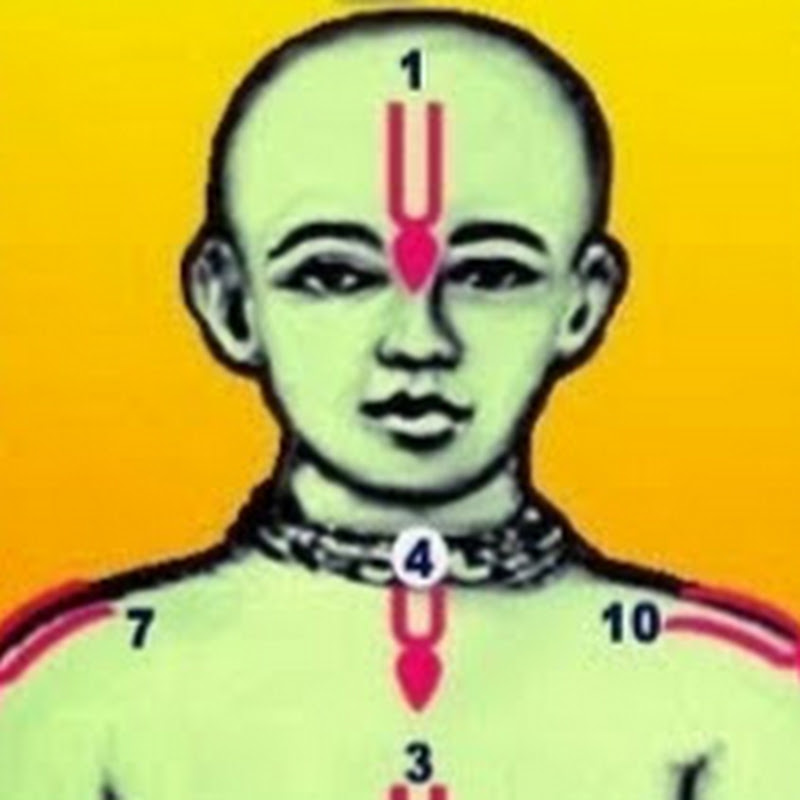
All kinds of backgrounds, including atheistic, agnostic, religious. Why the, could you explain the shaving of the head or the close cutting of the hair and the mark on the forehead and nose. Yes. Again, the shaving of the head is required for students, like you saw in the film, and required for those who take up the life of monks or celibates.
It's not required for everyone because you don't have to shave your head to chant Hare Krishna or chant any holy name of God. What Lord Chaitanya Mahaprabhu's teaching was that any name of God will do, and there are many names in the scriptures of the world. So that was the main idea, to chant the holy name, it doesn't matter about one's dress. Now, the mark on the forehead is the mark of the Vaishnava, the Tilak.
And it's a very ancient mark from unrecorded history. You don't know actually how long. And we wear this as a sign to people that we are Krishnites or devotees of Krishna. I noticed in the film the children were reading very fluently in Sanskrit.
Is this an attempt to get to a holy language, to get closer to God? Well, the scriptures, Vedic scriptures, are of course written in Sanskrit originally. And the children first learn how to pronounce Sanskrit by doing transliterations, just like the book I have here before me, Sarva-dharmam-paryajya-mamekam-sarva-dharmam-bhaja. So a child can learn how to pronounce these words.
And they read the verses of the Bhagavad Gita in Sanskrit eventually. They're scholarly inclined, they may learn. It's said that the Krishnas are the fundamentalists of Hinduism, is that true? The literalists, let's say, that's a better word.
Actually, that's a pretty good conclusion, if we understand the meaning of Hinduism. Actually, Hindu is not really a Sanskrit word, yet it's a word that comes from the word Sindhu, from the Sindhu River in India. And those persons on one side of the river, they call those who lived on the other side Hindus, because they couldn't pronounce the S, they said Hindu. So Hindu is somehow stuck, especially since the 12th century.
But in India, there's a whole plethora of religious following, demigod worshippers included. But our Vaishnava sampradaya, or our community, has been following the same scriptures for thousands and thousands of years. And we've brought the same scriptures in their original form to the Western countries. Do you ever read the Bible, since you mentioned that Jesus is a legitimate name for God?
Since I've joined the movement, I've read the Bible several times, especially the New Testament, because I was very happy to find out my spiritual master's attitude toward Jesus Christ. Just let me read to you what he said. In Melbourne, he was asked by a group of Christian ministers that visited him, what is your idea of Jesus Christ? I told them, he is our guru.
He is preaching God consciousness, so he is our spiritual master. What about the Incarnation? What about the incarnation of Jesus as fully God and fully man, apart from, you know, saying that there is a real world and a real... Do you believe in maya?
Let me put it in a different way. Do you believe that the world is an illusion? Maya means forgetfulness of God. That's all.
Actually, everything's in the kingdom of God, but this is that part of the kingdom of God where people are forgetful of God, and they have to remember. So maya means the illusion to see separately from God, to think separately from God, to see oneself as living separately from God. This duality is Maya. So you don't see that this world exists apart from God?
No, nothing exists apart from God. Hamsa Vasa Pallavao Krishna says, everything is emanating from me. How can anyone exist, anything exist apart from God? So this is a pantheistic worldview.
Not pantheistic. Everything is created by God, dependent upon God, maintained by God. Pantheism implies many gods. There's one God, one supreme God, and everyone else is a servant.
How much freedom are you given in your religion? I guess, you know, looking at the children there, it seems like they were little robots. And I guess in the Western world, we treasure the whole idea of freedom of intellect and... Well, no, why robots?
I mean, every child has to be educated. Nobody wants to go to school, but their parents make them go initially. They go, some of them go to Catholic school, some of them go to public school, some of them go to the Krishna Conscious School. So is there freedom of different beliefs within your organization? well i mean the idea is the child learns the basic uh krishna conscious philosophy and then always has the freedom to remain in the movement or not it's completely voluntary movement people come and go all the time when a child gets older they can take up whatever way of life they can work they can remain as a student or as a monk or if they decide not to follow krishna consciousness there's nothing no one can stop them but they can't stay if they have some difference and belief on what krishna might have said well no one's going to if anyone contradicts what krishna says and doesn't believe in krishna and he's not going to stay why would he stay in a movement dedicated to krishna consciousness you said at one point that you read the bible now you know jesus talks about not praying with vain repetition uh and clearly mantras are repetition well is christ's name repetition vain this place is in the bible it says all nations whom thou has made shall come and worship before thee, O Lord, and shall glorify thy name.
Or, this is from the Old Testament, it is a good thing to give thanks unto the Lord, and to sing praises unto thy name, O Most High. O Most High is a translation of the name of God, just like Krishna is translated as the most attractive one. But we don't say the most attractive one, the most attractive one. We say Krishna.
Now, repeating Christ's name is no sin, because one becomes more Christian by repeating the name of Christ and by praising Christ and by studying his teachings. But we just don't see it as a necessary thing to do. Well, you should, because it's the teaching of this age. If you chant the holy name of Christ, you become more Christ-conscious.
Why don't you? This is what our idea is. This is the only point we're making, the only point we're introducing. Nothing new.
We don't add anything to Christ's name. But where he says praise, and where the New Testament and Old Testament are full of places, hallowed be thy name, praise thy name. Why don't you do it? Instead of just talking, do it.
And you become more Christ-conscious. Well, that is an animated point of the conversation, and it also is a point in the program where we have just about run out of time. We have just a moment. Any parting word you would give to us?
I just want to thank you very much for inviting me here to speak with you and to show you that actually we're all one in religion because the goal of religion is one, is one God, and that we should try to understand what the common ground for religion is. And we believe that it's simply becoming conscious of God by chanting his holy name. Thank you. We hope that you have enjoyed Perspectives, which has been brought to you by the Episcopal Church, the Lutheran Church in America, the Presbyterian Church in the U.S., and the United Methodist Church, in cooperation with the Protestant Radio and Television Center.
If you would like a transcript of the program you have just seen, please send $3 with your name and address to Perspectives, 1727 Clifton Road, Northeast, Atlanta, Georgia, 30329. We thank you for being with us and hope you will join us next week for Perspectives.