- Autoplay NEXT:


















Houston Live interviewsing Tamal Krishna Maharaja on Hare Krishnas 1980s

- ISKCON
- 1980's television news presentation "Houston Live", interview with Tamal Krishna Maharaja.
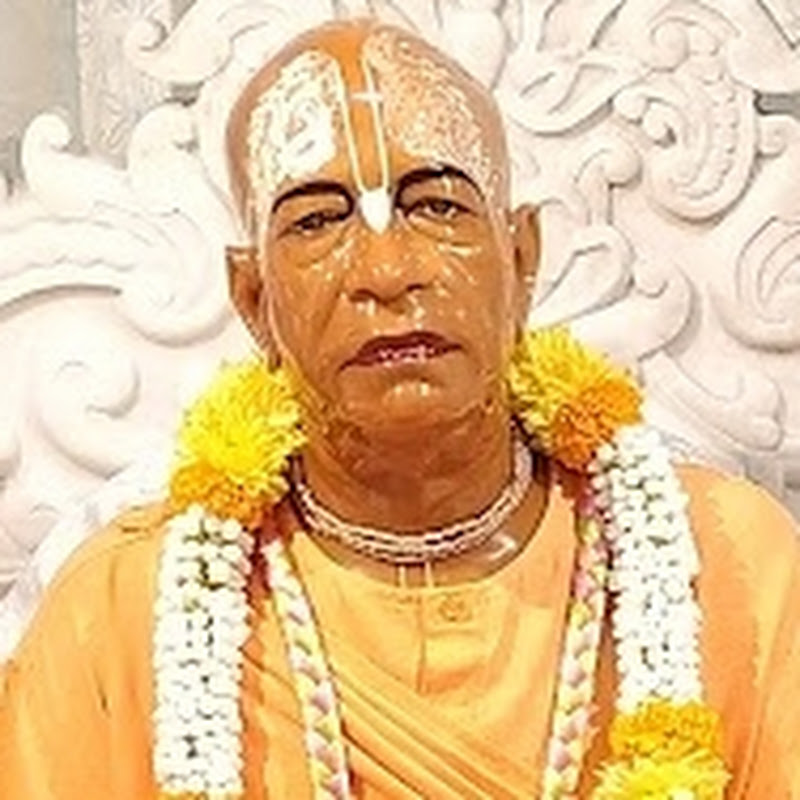
Welcome back. As I said, today we're going to be talking about the people you have probably seen at one time or another and wondered about, maybe feared a little bit, had questions about, certainly. And those are the members of the Hare Krishna movement here in the United States. My guest is Srila Gurudeva, who's asked me to simply call him Gurudev.
He is, as I mentioned, the initiating spiritual master, governing body commissioner in the Hare Krishna movement here in the United States, and spends a lot of time here in Texas and in Houston. Good to have you here. We appreciate you... Thank you very much, Roger. ...coming on the show.
Tell us something, if you will, a bit just to form a basis for things about the history of Krishna and the movement and the religion. Where did it begin? And how did it come here? Well, Krishna is a name in Sanskrit for God.
So I guess we have to say that this movement began with God. And traditionally, Krishna is worshiped in India. God is worshiped there in the name of Krishna. And the movement came to the United States in 1965 when my spiritual master, his name is Srila Prabhupada, brought the movement from India on the order of his teacher and began the movement.
It's not, of course, a new movement. Sometimes people brand us as a cult, but it's far from that. Our scriptures are 5,000 years old, and it's a very traditional and conservative religion. In fact, in India it's considered to be the most traditional of all the religions practiced there.
Why did he feel compelled to bring it to the United States? Well, one who actually has love for God wants to spread it to others. And the beauty about the Krishna Consciousness Movement is it provides an entire day, hour by hour process of loving and serving God, and the very easy method of developing love for God by chanting Hare Krishna. The essence of the religion is to chant the Hare Krishna mantra.
These three words, Hare Krishna and Rama, are different names for God, and they purify one. So seeing the great irreligion that had spread all over the world, the world has become very materialistic nowadays, Prabhupada felt that there was a genuine need to bring relief to the people of the world, and he felt that the best way to do this was by broadcasting the chanting of Hare Krishna. He first established his headquarters in New York. That's right.
And you are very obviously an American, and I would be willing to wager a New Yorker. I'm a New Yorker. Okay. You joined in 1967 shortly after you arrived.
What attracted you to this? What in your life made this seem like a good way to go for you? Well, in college I had been studying philosophy, and so naturally I was searching for the perfect philosophy or way of life. And actually I joined out in San Francisco, on the West Coast.
I went out after college, I went out to the West Coast and I happened to meet up with some of the devotees of Krishna who invited me to the local temple there. And that was the first time I met Prabhupada, my spiritual master. Of course, when I first heard him speak I was a little doubtful, to be very honest. I had seen so many spiritualists and leaders, and I felt many of them were a little bit cheating, to be honest.
In what sense? In the sense that they said so many nice things, but they often didn't practice what they preached. Okay. And so I made a very close study, first of all about his teachings, and secondly about his personal lifestyle and the lifestyle of the other devotees there.
Then I became a little bit convinced. It is, from what I read, a strict religion. Now, I understand there are four basic principles that you have to follow. I want to make a statement here to say that that doesn't mean that all of our congregational members follow these four principles.
But in order to be an initiated devotee and, say, a minister of our religion, you have to follow four rules. No meat-eating or fish or eggs. I was curious to know why eggs were included in that. Well, they have the potential for...
Oh, to become life. Yeah. Okay. So, no meat, fish, or eggs, no gambling, no intoxication, and in fact...
That includes coffee. That's right. Coffee, tea. And cigarettes also.
Okay. And no illicit sex, which means no sex outside of marriage and even within marriage for the purpose of procreating children. What is the chanting for? It can sound to someone outside quite relentless.
Monotonous. Yeah, and quite monotonous. Well, one point is that I would say that if anybody tried to chant any word, let's say coffee, coffee, coffee, you'd get pretty sick of it after a while. You wouldn't get your thirst quenched.
But somehow or other, we're able to chant Hare Krishna throughout the day, throughout our lives, and not get tired. In fact, we relish it more and more. And this is because we actually understand that the name of God and God are non-different. In other words, God is present within his holy name.
Krishna is one of the holy names of God. We don't say it's the only name. So we find that by vibrating God's holy name, we feel ourselves in contact with God. And naturally, we feel ecstatic about that.
Do you actively go out and seek converts? I mean, I would gather you believe in proselytizing your religion. Yes, we do. But we don't force people, of course.
In other words, this is something which someone's going to have to be convinced by their reason and intelligence, not by blind faith. How does the religion keep going? Is your main source of funds soliciting on the streets, selling the information in the books and so forth? No.
Book sales is one of our sources of income. That's probably where most of us have encountered members of your religion. Right. Book selling is one of our major preaching activities, but the largest part of our income comes from our congregational members who support our movement.
And so we should make this clear. We were talking about this before the show. People that belong to the Krishna religion do not have to dress as you are dressed, do not have to live in the temple, etc. No, most of them don't.
Most of them practice Krishna consciousness in their own home. They chant Hare Krishna at home. They chant Hare Krishna on the way to work. You know, probably some of your friends are Hare Krishna people.
Maybe they just haven't revealed it yet. Well, there they have it. You're right. We've got to take a break here.
We'll be back and talk more about this, and we'll take your questions and comments at 626-2619. So do stay with us. And we are back discussing the religion of Krishna with Guru Dev, as he's asked to be called. It's a lot easier than saying his full name, believe me.
So I appreciate him making that easy for me. I do want to make a distinction, though, between our movement and other movements of the day, which are known as cults. One of the differences is that we base our movement on a very ancient philosophy. You were mentioning that you had heard of this book, the Bhagavad Gita.
So this book is one of, it's like the Bible of our religion. It's 5,000 years old. Hold it to that camera there. So this book is 5,000 years old.
And it's not that this religion was made by some cult leader and it's got some dogmatic beliefs. It's a very ancient, respected religion. Most universities, for example, which have East Asian departments, they use our textbooks. We have a publishing wing of our society called the Bhaktivedanta Book Trust, which publishes about 80 volumes of these literatures.
And they're considered the authoritative texts in this particular field of study. So, first of all, to distinguish it from, say, a cult, it's not just some cult leader's philosophy. It's a very ancient, respected, bona fide religious philosophy, which precedes Christianity and even Judaism. You can appreciate, though, the worries of parents who see their children joining something that is so strange to them, see their children with shaved heads, chanting mantras on the street, selling magazines and so forth and so on. can appreciate their concerns though their worries yeah i think that um i do i do appreciate it i think first of all what they should do is find out more about our religion and see that it's not something which is so different although i would definitely agree in in in the garb and in the shaped head it is a little different the people who join uh to become full-time ministers looks like the president here of our houston temple was a businessman he was the head of the business here and since that time he's given up his business activities and become a full-time minister and in charge of our activities here in Houston.
He's about 32. His wife is a MA degree holder. She was a social worker. So I think the average age here of our ministers is probably around 27 to 28.
Hello, you're on the air. Have you got a question? Yes, I was just wondering if he believe in our God, Jesus Christ. Okay.
Okay, thank you. I do believe in your God, but I believe that Jesus Christ is the Son of God, as I think he himself said he was. So we believe in both Jesus Christ as the Son of God and also in his Father as God himself. When we say Krishna, we're speaking of God the Father.
In other words, we understand Krishna to be the Father of Jesus Christ, and we accept Jesus Christ as the Son of God. Oh, you do? Oh, definitely. That was not an original tenet of religion, I would imagine, though, certainly if it predates Christianity.
No, but in other words, we accept that Christ came to deliver mankind from their sins and that he is a chosen son of God for this purpose. What reactions have you gotten from mainstream Christianity or Judaism? Well, people who are open-minded and who are a little bit knowledgeable, they very much appreciate our religion. We have dealings with so many mainstream leaders of religion and they don't find any contradiction in our teachings.
You read the Bhagavad Gita and you read the Bible and you won't find contradictions. Okay. We have also heard from former members, and this is your chance to respond to this, that very often medical care is reluctantly given if chanting and prayer do not work. This is absolutely untrue.
We believe firmly that medical treatment is required. In fact, In fact, we say that there's three things which should not be neglected. Fire, debt, and diseases. Okay.
So we're, you know, here's Houston is a big medical complex. I mean, the doctors should not worry that we're going to keep patients away from them. Of course, if one leads a very God-conscious life, the chance of disease is minimized. For example, we very much regulate our diet and we eat foods.
It's like now I think they've come out with a lot of research about cancer perhaps being helped at least along the way by meat eating. So there's a lot to be said for a vegetarian diet. So our members do find themselves with a lot less diseases. In that sense, I guess the doctors could worry about our movement.
They might. Business might be falling off, eh? Hello, you're on Houston Live. You have a question.
All right. I want to know their feeling on homosexuality and their religion. I barely tuned it in, so I don't. Okay, thank you.
Yeah, we don't feel that homosexuality is a normal experience. We think that it's an abnormal experience, which is the result of a very confused, materialistic civilization. So we don't agree that homosexuality is something which is natural. Line two is ready, all right.
Hello, you're on the air, have you got a question? Yes, first of all, I want to say that I'm a Christian, But I have studied with the, I did live in an ashram. I didn't, they told me there, they never forced me to do anything. This was an ashram in the States?
It was an ashram in New York City. Part of the Krishna movement. Right. Both of them were in the Krishna movement and studied with them.
I didn't see, but. Could I ask you, could I interrupt for a moment and ask you where you disagreed? well what did it lack for you it's really hard to put my finger on asking me what the Baptist religion to the pinnacle okay to say you know what it would you know is the difference between chanting Hare Krishna and basic ideal don't mind doing that so tell me what I'm it's it's a valid religion and I you know I support it 100% it's just like I I don't agree with like that is cult and Okay, we appreciate your call. Thank you. Thank you.
Okay, we've got to take a break here. We'll be back. We've got a longer segment, and we'll take more of your calls at 626-2619. Do call us, and we'll be right back.
And we are back with Guru Dave of the Krishna movement. He is, let me get the title right, again, the Initiating Spiritual Master and Governing Body Commissioner in Hare Krishna here in the United States. We have another call, line one. Hello, you're on the air.
Have you got a question? Yes, what kind of marriages do y'all have? What kind of marriages? Okay.
As in the ceremony or...? Yes. Okay. Well, we have...first of all, we don't believe in divorce, so our marriages go for life.
Okay. And, well, what kind of marriages? Boy likes a girl... They're married within the movement.
You don't...you don't... Not always. I mean, that's an individual's preference. I mean, it's a lot easier if you marry someone in the movement.
Are they recognized by law? Oh, sure. If a Krishna minister performs a ceremony, it's... Yes, definitely.
Okay. Everything's legal. Have members of your group had that experience of marrying someone outside the group? Yes.
And what kind of conflicts does that create? Strained. Yeah? It's a strain.
Because look at the kind of lifestyle we lead. We get up at four in the morning at least. We chant Hare Krishna for a couple hours a day. We have some strict vegetarian rules about our eating habits.
So, I mean, there's a number of things which would make it pretty hard for someone to live with someone else if they weren't at least pretty favorable to Krishna consciousness. Okay. Hello, you're on the air. Have you got a question?
Yes, I was wanting to know where this name Krishna originated from. All right. Thank you. Krishna means he who is all-attractive.
We believe that God is all-attractive. He's the most beautiful person. He's the most wealthy, the most knowledgeable, the most famous. He's the strongest.
In other words, any quality which you and I may have, he has to the greatest degree. So he's all attractive. And in Sanskrit, Krishna means he who is all attractive. Who was the founding father of the religion?
There's no founding father. In other words, the Sanskrit says, which means religion is enunciated by God himself. So the founder is Krishna, God himself. Who wrote the Bhagavad Gita?
Bhagavad Gita was written down by an incarnation of Krishna. In other words, God not only has his son like Jesus to come or his prophet like Muhammad, but he himself can come or he can send an empowered person. And he sent a very empowered person 5,000 years ago by the name of Vyasa Deva, who wrote the Vedic literatures, of which the Bhagavad Gita is one of the prominent. These were all put into writing at that time.
The reason that they were put into writing is that previous to that, people's memories were sharper and they didn't have to write it down. Nowadays, if we don't take notes, we're finished. Yeah, and you consider him to have been someone specifically appointed. Yes, he's empowered.
He's an incarnation empowered specifically to write down the Vedic literatures. Okay. Hello, you're on Houston Live. Do you have a question?
Yes, I want to know what spiritual master, how do you become a spiritual master? Okay, how do you become a spiritual master? By becoming a good disciple. In other words, in order to become a spiritual master, you have to very rigidly follow the instructions of your spiritual master.
And when he sees that you're fully qualified and that you followed all of his instructions perfectly, then gradually you become empowered to also become a spiritual master. How long did it take you? Well, I was serving my spiritual master from 1967 through 1977 when he left this world, so I guess 10 years. But I'm always trying to improve myself and to love Krishna more and more.
Hello, you're on the air. Have you got a question? Yes, I do. I'd like to respond to the gentleman's statement.
His book of doctrine is older than the Bible. One thing I want to make sure that the audience understands and that this gentleman understands is that the Holy Scriptures are from God and that all other religious doctrine books and changes from those original Scriptures in the world are based. John 10, 6 says, way and the truth, and no man comes to it. I'd like to hear what his response is.
Well, you ought to learn what the original... Hang on a second. Hang on. I got a response for you.
First of all, you should learn what it... Originally, the Bible was in Greek, and it says, no man cometh unto the Father except through one who is of the Father. Now, that's been changed and translated into through me. As far as what you said about works go, we don't believe that a man can approach the kingdom of God through works alone.
He has to have the divine mercy of God. As far as your statement about this, the Bible being the oldest book in the world, then you ought to go to a comparative religion class in any major universe in the world, and they'll tell you that the Vedic liturgies predate the Bible by thousands of years. I would gather you run into a good deal of intolerance. Yes, we do.
I mean, basically what I would say to this type of a person is that, all right, now let's see what you're actually doing. let's see your lifestyle. Are you devoted to God in your activities? In other words, one of the symptoms of someone actually being a follower of God is that they serve God with their heart and their soul. So I invite everybody to come down to our temple.
You know, we have a temple here in Houston, and let them personally observe the lifestyle of the people who live there and see how devoted they are to God. Dr. What is your tolerance level for other religions, for Buddhism, Hindu, Islam, Christianity, Judaism. We see that all religions, bona fide religions, I don't mean I would agree with this gentleman.
I don't appreciate these cults that have sprung up and, you know, calling themselves religions. But any genuine religion which is based on a bona fide scripture is ultimately bringing someone to the point of love of God. Now, we have to see what, you know, what religion can bring you most quickly and most perfectly to that platform of love of God. And love of God means that you become more attracted to serving God than to simply serving your senses.
That's why I say that, you know, that's, well, he's speaking very nicely, but let us see in his own personal life how much he's actually doing everything for God. If he lights up a cigarette, can he say that I'm doing this for Jesus Christ? I doubt it. He may, and I doubt it.
Hello, you're on Houston Live. Do you have a question? I have a question about the businessman. Okay.
He sounded like a guy that had everything going for him. and then he just quit his job and went to Harry Kirshner. Now, what is this man doing to eat and just make a living? Is he just a bum eating Harry Kirshner and they give him food or what? All right.
Thank you. Well, this man works about 19 hours a day to spread, you know, the highest welfare activity of all. I mean, what is the world missing nowadays? There's lots of hospitals.
There's lots of schools. There's lots of old age institutions. but look at the newspaper and the world isn't doing too well. So we say that the thing that the world needs the most is, you know, God consciousness. So if someone gives their life to spread God consciousness 18, 19 hours a day, I don't think that that's being a bum.
I think that he's doing welfare activities. I don't, you know, just because he, you know, he could have kept his job, and most businessmen do who join our movement. We don't encourage them to give up their business. But this man was so much, you know, determined in his own heart to want to directly preach that he decided to do that.
I mean, a lot of people don't do that. But I think it would be unfair to call him a bum, you know. Well, certainly his living, his lodging, et cetera, is provided, though, by... Yeah, and let me explain that the lodging, you know, that our devotees have is really simple.
Like, I've got two sets of clothes. This is one, and the other one is being washed right now. Okay. So, I'm in a nice sleep on a floor, you know, on a mat, on a simple mat.
I don't have any bank account personally. I have no personal, you know, savings of any type. I don't have my own vehicle. I don't own anything except, you know, this cloth.
And someone gave me a watch, and I got my prayer beads. So, it's not like we're spending a lot of the public money on ourselves. Well, and in the sense of fairness, it would have to be stated that ministers and priests and nuns and rabbis are paid by the church as well. I mean, they don't have other jobs as well.
Hello, you're on the air. Have you got a question? Yes, I do. I'd like to know what their creation theory is, if it's like Adam and Eve or evolution or what.
Okay, good point. Thank you. Thank you. No, we don't.
The origins of life. Yeah, well, the origin of life is by creation. God created the universe, the world, et cetera. If you read the Vedic literatures, you'll see a tremendously detailed explanation about the process of creation.
This theory of relativity is there about the atoms, about how to calculate time from the movement of atoms. Very scientific information is contained in the Vedas about the entire creation from the — it's not just a very simplistic description. So I just want to say we don't at all agree with Darwin's theory. Oh, you don't?
No, we don't agree with Darwin's theory. We understand that there's evolution, but that's an evolution of consciousness, that we believe that the soul transmigrates. Well, we've talked to fundamental Christians who disagree with Darwin. How do you explain scientific research and findings?
Well, then I don't. I mean, there's a lot of books written by Christians. We have our Bhaktivedanta Institute of PhD scientists also. there's no proof yet about Darwin's theory. It's still a theory.
You know, there's so many missing links in the fossil records. I mean, basically, they have never yet substantiated Darwin's theory. We understand that there are many different species of life. According to our Scriptures, there's 8,400,000 species, and the soul transmigrates through these different species.
In other words, this is not your first birth. Now you have a human form of life, previously you may have had a life in so many different types of bodies so reincarnation is a yes yes your consciousness is evolving we believe in evolution of consciousness and gradually you get a human body and it's in this body that you can actually get out of the material world and go back to godhead because human life is an opportunity for self-realization okay hello you're on the air have you got a question uh yes i'd like to know what happened to the i don't know if i'm pronouncing it correct or not but it's i believe it's the guru maharahi Jai, the one who ran the Astrodome. He was 14 years old at the time. Oh, Maharaji.
As far as I know, he started to go to nightclubs with his secretary, and that's the last thing I heard about him. What was his... He's got no connection whatsoever. The only connection...
A lot of Indian-based religions get jumbled together, don't they? Yeah, but I think if you study his activity, you'll see, you know... Was he a devotee of Krishna, though? No, not at all.
No, he, in fact, he called himself Krishna. He says he is God. He's God, you're God, we're all God. You just have to realize it.
We don't agree with that at all. Okay. Hello, you're on the air. You've got a question.
Yes, I've been really interested in the Hare Krishna movement, and I've noticed that in many pictures that they have a sitar. Is this a kind of a religious instrument or something? Yes, sitar creates a harmonious atmosphere which is conducive to meditation. Meditation means to think of God and the perfect meditation is where you can remember God throughout the day.
That's why we chant Hare Krishna. Okay. On that point, we're going to have to leave it. We're out of time.
Guru, Dave, thank you for being with us and sharing information with us. We'll leave the judgment to you. That's about as good an explanation of it as we can make. Again, thank you for being with us.