- Autoplay NEXT:

















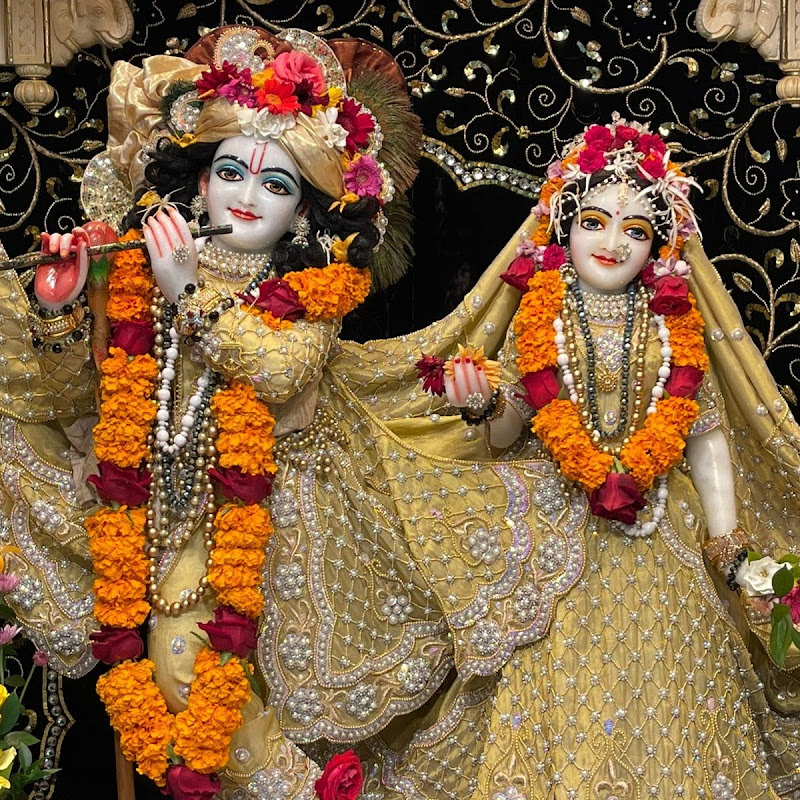
Durban South Africa ISKCON Temple Opening -- Sri Sri Radhanatha -- 1080p HD

- Preaching
- Enjoy the grand opening festival of ISKCON's Durban, South Africa temple. Now digitally remastered in 1080p HD video!
Sri Sri Radhanatha Temple was opened in the 1980s. It was constructed by the South African ISKCON devotees on the desire of Srila Prabhupada that a temple be constructed there.
The Durban municipal authorities were very impressed with ISKCON's submission and plans for the temple so they offered the devotees the best piece of land available in a very prominent position.
The temple was constructed and the grand opening ceremony was a very joyous and festive occasion centered around the theme of unity and peace.
The dignitaries included leaders of the African nation and the whole program was very inclusive, positive and hopeful.
A key speaker was Bhakti Tirtha Swami, a black American ISKCON sanyasi, who, in his earlier life, was a part of the black revolutionary movement in the USA.have here is a one-acre site and we purchased it from the government for one dollar. So the man at the city estates department, the man in charge, he showed me a parcel of land that hadn't ever been shown to any other Hindu organization and that's the same parcel of land, this one-acre parcel that we've built the Radha Radhana temple on today. And why they hadn't shown it to anyone because they considered it the most valuable piece of acreage, the choicest spot, and it actually is because we're sitting here in what they call a community center. Right across the street, we have the courthouse, we have the other administrative buildings, new post office.
Of course, they're putting in a library here, they're putting in a museum. So they were reserving this spot, actually, for what they considered to be just the right group to develop it. So when they saw our plans, actually, and they heard what we wanted to do, and they heard about our organization and that we were an international organization and all the successes that we'd had so far, they more or less encouraged us that we should apply for this piece of land. So we became committed as a yatra.
All the devotees got together, all of us agreed, and as a yatra, as a temple, we became committed to building this temple. So Raj Ram actually got some wonderful inspiration. So when he showed us the plans, the devotees immediately became inspired. They immediately could see that this unique piece of architecture, which was more or less a marriage between authentic Vedic design and a modern, progressive type of feeling in architecture and materials, temples would be ideal for spreading Kṛṣṇa consciousness in the Indian community.
As we developed the construction company and the work was going on, when the engineers came to check the work that was going on by the devotees under Raja Rāma's direction, they were so happy, they were so actually encouraging with the quality that it seemed And just again, like Krishna's arrangement, that now ISKCON South Africa had a construction company, ISKCON Construction. In our case here, we see here the big tower has the height of 108 cubits, which is the equivalent of a 12-story building. We have used approximately 80,000 bricks just to build the big tower alone, in which every week one story was completed the stainless steel roof we can see here consists out of 35 000 stainless steel tiles which have been made by the devotees themselves in between the stainless steel tiles there you see these gold reflective windows which consists of two layers of glass with real gold dust in between to give us the gold effect.
The total number of windows on the building is 235. Marble on the outside which came from Portugal and there are about eight tons of marbles being shipped in for use on this project. Also the marble in the interior is from Portugal of a different kind lighter in shape the total quantity of concrete we used is quite big it's approximately 600 cubic meters of concrete reinforced with 75 tons of steel the original is made is carved in plaster as you can see here it's a fairly hard plaster and from there we we make the mold in silicone. It's called silicone rubber.
This particular piece here, it comes from the corner of the crown. Architectural meaning behind the four different entrance gates are the four different yugas with their four different means for self-realization. Satya Yuga, that was when the yoga system, of course they had the long life so they could practice the yoga system. And the Treta Yuga, where they had opulence, and they could perform the different yugas, different types of sacrifice.
The Dwarpa Yuga, and that yuga, temple worship, was the means for self-realization. And in Kala Yuga, which is the yuga that we're living in, then the chanting of the holy name, Hare Krishna, this is the means for self-realization. And leading up from the gates, we see that there is the bridge entering into the temple. This is the living entities crossing the bridge, rising up above the material world, and entering into the spiritual world, which is the temple.
And on the temple we can see there are three different towers. Of course the main tower, that's Krishna's tower. This is very traditional. You'll find this on all Vedic temples, or temples especially in India, where the large tower can be seen from very far away, and that tower represents Krishna.
Now we have two smaller identical towers. One represents or is over the seat of His Divine Grace A.C. Bhaktivedanta Swami Prabhupāda. Śrīla Prabhupāda is the founder, ācārya, the founder spiritual master for the International Society for Krishna Consciousness. So that one tower is over his seat, or his asana.
And the second tower is for the present spiritual master. Prabhupada originally came to South Africa in October 1975, and he stayed here for just less than three weeks. He was very enlivened. While he was here, he stressed this, that he'd like a temple, something like the Krishna Balaran temple that we have in Vrindavan to be built in the middle of the Indian area actually and the largest Indian township outside of India Prabhupada could see into the future the necessity of having a temple cultural center for the Indian population we thought we should try some campaigns so we did this for about four or five years and because Because of the response we had to these programs, this actually convinced us of the need to have a large temple here.
We would regularly get over 1,000 people, 1,500 people, sometimes 2,000 people every night and this went on for about four or five years. So this convinced us of the importance to actually have a large temple and cultural center in the middle of Chatsworth. We're very fortunate to have some very wonderful personalities there for the opening ceremony of the Sri Sri Radha Radhanath Temple. One of the most exciting guests for the opening was the chief of the Zulu nation, Chief Butelezi.
The Zulu nation is one of the largest African tribes and his presence and his participation was very much appreciated and inspiring in such a function as this opening. The mayor of Durban was there. Then we had, of course, two very leading Indian politicians, Mr. Raj Bansi and Mr. J.N.
Reddy, who are both life members, not just life members, but patron members of our society, and both have helped very, very much with the establishing of Krishna consciousness in South Africa, and in particular with helping establish this beautiful temple. It is always pleasurable to welcome people to our city and today is no exception where we have so many distinguished people not only from South Africa but throughout the world. The International Society for Krishna Consciousness has made tremendous strides since it was founded in New York in 1966 and the fact that the society today has approximately 150 centres throughout the world is a tangible tribute to the tenacity and sincerity of its devotees. I congratulate you too on your confidence in planning the next phase of the project and that is on the land immediately adjacent to here where in due course the land will be handed over to the organisation by the City Council of the Gita the message of an eternal religion an eternal message which has remained pure two thousands of years which has no time which has no place but is a universal message can help to solve the problems of our land and therefore we the Indian members of South African society have a special responsibility because if we cannot accept and impart this message to ask others to do it becomes a little bit more difficult so the challenge is even greater to those of us who are members of the Indian community to grasp the message and carry it forward when the Hare Krishna movement came to South Africa I was introduced to the movement and was also introduced to the leader Prabhupada and I was asked to say a few words about my association with him and I do so with pleasure and with great humility.
Here you have a simple man who's come and troubled the world, doing this one thing, spreading, as he himself said, the glory of the Lord. And his phrase that man must be educated to see the soul, he must be educated to see and realize the soul in the body. And until and unless he is so educated, this dual frenzy between hate and love will continue. And my earnest prayer is that philosophy and the basic work which our Prabhupada started here in South Africa and in so many other centers of the Western world, that this will be carried forward by those who follow him and that this cultural center will provide to our young people, our children, also those educational opportunities to live out at least some of the things which this movement and the leader have come to stress for us today thank you very much so Krishna consciousness is somewhat different and that it gives mankind the oldest spiritual scriptures on the entire planet this can be historically linguistically, philosophically proven.
The Vedic scriptures are the older scriptures and so therefore they help to make a person a better Christian, a better Muslim, a better Hindu and when one becomes better, perfect, he no longer considers himself of any specific demarcated distinction. But he considers himself as a servant of God. When we look at the great scriptures of the world, we We look at the Quran, Muhammad taught in 87 too that of all the names the most beautiful names belong to God so call upon him by them. David taught in Psalms 113 that whoever calls on the name of God he shall be saved.
We find that in Romans it teaches that from the rising of the sun to the setting one should called on God's name. Buddha taught in Amida Buddha that whoever calls on my name he shall attain paradise. So this calling on God's name has tremendous effect in invoking the presence of the Lord, in invoking the mercy and the benediction of God. So we encourage you to come closer to find out how one can become in a state of consciousness where he is meditating, feeling the Lord's presence every day where one is able to understand that this body is simply a garment just as we change clothes from day to day that the body is simply being used by the soul if we develop that genuine understanding then there is no difficulty and you having a white coat or he having a red coat or me having a black coat these distinctions no longer become such a dominant factor in one's life once in Nairobi, one minister of the government came to visit us.
And he said, Swamiji, so what can your society offer? So we were explaining about our food for life programs, how we're helping the poor, how we have schools, many, many projects that are going on all over the world. But I said, but let's be very immediate and specific. Let me take you on a small walk, very small temple.
In five minutes, I said, so this boy is from Italy. This girl is from Spain. This person is from South Africa white person this white black person is from South Africa this person from America says now you tell me one place in Nairobi one place in Kenya where you can say you have these this kind of variegatedness and people are working together in a loving spirit and he immediately could understand due to his knowledge of problems racial problems etc so we are showing what is possible and we are humbly and submissively willing to offer that to help to solve some of the seemingly unsolvable problems in this world thank you very much indeed today is one of the greatest days of my life because for me personally i think it is a very moving experience to come and to be present at this very moving ceremony today.
And I've traveled very widely and I've seen many houses of God in many parts of the world. I've seen one of the Christian shrines such as the Basilica of Saint Peter's in Rome and recently I saw the third holy shrine in the Muslim religion the Dome of the Rock in Jerusalem and I've seen many cathedrals in many parts of the world but the temple that your grace has come to dedicate today is second to none of these in fact in many places it is miles ahead of them I want to say today that whatever love draws people together as as today, I am always inspired by hope. And in this world of harshness in which technology so often replaces human care, the magnificence of this temple and culture center, the spiritual awe that I felt as I walked into it led by his divine grace, and the inspiration of deeply devoted people to the highest ideals of love that I have met, moves me, my brothers and sisters, to the very depths of my very being.
I thank you very much. Well, I think that those who are worried about South Africa, I think those who are worried politically about South Africa, should look at the workings of ISKCON with a tremendous measure of positiveness, particularly from the point of view that ISKCON knows no barriers. ISKCON is universal. ISKCON knows no country, make no distinction between countries, no distinction between groups, and no distinction between nations.
And if you look at the community that is at the ISKCON center here, it is Eastern international, and I would also describe it as cosmopolitan, and this is what the international community wants. And if you have pilot projects in religious institutions like this in South Africa, it not only augurs wealth for this particular region it also augurs well for the international community of nations. Again, although devotees have always really been inspired by the project and liked it, there's nothing nothing more wonderful than when the public comes and you see all their faces as they look at the outside, they see the fountains, they see the moat, they come up the stairs, they come into this beautiful temple room, they see the altar, they see the deities, they see the architecture, they hear the kirtan, they get the prashadam, they see the festival. I've never... everyone that's come, everyone that's been here to the festival has loved it no matter what community they come from in South Africa and got a little more insight into spiritual life and the goal of going back home, back to Godhead.