
- Autoplay NEXT:












Prabhupadas Palace on Australian Morning TV

- Temples
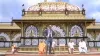
- The opening of Prabhupada's Palace of Gold created world-wide interest in the media. Here is an Australian Television morning news program covering the opening.
Out of the Hare Krishnas and the Golden Palace that they've built in a place called Limestone, West Virginia, we know from past experience the problems the shaven-headed, yellow-robed devotees of Krishna have found in fitting in with their local communities. But in spite of the fact that their Golden Palace stands out like a sore thumb among the farmhouses of Limestone in America, the Krishnas seem to have managed that very rare thing, assimilation. It is first a temple, a place of worship for these early risers, who shuffled past the fountains in the darkness to a morning offering to glorify Krishna. It began as a simple home for their spiritual leader and gradually grew into something far more ambitious with $750,000 in building materials and the labor of the devotees far exceeding that.
They did it over six years with little more knowledge of ancient construction than how to do it books. But the spiritual temple also serves another purpose. It's a money-making tourist attraction, and they come busloads at a time to see gold leaf gilding the ceilings and column caps, onyx and marble from 13 countries, chandeliers that were handmade, peacock windows carefully fitted with stained glass, all dedicated to their founder, Srila Prabhupada, whose image sits carved in wax and is covered daily with fresh flowers and a new change of clothes. It has turned the Hare Krishna lifestyle into an economic boom and given them an acceptance which most Hare Krishna sects are unaccustomed to.
The spiritual master of the group is Swami Bhaktapada, who dreams of seven more temples dotting the surrounding hilltops. In the beginning, people didn't know anything. They were suspicious. We looked different.
West Virginia, of course, is a little kind of closed community, so there was some suspicion. But when they have seen what we have done, and they see how wonderful it is, and how it's helping the community, it's helping the state, and they're pleased too. Tourist business means money. And in the recession, the Hare Krishnas have emerged as one of the most stable elements in the hill community.
Their living group, not far from the temple, is virtually self-sustaining. As vegetarians, they produce their own food. They make crafts for the community and for the tourists. They even have their own resident artist who has painted murals which adorn the walls and ceilings of the palace.
And when they do spend their money, it's at the neighborhood businesses, like Marvin Eddy's General Store. They have done good for my business. As far as that goes, they're considered friends of mine. And I think they consider me a friend of theirs.
As far as that's concerned, I try to treat everybody like I'd want to be treated. and, of course, their religious activities and things are particularly there, so far as I'm concerned, you know. While many people may still harbor the image of Hare Krishnas as strange-looking panhandlers in airports or a bizarre cult fighting with parents of children who have joined their ranks, at least in one West Virginia community, the image is changing. In the isolation of these hills, they bother very few people. The public comes to them because it is curious about their palace of gold and in the quiet wonder about their temple.
It tries to understand the belief that could produce this. For Hare Krishnas, that is no small achievement. That is no small construction either. I guess some people will say they now know where the money that the Krishnas raise in streets including our own is going to sit.
Yeah, it's amazing. Some palace there.
