
- Autoplay NEXT:











Radha Raman Temple Vrindavan Interview with Padmanaba Goswami

- Temples
- An interview with the head goswami at the famous historic Radha-Raman Temple in Vrindavan by Brahmananda Prabhu.
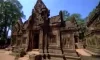
It's a great honor today to be with Padmanabh Goswamiji of Radharaman Temple. He's a great friend of ISKCON, especially for welcoming the devotees. I don't think any other temple in Brindavan has given such a warm welcome to the ISKCON devotees who come from all over the world, and we very much appreciate that. So we're very honored today to be able to discuss with you all about the Radha Ramana Temple and your service and your family and the whole history.
So we wanted to ask, actually you were explaining that your father had an association with Srila Prabhupada from very early on when Prabhupada was in Vrindavan in the 1950s. I think you have some correspondence in that regard? Yes, I have some correspondence which Srila Prabhupada had written to my father in 1956. 1956, that's before Prabhupada took sannyas.
Yeah. Prabhupada took sannyas in 1959. Yes. So I have that original letter of Srila Prabhupada and I have also some old BTGs back to Gotthard. which Prabhupada published.
Yeah, which Prabhupada published and he delivered to my father at that time. Prabhupada was distributing to your father back to Godhead. So I have a few copies of that BTC also. It's still in my record.
This was Prabhupada's major preaching at that time. Yes. He was editing, writing, editing, publishing. He was going to Delhi to get it printed and then he would also personally distribute.
And in that letter, Prabhupada has asked help and support from my father about the League of Devotees. Yes. Prabhupada had established the League of Devotees in Jhansi. In Jhansi.
Before he came to Vrindavan. Yes. So this was Prabhupada's idea, concept to make a society for Krishna consciousness devotees. So that back to Godhead was written in English because that was the specific instruction that he received from Srila Bhakti Siddhanta Saraswati Thakur to particularly preach in English?
Actually, we have very strong history in my family that my great-grandfather, his name was Sarbhama Madhusudana Goswami. He was a very genius and very great preacher at that time. And he was very close associate with Shri Bhakti Vinod Thakur and Bhakti Siddhant Saraswati. And my great-grandfather had also preached all over India at that time.
And he had preached with Shri Bhakti Siddhant Saraswati in 1911 or 1912 together. Here in Brindavan? No, in the Bengal. Oh, really?
Yes. And this is your grandfather, great-grandfather, Madhusudana Goswami. He was very close of Bhaktisiddhanta Saraswati. And I have his diaries, personal diaries, where he had mentioned about the meetings of Bhakti Vinod Thakur and Bhaktisiddhanta Saraswati.
In 1914, there was the Samadhi ceremony of Shil Bhakti Vinod Thakur. Yes, he passed away in 1914. Yes, so in December, and I think in 27th December, there was the installation of Samadhi ceremony in Lai Ganj Navadip of Shil Bhakti Vinod Thakur. So my great-grandfather, he sent the Radha Ramanji's Mahaprasad for that ceremony to Bhakti Siddhant Saraswati.
So this thing is also mentioned in his personal diary. So this shows that our family, our great-grandfather, he was very close with Bhakti Siddhant Saraswati and Bhakti Vinod Thakur. And my grandfather, Shri Krishna Chaitanya Goswami, he was also very close with Bhakti Siddhant Saraswati. And my father, he was also very close of Shri Prabhupada.
My father was studying in Allahabad. He has completed his intermediary education and graduation and post-graduation and law graduation in Allahabad University. Dr. Kapoor also went to...
Yeah. So when he completed his study, he came back in 1952 to Vindravan. And in 1953, he became a mayor. He was elected by the general public of Vindravan.
And he became a mayor of Vindravan town. So for five years, he has taken care of as a mayor of Vindravan town. So 1952 or 1953, Prabhupada has met with my father in my home and they were very close friends and they have exchanged their views and together they have worked. My father has given support to Shri Prabhupada and when Prabhupada went to preach in the West and he returned to Vrindavan, At that time Shri Puru Parth has come to visit with my father with some western devotees and my father has welcomed Shri Puru Parth in Govidhyam temple when he came with some western devotees and he was very much pleased to receive Shri Puru Parth.
There was Gurudas and Jamuna, Gurudas and Jamuna, Shyamsundar, Satchinandan Swami, old devotees at that time with Shri Prabhupada. So, and then time to time when the Prabhupada came and he visited with my father and he has asked and discussed about the Krishna Vargaon temple construction and all these things. One time my father was in 1970 or 71, there was the Kumbh Mela in Inhavad. So my father was also in the camp, his own camp and Prabhupada was also in his in-score camp in Kumbh Mela.
So Prabhupada was, in the morning walk he was passing in that camp, so he read my father's name in front of the camp. He had his own camp there. Yes. So just he asked one devotee that you please go inside and ask that Sri Vishambhav Goswami is there and ask him that I want to visit him.
So, in the morning time, about 7 o'clock in the winter time. Yeah, of course, very cold. Very cold. So, my father was doing puja.
So, one Western devotee has entered in his, this Swiss Scottish camp. And he asked that, are you Vishwamgarh Goswami? So, he said, yes. So, he said, Prabhupada wants to meet with you.
So, my father and Sahasrath said, where is Prabhupada? So, he said, he is just outside. So, please call him and he can come. So my father has called him and he go to inside and Prupat was sit there and they have also talk together.
And at that time... You were there at that time? Yeah, I was also there also. I was very young at that time.
And my father and Shri Prupat, they were very much interested to renovate it at that time. The Roop Siksha Isthali Dasasmesh Ghat at Allahabad. Which is that? Roop Siksha Isthali.
Where the Mahaprabhu has given the teaching of the Roop Goswami. So that place was need to some renovation and some... That's not Dasasmesh Ghat. That is the Roop Siksha Isthali that has called.
So Prupa and my father both they have discussed and they have started some renovation and they have done the renovation that place also that time. And after many times Prupa has come to visit my place, to visit my father. Many times he has to push out at my place. So both they were very intimate and very close friend and sometimes many times Prupa has discussed some problem and ask some advice or guideline.
So, time to time my father has given to advise and guideline to Shri Prabhupada. So this is following the family tradition that the fact that your great grandfather was connected with Srila Bhaktivinoda Thakur, you know, this is in 1914, I mean this is very early. This is even before. Srila Prabhupada only met Srila Bhaktisiddhanta Saraswati Thakur in 1922.
So this is even before that. I have some meetings history which is mentioned in my great-grandfather's diary. That is 1908, 1907 he met with Bhakti Vinod Thakur in Calcutta or Bhaktivinoda Thakur came to Vrindavan and Bhaktivinoda with Bhaktivinoda Thakur in Puri. So that is the different places in his diaries that meeting.
So it's amazing that he kept such a diary and wrote all these things because he considered it very important and Srila Bhaktivinoda Thakur made such an impression upon him Because mainly Srila Bhaktivinoda Thakur was in Bengal, Calcutta, but he would come to visit Vrindavan. That's where he met his Shikshu Guru, Jagannatha's Babaji. So that's a great history. And then of course Srila Bhaktisiddhanta Saraswati, he came to Vrindavan more later on. on, he did Parikram of all the Vrindavan, Rajamundala area.
And Srila Prabhupada met him here later on. That must have been about 1932. Well, that was in the beginning in Calcutta, but the Rajamundala Parikram must have been in 1930, 1931, something like that, the early thirties. Of course, Vrindavan was very different then.
Yeah, definitely, Vrindavan was the real forest and very dancing place of Radha and Krishna. Yes, of course, historically it was Sri Chaitanya Mahaprabhu who, you might say, discovered all these places of Vrindavan. He established all these places and determined the location where pastimes took place and then instructed his Goswamis to develop them and of course Radharaman temple is the progenitor is Srila Gopal Bhatt Goswami who is one of the six Goswamis so his history is very unique of course all of the Goswamis were coming from Bengal but Gopal Bhatt Goswami was of course from South India maybe you can tell us something about how he joined Lord Chaitanya and how he came to See Chaitanya Mahaprabhu travelled to South India. During his travelling in South India, he had visited Sri Rangam.
In Sri Rangam, he has took the bath in Kaveri river and after that he had visited Sri Rangam temple. In front of the deity, he was start to dance and chanting. The deity is Ranganath? Yes, Ranganath.
And in very aesthetic mood, the Mahaprabhu was chanting and dancing. At that time, the Venkat Bhatt, he was the head priest of Sri Ranganath temple. And he was very much impressed to see the Mahaprabhu's chanting and dancing. When the Mahaprabhu has finished his chant and dance, then Venkat Bhatt, he has requested to Mahaprabhu that you please take Prasad at my place.
So Mahaprabhu has accepted his request and Mahaprabhu has visited to Venkat Bhatt's house and he took Prasad in his house. All the family of the Venkat Bhatt, they were very much pleased that Mahaprabhu has to give blessings to their family. That time, very soon the Chaturmaas is going to start. Chaturmaas is?
That is the four months Niyam Seva. Yes. That is mentioned in the scripture. So actually for the sannyasis, this is very clear mentioned in the scripture that during this Chaturmas, they should not travel They should stay in one place and they should give the preaching from that place So Venkat Bhat has requested to Mahaprabhu that very soon the Chaturmas will start This is my request that during this Chaturmas you stay at my place.
For four months. So that is for four months So Mahaprabhu has accepted his request and Mahaprabhu has stayed during these four months in Venkatbhatt house. But that was the routine of Mahaprabhu that daily he has took his bath in Kabiridhi work and then he has go for the darshan in the Srirangam temple. and he has given the discourses. So, Venkatbhata family and all the devotees, many devotees, they come and they have joined and Mahaprabhu has chanted and danced with high love.
So, at that time Venkatbhata's son Gopalbhata, he was very young. He was about 12 or 14 years old. But he personally take care of Shri Mahaprabhu. What the Mahaprabhu has need, what is Mahaprabhu's requirement, to serve the prasad of Mahaprabhu, to take care of the personal care of Mahaprabhu.
So Gopal Bhatt, he has done all these things. So Mahaprabhu was very much pleased for his service. When the Chaturmas was going to finish, so Mahaprabhu has initiated to Gopal Bhatt Goswami. And told him that when your parents have disappeared from this planet, then you have to go to a bridge and you have visited the bridge and you have settled in Vimravan, you have spent your life in Vimravan.
You have to read the scriptures, write in the scriptures and do the worship of Radha and Krishna. So Mahaprabhu has advised Gopal Ghatua Swami. Then four months was finished, Chaturmas was finished, then again Mahaprabhu has started his South India tour. So the discussion with Venkat Bhatt that Chaitanya Mahaprabhu, he converted him.
Because Venkabhata, of course, he was the Sri Sampradaya, worshipping Lakshmi Narayan. And Chaitanya Mahaprabhu was worshipping Radhakrishna. So there is, although both are Vaishnavas, there is some difference. so to, you might say it was a conversion, to make that conversion is a very amazing thing, because one is already, he's worshipping God, he's worshipping Narayan and to go from Narayan to Krishna there's how did Mahaprabhu do this, how did he change his focus We say that this thing that Mahaprabhu is the incarnation of Radha and Krishna. And as a incarnation of combined of Radha and Krishna, Mahaprabhu appeared on this planet.
So in Mahaprabhu's whole life if we will study and we will see that that those persons who came to close the Mahaprabhu's association. By the association of the Mahaprabhu and definitely by the blessings of Sri Chaitanya Mahaprabhu, they have changed their life. So that is we can say that is definitely that is Mahaprabhu's plan or Mahaprabhu's association and Mahaprabhu's blessings. That is affected to the person and that is affected to the devotee. and that is I just tell you one thing so that is they have changed these things that from the Siri Sampradaya to Mathu Sampradaya they have accept the Mahaprabhu's preaching they have accept the Mahaprabhu's teaching that is the thing so that is definitely this is Mahaprabhu's blessings and I can say now that is Mahaprabhu's blessings the western western devotees, western persons, they don't know about the Shri Sampradaya, they don't know about the Matu Sampradaya, they don't know about the any Sampradaya.
And now they accept the Mahaprabhu and Radha and Krishna. So that thing has done with the blessings of Mahaprabhu. Without the blessing of the Mahaprabhus, Shri Puru Path cannot be good, rigid in the West. Definitely, there is the blessings of the of the Guru and Gauranga.
Which we have said that is the blessings of the Guru and Gauranga. So, Shri Puru Paas, he has the blessings of Guru, he has the blessings of Mahaprabhu, that in the very advanced age, he has visited to the West and he has converted lot of Western pupils who don't know about the Radha and Krishna, who don't know about Mahaprabhu. And now they have chanting the Harnam, they have doing the worship of Radha and Krishna and Mahaprabhu and Nityananda too. So definitely this was the Mahaprabhu's mission.
That was the Mahaprabhu's blessing that the Venkat Bhatt accept these things. And he has surrendered to his son Gopal Bhatt and the lotus feet of Mahaprabhu. Mahaprabhu and Mahaprabhu accept him and he advised him that you have to go to the bridge bundle for the preaching. In Chaitanya Charitamrita, Krishnaskariraj writes about, and he gives the details of their conversation, that Chaitanya Mahaprabhu asked Venkat Bhatt why Lakshmi Devi, why she wants to go to Ras Leela, why she wants to participate in the Ras Leela.
So this is a very unusual question. And Venkat Bhatt, he didn't know how to answer. And not only does Lakshmi and Dini Devi want to go to Ras Leela, but neither she can be admitted into the Ras Leela. Only the gopis can be in.
So she wants to enter into that. So obviously that is a higher, more enjoyable and spiritual activity. Of course, Krishna is analyzed that Krishna has the attractive, more attractive features than Lord Narayan. Just like Krishna plays the flute, Lord Narayan doesn't play a flute.
So that flute playing of Krishna is so attractive, and that's why we call Krishna all attractive. So in this way, Venkabhat was converted to worship Krishna, and as you say, he surrendered himself and his whole family, and he was very glad that Lord Chaitanya, you know, took his son. I mean one's most prized possession is one's son and that the Lord, but Chaitanya Mahaprabhu instructed him, do not go to Vrindavan unless till your parents have disappeared, yes. No, actually that is, I just tell you one thing, that Lakshmi wants to Krishna, but this Krishna's form which has appeared on the bridge mandal, that is not as the mood of the ashwarya, glorifying.
Ashwarya, yes. That is not the opulent mood in the bridge. The mood of the bridge, that is the madhurya. Madhurya, sweet mood.
So that sweet mood is not possible with the Lakshmi Devi. So Aishwarya that can be possible is the form of Narayan and Lakshmi. That is not possible with Krishna and Radharani. Because the mood of the Brith, that is the quite different mood.
That is that is very sweet moot, very madhurya rasam. So for this region, the Krishna has accepted Srimati Radha. He has not accepted Srimati Lakshmi Devi. So in the bridge, particularly in the Vrindavan also, you can see that, present, the Vrindavan, there is all the temples of Radha and Krishna.
And the Lakshmi Devi, that temple is in the Belwan, which is the across of the Yamuna, of the other side. So, Lakshmi Devi's temple is the other side of the Bindravan. That is not in the Bindravan premises. So, we have told this thing that actually the Bindravan is under the territory of Srimati Radharani.
Bindravan is not under the territory of Krishna. Because the Bindravan is also the most important, that is the mood of the The sweet. Everyone says Jai Rahe, Rane Rane. Yes.
They don't say Krishna. No. There is the importance of the Srimati Radharani. There is the importance of Srimati Radharani because if Radharani is pleased, so there is no problem, there is no difficulty that Krishna will not please.
Krishna will automatically please. And when the Radha Rani is not pleased, there is no possibility that Krishna will please. If we will go through the Radha, the devotional blessings from Krishna, definitely the Krishna will accept. But without Radha this is not possible.
And that is the great mercy of Shri Chaitanya Mahaprabhu, that which He has shown us. These two things, what is the importance of Srimati Radharani? And what is the importance of the love of devotion? Not devotion, the love of devotion.
These two things, love of devotion, prema bhakti, love with devotion, devotion with love, this prema bhakti, these things have shown us by Sri Chaitanya Mahaprabhu. Actually if we will see what is the importance of the Vraj Mandal and what is the importance of all the places where the Raja and Krishna they have performed the Leela, they were covered. So, that is Mahaprabhu and his followers that they have shown us the importance of bridge and importance of those particular places where the Radha and Krishna they have performed their liyas. So, this is the great mercy of Shri Chaitanya Mahaprabhu.
It's unfortunate that we are speaking in English. English is not a very accurate language. Because there is really no definition of English for the word prema and bhakti. You know we say love for both words.
But actually there is difference. In prema bhakti that is the quite different mood that shows the love and affection and actually the devotee has merged himself with the service of Radha and Krishna. So, in this way Chaitanya Mahaprabhu, he converted the family. Yes.
Because actually to convert someone like a Jagai and Madai, to make them to become spiritual, spiritual, of course that's a very wonderful thing. But to convert someone who is already on a very high platform, because Venkatbhava, he was the head priest of the temple and he was very elevated and very highly realized in the devotion to Lakshmi Narayan, to convert him to Radha Krishna, that is even a more wonderful conversion than converting the Jaga and Madha. No, that is the very big history in Mahaprabhu's life that he has changed the life of the Prakashananda. Prakashananda Saraswati.
Yes. Mahaprabhu has changed his life, the Prakashananda Saraswati. He was like the Ramanuja. Yeah.
He was also that Mayavadi, that philosophy and... Oh, Prakashananda, yes. Prakashananda, he was also follow the Mayavadi philosophy. And Mahaprabhu has changed his mood completely.
So, that is without the Mahaprabhu's blessing and Mahaprabhu's mercy it cannot be possible. In Varanasi, yes. Yes. So, in the Varanasi that was and he was thinking that he was very big sanyasi, he was very genius and he tried to convert Mahaprabhu.
Yes. First he tried to convert the Mahaprabhu. But Mahaprabhu had told that I don't know that my guru has given this mantra and I am chanting this holy mantra. I don't know that.
What is this? So Mahaprabhu changed the Prakashananda Saraswati. I was thinking of Prabodhananda Saraswati. He was the brother of Venkata.
He was in the Ramanuja and he also was converted. So that is a lot of examples in Mahaprabhu's life that Mahaprabhu has changed a lot of devotees' lives. So then Gopal Bhatt Goswami, he had to wait and then when his parents expired, then he went to Vrindavan. Yeah.
When Gopal Bhatt, he was becoming about 20 or 30 years old, his parents had disappeared from this world and he came to Vrindavan. But when he came to Bindravan, he heard that Mahaprabhu has already visited to Brij. Oh, so he wasn't here. And he has went to Jagannath Puri.
At that time, Rupa Goswami and Sanatan Goswami, they were here. So Gopal Bhatt, he met with Rupa Goswami and Sanatan Goswami. he was little upset that he had not find out another chance to meet with Mahaprabhu. But he was thinking also that Mahaprabhu has never ordered him that he should go personally to visit Mahaprabhu in Jagannath Puri. Because Rupa and Sanatan, they had gone to Puri.
Yes. They spent time. Yes. So Gopal Bhatt has thought that when he has not permit, how I can go to visit Mahaprabhu in Jagannath Puri.
Without being ordered. Yes. So then Gopal Bhatt asked to Rupa Goswami and Sanatan Goswami that you are going to Puri. So you ask to Mahaprabhu that if he will permit me.
So then I can go to Puri and I can visit him personally. So Rupa Goswami and Sanatan Goswami both they were in Jagannath Puri to visit the Mahaprabhu and they informed the Mahaprabhu that the parliament came to Vrindavan and he settled himself in Vrindavan. And he asked that if you permit that he can come to visit you here in Puri. The Mahaprabhu just smiled, he didn't reply.
So, Luke Goswami and Sanatana Goswami, they were attending the Rajyatra festival in Jagannath Puri and they were sometime with Mahaprabhu in Puri. When they have returned, then they asked again to Mahaprabhu that if you permit, we will tell him and he will come to visit you here. But Mahaprabhu didn't apply anything. He just smiled and he gave his asana, the wooden piece, wooden seat, which personally the Mahaprabhu used to sit, and his own cloth and his offered garland and Jagannath Prasad.
So these things, Rukh Goswami and Sanatan Goswami, they brought from Puri to Indravan and they have delivered this thing to Gopal Bhatt Goswami. So Jagannathji's Prasad, Mahaprabhu's garland and Mahaprabhu's wooden seat, asan and Mahaprabhu's cloth. So Gopal Bhatt has received these things. Is that the Kopan cloth?
Yeah, Kopan cloth. The undergarment. Yeah, as a blessings from the Asan, Sri Chaitanya Mahaprabhu. Then after the Gopal Ghat, he has visited the different places in the Vrishmandir.
These are very personal, right, to give such a thing, a gift at the Asan. Yes. That is the most intimate. Intimate thing of Mahaprabhu.
Mahaprabhu. That's a special thing that was given to Gopalpata Goswami. Yes. No other Goswami received personal items.
Still these two Mahaprabhu's personal items we have in our temple in the Deity room. The Mahaprabhu's asana and Mahaprabhu's cloth. And daily we have worshipped these two items, Mahaprabhu's personal things in our deity room. They are kept in the deity room?
Yes, in the Radharaman temple and six days in a year the devotees they can see these things. Which days are those? Gaur Purnima, the Mahaproja appearance day. Second is the Radharaman appearance day.
When does that come? That is the generally in the month of May, next day of the Lord's missing appearance day, Vaishak Purima, two days on the disappearance day of the Gopal Ghat Goswami, that is in the month of July, the Shravan Panchami, Shravan Krishna Panchami, so that is two days on the Gopal Ghat Goswami's disappearance day, and fifth is the Janmashtami, Lord Krishna's Day and next day of the Lord Krishna's Sapience Day there must be Nandos. That six days in a year we have put in the front and devotees they can see these Mahaprabhu's original things on the altar. So then after the Gopal Gautama Goswami he had visited the different places in the bridge The Sanket, Varsana, Anandakam, Radha Kund, Govartan.
And after that he himself settled in Bindravan. So he read the scriptures, he wrote all these things. He was spending his time with the chanting and the meditation and all these things. After few years, the Goswamis of Bindravan and the Gaudiya Vaishnavas they heard about the disappearance of the Shri Chaitanya Mahaprabhu from this planet.
And they felt very great separation and they were in very deep sorrow. So Gopal Bhatt also felt very pain in his heart and he felt very great separation in his heart. And he was crying at that time, Har Baur, Har Baur, Har Baur. That was the very great pain for him.
One night in the dream, Mahaprabhu ordered him that I am never separate from my devotee. I am always with my devotees. So you don't feel that I am separate from you. But if you want to serve me, so you have to go for some pilgrimage.
So Mahaprabhu ordered him this thing in his dream. So Gopal went to Goswami then go for some pilgrimage in the different holy places in India. So in his pilgrimage he was in Haridwar, Vishitesh, Badrinath, Kedarnath, all these different places. So through that he go to the Nepal in the Gandaki river.
And in the Gandaki river he took bath. And after the bath he took water in his kamandalu, in his water pot. At that time, in the current of the river, some Shaligram Shilas entered in his water pot and he thought that this is Shaligram Shilas, what I should do. I am the Babaji and how I should serve these Shaligram Shilas.
So these Shaligram Shilas, these are stones only found, I think, on this Gandaki River. Yeah, in the Gautami Tantra and all in the scriptures, there is mentioned that which stone is found out in Gandaki river Nepal, that is the Shaligram Shila. And that Shaligram Shila is not different as the form of Lord Vishnu. There is a different, according to the different sign on the Shilas, there is a different name is mentioned of Lord Vishnu and Lord Krishna.
And in the scripture, this is mentioned, in Shaligram Shila and in Govardhan Shila, the Lord always resides in those Shilas. There is no need for any installation ceremony to worship these Shilas. If somebody has found out these silas, they should immediately start the worship of these silas. There is no need to wait for any installation ceremony because Lord is already there.
There is no Pratishtha. There is no Pratishtha. So when he thought that what I should do, again he put all these silas in the river. But again he has took water from the river.
Again some Shaligram Shilas entered in his water pot and he thought that what I should do. Again he put back all these Shilas in the river. And when third time he took water, at that time 12 Shaligram Shilas entered in his water pot. Then he thought that maybe this is the some mercy of Mahaprabhu and I should take care of these shilas.
So he brought all these twelve shilas in Vidravan and he returned to Vidravan. He started to worship all these twelve shilas, Shaligram shilas. There was not a any constructed house, not a any constructed temple. The Vidravan was the real forest, the real dancing place of Radha and Krishna. where they performed the Raas.
And actually the whole bank of Jamuna that was the place of the Raas Isthari. Raas. The place of Raas where Radha and Krishna performed the Raas Leela. This is all the bank of Jamuna, all the Ghats.
Right now you can see the Ghats from Madan on to the Bansi Bhat. There was all the place where Radha and Krishna performed the Raas Leela on the bank of Jamuna. So Gopal Bhatt Goswami, he started to worship of these Shaligram Shilas. He developed worship of all these twelve Shaligram Shilas.
It's a very intricate worship and he must have established. Yes. Doing all the different decorations. All the decorations and all the worships were very productive.
Mantras and... Everything he has done very properly. So one day, well, this was something new in Lord Chaitanya's movement, because the other Goswamis, they were worshipping the Krishna deity, but not Shalagramshila. Yes.
And this is something very special. Yes. It's, you might say, more elaborate worship. And, of course, Gopal Bhakti Goswami was coming from that tradition in South India from the Sri Vaishnav.
Yes. Which has very elaborate Deity worship with so many rules and regulations and different rituals, things. But he was doing that here in Vrindavan. Yes.
But that is, if we will think like that, that Mahaprabhu wants to show him one thing. That you have worshipped the Shaligram Shila, which is the non-different of the form of Vishnu. And from that Shaligram Shila, the Lord Krishna has also appeared. So, he wants to show this thing also to Gopal, but that Lord Vishnu and Lord Krishna is also not different.
Because, of course, Raraman, he appeared from Shaligarh Shila. How did that happen? So, that is, that is the one man came to the Vrindavan and he had donated some ornaments and dresses for the deities in the different temples. So he had done it to some dress and some ornaments to the Gopal Bhatt Goswami for his Shaligram Shila.
But Gopal Bhatt Goswami has asked him that I am worshipping the Shaligram Shila. There is no form of. Yeah, these ornaments are meant for the Murti. Yes, that is for some deity form.
So he asked that better that have to give some other temple for some other deity because I have the Shaligram Shila I have how I can decorate and how I can dress the Shaligram Shila but the same time he feel these things that oh Krishna I want to worship you in a full form because I am worshiping you in a form of Shaligram Shila that is not different from you but now I want to worship you in a full form and that particular day was the Lord Nishik Appian's day that particular day was the Lord Nishik Appian's day so here to Prahlad yeah so he studied from the Srimad Bhagwat about the Lord Nishik Appian's and he read the Pahala Maharashtra for the Lord Nishika. So Gopal Bhatt Goswami he is in very aesthetic mood at that time and he was crying that you are so merciful when the Pehlada Maharashtra, Hirnakashyap asked to Pehlada Maharashtra that where is your lot?
Where is your hurry? So Pehlada Maharashtra has told that everything. So Hirnakashyap asked him that in this pillar is also. So then Bheradana has told, yes, in this pillar.
So when Bhindrakashyap has break this pillar, the Lord Nishi has appeared from this pillar. So Gopal Bhatt Goswami has taught this thing that you are very merciful when you have appeared from the pillar. So why you cannot appear from this pillar which is not different from you. I want to worship you in a full form.
So in this very aesthetic mood he was all the he was read all the glorifying of the Nrsingadev which is Pehlar Maharaj Stuti from Srimad Bhagavatam and he was crying and he was chanting and dancing in very higher aesthetic mood. He was unconscious when next day morning he was came in the conscious he saw that one particular Shila that called the Damodar Shaligram Shila from that Damodar Shaligram Shila this Radha Raman Ji has manifested self manifested so that is the self manifested from the Shaligram Shila his deity then he informed the Rukh Goswami Sanatan Goswami Loknath Goswami other Goswamis and Vaishnavas in Vrindavan and all the Vaishnavas they came to Radharamanji's appearance place. They have performed the Aushik ceremony of Radharamanji and Ruh Goswami, Sanatan Goswami they all the support and cooperate to Gopal Bhat Goswami to perform the Aushik ceremony and all these things.
But then this worship of the Radha Raman Ji's has a start from that day and Gopal Ghat Goswami has personally worshipped this Radha Raman Ji's Deity. And the proof that the Deity came from the Shalagram Shila, I think there's some special... There is the back, there is the sign of the Shalagram Shila of the Deity of Radha Raman Ji. And this deity, I can say that definitely in the whole universe nobody can make like that deity.
There is all this sign, all natural sign on the deity. You can see there is the line on the hand, there is the line on the finger. There is the nail. Everything is on his body is very natural sign.
There is the teeth, there is the navel like that and what you call the knee, kneecap. All this sign is very natural. Nobody can make. No one can.
So that is the very natural sign on his body. So that is really very strong manifested deity from Shaligram Shila. So Gopal Bhattaswamy has worshipped this Shila very well. And he also, he even wrote books I think about deity worship.
The Hari Bhakti Vilas, that was one of his, Of course he didn't write it but he gave inspiration to the Sanatana Goswami. He got the inspiration from the Sanatana Goswami and Gopal Bhatt Goswami has written the commentary of Harivakti Vilas. And Harivakti Vilas is just like the Vaishnava code of conduct. Yes.
There's many things I've mentioned from the different Puranas and different scriptures. This is thing mentioned that they have combined in a one place, in a one scripture that is Harivati Vlas. So according that he has started to worship of Radha Ramadhi and he has one of his disciple, that name of his name of Gopinath Das Goswami. He was the Brahmachari.
So he initiated him. Gopal Bhatt Goswami initiated soon him. Because Rupa and Sanatan, they did not initiate. Yes.
But Gopal Bhatt Goswami, he initiated. Yes, he initiated to Gopinath Das Goswami. He was the Brahmachari. And he personally took care of Gopal Bhatt Goswami and the deity worship of Radha Ramam Ji.
But when Gopal Bhatt Goswami was going to become old... Did he construct the temple? No. He did not construct a temple.
At that time, it was not a constructed temple. So, they had just some small... A small, some hut or a small, some cottage. And they were worshipped like that?
Yes. And in this hut or the cottage, he worshipped Radha Ravan Ji's deity. So, Gopalapada Goswami advised to Gopinath Das Goswami that, I want to give this deity worship to the householder. His disciple.
Yeah, and if you want you can marry, so better that you have to take care of the Deity worship, the responsibilities of the Deity worship. But Bhoginath Das Goswami asked him that, Maharaj, I want to belong. But my younger brother, he is householder. And if you want, you can give the initiation and you can give the responsibilities of the Deity worship. so he called his his name was the Damodar Das Goswami and he was the house holder so Gopal Bhatt Goswami initiated him and he has given him also the responsibilities of the deity worship of Radha Ramanji so after Gopal Bhatt Goswami's disappearance Damodar Das Goswami he has took the responsibilities of the deity worship of Radha Ramanji and he was householder and after him you have seen the Goswami family we are all the family descended from the line of Damodar Das Goswami and initiated we have line from the Mahaprabhu and then Gopalavati Goswami and then Damodar Das Goswami and that line escape as a initiated line still now our Goswami families they take care of the deity worship of Radha Namaji, very particularly and very orderly.
There are so many families now. How do you divide up the worship amongst the families? How do you organize, you know, which family does the particular service? About 300 years before there was the five families and when they have become five families among big families, so they decided to take care of the deity worship individually.
So each family has took care of the deity worship, six months deity worship. The five families, each family has six months. But they have to cooperate and support to each other. That was the very common and clear understanding.
So six months one family will take care. And after six months second family will take care. And after six months third family will take care. After two and a half year, that was the cycle was going on.
Right now we are about 40-45 families. But mainly we are as a branch of these five branches. We have five families, we have five different branches. So the time period of the each family has fixed 6 months.
That will be not increase and that will be not decrease. And here is the system that only the sons in the family they will get the right of the Deity worship of Radha. The daughters they have no right. All the sons.
No all the sons. All the sons. There is not elder and younger. There is no question.
All the sons, they have the equal right for the Deity worship of Radha Ramayana. I am giving the example, so you will be more clear through this example. For example, one family has three months Deity worship and he has three sons. So after him, his each sons, three sons, each son will get one month, one month, one month Deity worship time. time and after him one son has two sons so after him each son will get the 15 days 15 days time the number of son will increase number of days will be decrease so there is the equal division in the family and what age does the son that is generally the after 18 or 20 years he can go for the worship in the temple.
And this I will just tell you also here. We have some customs also. If somebody has no son, the daughters or son-in-law, they have no right for the deity worship. They have no right for the deity worship.
If that family has no son and they want to take the adoption, the adopted son has also no right for the deity worship. His days of the worship will be divided amongst his family, which is the closer of his family. For example, he has his brothers, he has his uncle, he has his nephews, he has his cousins. Those days of worship will be divided amongst them.
His extended family. That is the subsystem which we have followed very strictly till now. So it maintains the lineage and at the same time it provides for worship in the future. There will never be any break.
No. So every family they have got their time for the deity worship every two and half years. Jai Jai Govind Jai Jai Mero Gopal Jai Jai Govind Jai Jai Mero Gopal Jai Jai Govind Jai Jai Mero Radharaman Hari Ho Bhaj Gopalam Deen Bachan Rasalam Taap Haram Sundar Van Malam Nayan Vishalam Upra Salam Chit Haram Upra Salam Chit Haram Jai Jai Mero Gopal Jai Jai Responsibility of the Deesha, what actually the daily RT, Voga, bathing and so on, what does the family do? When the family has got their personal type of the Deity worship, they have the whole right for the Deity worship.
From the Mangala Aarti till the last Sain Aarti, they have done everything in the temple. So generally the family member, the male member, they go in the temple. They have to do the aartis, the mangala aarti. We have seven aartis.
The females, do they participate in any way? No, they have participated from the outside only. The outside they can clean the grains, cut the fruits, vegetables, making the dress. Who does the cooking?
The cooking, the lunch prasad is cooked by the Goswamis only. Which is Radharamanji's lunch prasad which we have offered to him. that is only cooked by the Goswamis. Generally those families go there to cook the prasad of the Radha Namah Ji. Otherwise we can take help from any other Goswami.
But the responsibility of that particular family whose turn is going on. So they can go and they can ask to take support and help from any other Goswami other Goswami and they can go also. How many people are required? Generally we have required the four Goswamis.
One as a morning Pujari from Mangala Aarti to Rajbhog Aarti and one Pujari for the evening Pujari for the evening Seva and two Goswamis for the cooking for the lunch prasad in the kitchen so generally we have the four Goswamis who have for a day they can organize all the worship and cooking for the Radha Ramanji but more families and if there is more member they can go and they can participate and they can help to each other and they can go in the service of cleaning the utensils who cleans the only there is the Vaishnavas also in the kitchen they clean also the initiative they are different RT order implements actually I just tell you the other The other prashad, the dinner prashad and the breakfast prashad, that is cooked by the initiated Vaishnavas in the kitchen. And there is the initiated Vaishnavas who clean all the pots and the utensils and the aartis in the temple.
They have to do these things also. So they manage all these things there. But bhog offering and aartis and deities dress and all the worship that is done by the Goswamis. Who makes the dresses?
Who will be the pujari that time, that morning and in the evening. They can be dressed to Radhanamadis. And the sewing of the dresses? Dresses, there is in the house in the ladies or some disciple ladies or some disciples.
So everyone is involved? There is everyone they can do that, who wants to do that. There is not a big thing. So all the responsibilities for that family, particularly for that term.
But we have some system also in our temple which we have followed. For example that our time came. So we took charge from the last family. And they will be delivered to all the charge in the reading.
Which is the gold and silver ornaments and the silver pots and everything which is we have used in the temple. There is an inventory of everything? Yes. Everything is in the written.
That is. And if we will take, we have to sign also that receipt. And that receipt will be keep by the temple management office. And the last Goswami family they will receive from the office the office that they have delivered the charge and everything is okay and correct.
So that is some system which we have followed in our time. And all the ceremonies, they are also prescribed like for the different Abhishek or like you You have the Vasant Panchami festival. All these festivals, they have to be done the same every year. That must have been given by Gopal Bhakti Goswami.
Yeah. And we have our daily worship. I mean, can one family introduce something different, something new, one year? No. no everyone has to follow prescribed yeah we have daily worship we have used our fixed schedule in the morning we have Mangla Aarti at what time about 530 in the winter time and in Kartik or in the summer time that is the 430 and after Mangla Aarti there is the worship in the deity inside the deity room according to the scripture and then the pujari will dress the deity and then we have shingarati about 9 9 30 and then we have offered the breakfast for the deity in breakfast we have offered the halwa fruits, yogurt, milk, laddu, mathri, sev, different type of sweets and fruits and this Mahapashad of Radharamanji Kuliyya.
So that is the morning breakfast of the Deity. Kuliyya is the wooden clay pot. And then after the Shingar Aarti, we have the Shingar Aarti and after the Shingar Aarti then we have offered the lunch bhog. So we have our separate lunch room for the deity.
So Radharamanji, Radharani, Shaligramshila, all they have go in that lunch room. Oh it's a separate room from the deity room. A deity room. Oh just for the lunch room.
That is for the lunch. And Radharamanji, Radharani, Shaligramshila, all they are. The deity goes into the lunch room? Yes.
Deity Diti has gone to the lunch room to take lunch and at that time the pujari will open the curtains so you will see the empty throne, there is no Diti in the morning time. So Radha Ramam Jee has took lunch there and then again Diti came back on the throne and then we have to do the Rajbhoga Aarti and after the Rajbhoga Aarti then Diti has gone to bed. Is he placed on the bed? Yes, he is placed on the bed.
Radha Ramakrishna has his own bed. There is no utsav murti. No. Other temples they have the utsav, the small brass deity.
No, we have no utsav murti. We have only Radha Ramakrishna. What we have done, we have done with the remote deity of Radha Ramakrishna. so he has to rest on the bed that in the evening again the Pujari will come in enter in the temple and he wake up with heat and we have with mattress yes and the Pujari will do the evening Dhuparthi in the evening Dhuparthi then after we have offered that evening breakfast after evening breakfast again the darshan will open and then the evening aarti, the sandhya aarti. At what time is that?
That is depends upon the, in the winter time about 6, 6.30, in the summer time is about 8 o'clock in the evening. So after the evening aarti, again the curtain will close and we have to do the alai actually. We call this particular word alai. That is pujari will take of alai the ornaments and the dress from the Radha Raman Ji and he do the sponge with cloth and then we have put the oil on his body.
What kind of oil? In the winter we have used the Hina, in the summer we have used the Khas, rose oil or sandalwood oil, different oil, saffron oil, we have used the According to the season we use this oil. We massage with this oil and then very few ornaments and very few dress that time. And then this is Aulai Darshan.
That is for few minutes, 5, 10, 15 minutes. Not any more fixed time. And then again Pujari will close the curtain and then we have offered the dinner book to the Radha Hanumanji. and after dinner again the darshan will open and we have called the bho darshan that is also 5 to 10 or 15 minutes darshan and this is again the curtain has closed and then we have offered the milk bho we have offered the separate milk bho to Radharamudhi and then again the darshan is open and then we have done the sain aarti that is the last aarti These offerings like the milk and different things, that's done on the throne, the Deities on the throne or in the lunchroom? No, in front of the throne, on the throne.
Deity has gone only for the lunch in the lunchroom. And after the last Sain Aarti, then Deity has gone to bed for the rest. and the Bhog offering the system, first we have offered the Bhog to Radharamunji and Shaligramshekhar and then we have offered same Bhog to Radharani. Now, where is Radharani? We don't see Radharani.
There is, there is, definitely there is Radharani because in the Braz and according to the Mahaprabhu's tradition We cannot worship only Krishna in the Vraja. So we have worshiped Krishna with Radha. So there is definitely Radha. But there is no deity of Srimati Radharani.
According to the scriptures, the person himself and his name, there is no difference. The Naam and Naami, there is no difference. So there is, because Radha Ramaji has self-manifested and Radharani is not self-manifested with him. So there is no deity of Srimati Radharani.
But there is the name worship of Srimati Radharani. So according to the scriptures, we have worshipped the name of Shivati Radharani on the altar, on the throne, on the altar. And we have dressed him in the form of Radharani. We have put the ornaments and jewelries, that decoration that Radharani sees herself is present there.
On the deity or on the separate? On the separate. Like an asana for Radharani. There is the asana of Radharani, there is the name worship of Radharani.
You can see there is the two umbrellas. One is on the Radharamati and the right hand is a small one that is the Radharani. So there is all the decoration which we have done that is the Radharani's decoration. So Radharamans, some deities, they say the deity is a combination of Radha and Krishna and therefore they don't have any Radharani.
But Radharaman is not like that. No, there is a combination that is true but without Radha there is no worship in Vrindavan. So Radharani, if there is no deity of Radharani but there is the name worship or the asana we call the Gaddi Seva of Srimati Radharani. So we have worshipped that name, that Radharani herself is projected there.
Especially just the name Radharaman is a very intimate name. What is the meaning of Radharaman? The meaning of Radharaman is that Radha is the name of Radha and Raman means who can enjoy with Radha. So that is only the Krishna who can enjoy with Shri Mati Radharani.
So that is the name of Radha Ramana. So there you have it. So then second bhoga offer we have to offer to Radha Ramana Ji. And that same bhoga we have offered to Gopal Ghat as well.
Simultaneously? At the same time? Not same time. Different time.
Oh, after offering to Radha Ramana? After offering, first we have offered to Radharaman and Shaligram Shila. Then Pujari will go, he will wash the hand and to Radharaman and all these things and offer the water. And then same bhog we will offer to Radharani, second time.
And third time the same bhog we will offer to Gopal Gurdwara Swamy. Where it is? That is where is the asana of Mahaprabhu, that is represented, we have meditated, that is represented to Gopal Gopal Goswami. In the deity room?
In the deity room. And the asana? Yes. So that is different time we have offered the home.
But the same home. We have not a separate place. And the second thing is also which is very important in our temple that how much quantity bhog we will be cook in the temple kitchen the same quantity will come in the front of the TV for example so there's no large amount cooked in the kitchen no no there is a large amount of the cook in the kitchen and then that will be offered that everything will come in the offer in front of the not a small portion not that small portion maybe there is the one liter milk sweet rice or maybe the 50 liter or maybe the 100 liter milk sweet rice so you have to have very big uh offering you then how do you offer all these things we have the pots and we have put the all the offering in front of the deity maybe there is a one kilo rice maybe the five kilo rice or maybe the 10 kilo rice all the things which is cooked in the temple kitchen that all the Bhog will come in front of the Deity.
We have everything we will be offered in front of the Deity. That is very strong custom which we have followed. And the second thing which I will explain to you. Our forefathers, about 400 years before, they have performed the Yajna, the fire sacrifice. and that fire is still in our kitchen the continue last 400 years the flame the flame and we have used that fire is still for the cooking and for the burning the ghee lamp and the RT time we have never been extinguished that is never been that extended last 400 years that is still till now continue we cannot if If we will be on the altar for the Didi worship, the pujari cannot touch the matchbox, the pujari cannot touch the lighter.
We have never used the lighter in the matchbox for the fire. We have used that fire to burn our ghee lamp, for cooking, for putting the fire. This is the parampara. This is the parampara.
So, still that fire has been going on. And still till today, we have used the wood. for cooking everything in the temple kitchen. We have not used the gas cylinder or the gas stoves. Still we have used the fire boats in the temple kitchen.
Still this tradition is going on and we are following this tradition in our temple. This is the value of tradition. Yes. And when the pujari will go in the temple, When the Pujayi will take the bath and we change the cloth, we have the particular some cloth.
We have put on that cloth. What kind of cloth? That is the silk, woolen or the cotton also. And that cloth we will use only for the Deity worship on the altar.
We will not use that cloth in our home. After taking the bath, we will use that, we will take this cloth and then we will not touch anything outside. If somebody will touch us or we will touch any other things, again we have to take bath. So we have very strictly we have followed these customs in our temple.
And pavitra, purity. We have do all this often. You can see these things. When somebody has offer, give some purshad, pujari has give the purshad and tulsi or offer garland, they have do that, they don't will be touched to the devotees.
They just offer from the drop like that from the upper side to the purshad and the tulsi and the garland. How are the offering, the bhoga, how is it distributed? We have some fixed quantity. The family who is doing the work, they must be getting the bhoga.
Yes, we have the temple management, we have some fixed quantity to offer the bhoga. So we cannot decrease that quantity. So that is we have got from the temple that quantity and we have to offer that things. So that is the distribution is also fixed.
That how much, which one will get the prasad. So that is the fixed things. But if some other Goswami or which Goswami's family worship is going on, they want to cook something more or they want to offer more bhoga, they will offer more bhoga to the deity. And that is their own decision to how to distribute.
So nobody will be interfere for this personal things that how you are doing these things. So that is we have that system that we do that. You don't sell it? You distribute it to visitors?
We distribute and the visitors and the devotees, they have offered some donations on the altar. So, according that we have given some prasad to them, to Radha Ramanjis. So, according that we have do like that system. Before that you have asked about the festivals of Radha Ramanjis.
We have our Vaishnava calendar. And according to that Vaishnava calendar, we have fixed our whole year's festival. And in that Vaishnava calendar that is printed that which date, which festival we will be celebrating. And that is also one system is fixed that how we will be celebrating our festivals.
Just like according to the Vaishnava calendar, that is the new year generally we have called the Chaitra Shukla Prithpada. That is the first day of the Vaishnava calendar which is the start. When does that come? That is generally in the month of April.
That is the beginning of the first day according to the Vaishnava calendar. and what you have seen after the after the 15 days of the work after the 15 days of the work when you can see the all the astrological calendars for all year that is start from that day the calculation and all these things so that day our family priest came in front of the deity and he read all the whole year's chart in front of the deity that this is new year is started that is the moon is clip or this festival this day and according to the rasi what is the food and how much rain or the there is the according to the astrological things the priest will explain in front of the deity. Then after we have many other festivals also very small but I just explained here main festivals that is the Chandanyatra we have celebrated.
When does that come? That is generally the month of last of April or the month of May. So it's very hot in that time. Yes, so that day we have decorated to Radha Harman ji.
Actually the Goswamis they have made a sandalwood paste. Last two weeks or ten days they have made the paste of the sandalwood. And then we have mixed the saffron. And then sandalwood paste we have put as a dress of Radha Ramakrishna and put the ornaments.
That is the Chandan Yatra. So Radha Ramakrishna's dress is just like the Sandalwood Caste dress and he looks more beautiful that day. So that is the Chandan Yatra festival we have. How long does he wear that?
That is we have put in the morning after the Shingar Aarti and up to in the evening, the evening Aarti. only for one day only for one day and in the evening he came out that day that is we have think that is the summer has started so from that day the Radha Raman ji came outside in the evening time outside altar he came and he said and during the whole summer about five months he will sit on the outside altar and generally in the month of may and june which we have called according to the our hindi months vaishak and jist in the evening there is also the decoration of the flowers decoration that this is also very natural decoration and they we have used the fresh flowers for the dress not dress and also and the decoration also and this is very small, very large scale and the small scale, both type, decorations. Is that the full bungalow?
Yes, full bungalow. This is the full bungalow. So this is flower decoration we have done. So that is also very attractive for the darshan of Radha Ravan Ji and different design, different Decorations we have done.
We have used also the banana tree to cut and make some design or some art also. So that is some different art. And there is the Lord Neshing Appian's day. That day in the evening.
When does that come? That is generally month of May. So that is the time of the appearance of Radha Ramana. Yeah, so that is the Lord Neshing Appian's day.
In the evening, we have to do the Apshak Sharamani of the Shalikramshila on the altar. That is in the evening time, we have done this thing. And the next day is the Radha Ramji's Appian's day. So we have to do that big Apshak Sharamani of Radha Ramji's.
Before the Aap Sheikh, the Goswamis, they have gone to the Jamuna to take the Jamuna water and they brought the Jamuna water. They used that Jamuna water also on that day. And then the Aap Sheikh has started. We have used the Aap Sheikh with milk, yogurt, ghee, hali and sugar.
We have used also a lot of herbs and different… And what quantity? How much milk do you use? Milk depends on how much devotees they have offered the milk. But generally, sometimes nowadays we have used about 700-800 liters of milk or 1,000 liters of milk.
We have used the abhishek of Radha Ramam Ji. So that is, and so many herbs and medicines we have different use. One of them, Banavsiddhi, that is the Bijashtak Subhangli, Mavasiddhi, Sarvasiddhi, different things according to the scriptures we have used. and according that Rupur Swamiji has mentioned that Krishna Janmashtami Apshak met him. So according that we have performed this Apshak Shalawati in very large scale that has took about 3-4 hours time.
And then after the Apshak we have distributed the Panchamrit to all the devotees And then Radha Ramam Ji has dress and we have to again some Maharaj obchar pujan. Again some big pujan of Radha Ramam Ji. And then we have offered the til with sugar. Oil?
No. Til? Til. This is sesame.
Oh yes, sesame seed. Sesame seed. That is particular that two days in a year we have offered as a bhog with mixed with sugar. Because when the Radha Ramayani has manifested at that time there was not different many sweets.
There was not a very sweet preparations. So we have make with sugar juice and mix this sesame seeds. And this sweet we have offered to Radharamanji. So especially that special bhog we have offered to Radharamanji on that particular day.
And in the evening there is also nice darshan of Radharamanji. And you have kirtan? Kirtan and bhajans they have going on. On the padavali is kirtan.
That is go on in the evening and in the morning also. Who does the kirtan? There are the devotees and the Goswamis, they have done these things. They have the group, they have done these things.
And then we have also the Chhudha Yatra, the month of Shawan, which is generally the month of... This is the aarti going on, Ravan Ravan, what we are hearing now? This is Rajmubharti. This is Rajmubharti.
This is going on. This is the month of Shravan. This is the month of Shravan. The Jhulan Yatra.
Jhulan Yatra. That is about 12 or 13 days. So Radha Ramaji every evening he has sit on the swing throne which is made with the silver. So that every 12 days or 13 days in the evening he enjoys with Srimati Radhanani on this sweet home.
He enjoys that. Who does the swinging? The pujari. The pujari.
Yes. And then after the Janmashtami celebration, that is also in very large scale. We have celebrated the Janmashtami. Then next day is the Nandosha.
We have celebrated. Then after Vijaya Dasmi, Dasehra, this particular day Lord Ram has killed Ram. That day Radharamanji has sit on the elephant. We have big silver elephant, Hati.
So Radharamanji has sit on that silver elephant. In the month of July we have also the Rath Yatra festival, that is in the Jagannath temple. On the Rath Yatra festival. That is in the month of July.
So Radha Ramamurthy has also his own chariot. Rath. Rath, with horses. But that is the fixed, that is not movable.
So Radha Ramamurthy has sit on his chariot also, on the Rath Yatra festival. Because Chaitanya Mahaprabhu, he always used to celebrate Rantyatra. Yes, yes. And then after the Sena, there is the Sharad Purnima.
Sharad Purnima. So that Sharad Purnima is Radharamanji has also decorated all the white. We have decorated all the temples with white. And we have offered some special white puri with the sugar powder. powder and we have offered the kheer with some dry fruits makhana we have that is i don't know that english word butter makhana makhana that is the white this is come from the lotus seed i think oh yes makhana is the lotus seed yes yes so that kheer the sweet rice is we have oh you put the In the kheer that we have offered especially to Radharamanji in the evening.
Like a Bundi? Not Bundi. It's different. Bundi is the...
That is yellow one. That is with the milk. And then we have celebrated Deepavali festival. When does that come?
That is generally in the month of Navamkot. or the last of October of the month of November so we celebrate the Deepavali festival what is that celebrated we have in the evening we have worshipped the Lakshmi and Ganesh we have to the shake of the Lakshmi Devi in the temple and we have offered the key lamp and the candles and the big bhoga offering. How do you offer to Lakshmi? There is a deity? There is a deity in the gold deity we have.
Of Lakshmi Devi. We have to do the abhishek of that deity and we have offered the bhoga and offered the aarti and everything we have to do that. So there is the Lakshmi puja in the temple. And next day is the govardhan puja.
So on the courtyard we have made the govardhan in the form of Krishna to lift the govardhan hill with the cow dunk. We have made this and we have done the govardhan shilas of the altar. and after that we worshiped the Govardhan Shila and then we have worshipped this Govardhan which we have made the cow dung and all the Goswamis and devotees they come and they have do the puja and that particular day the cow came in front of the deity also The cow was brought into the temple? Yes For Go Puja Yes, so we have do also the Go Puja also We have to do the worship of the cow in the temple in front of Radha Ramanji. Then we have to also do the Gopashtami festival.
Gopashtami festival also the cow came in the front of the temple and the pujari he worshiped the cow in front of Radha Ramanji. And in the winter time we have offered the Khichadi Bhog especially for one month. That is the month of Paush. That is generally in the month of December or January.
For one month we have offered special bhog in the morning breakfast. Khichdi. Khichdi. Why khichdi?
Khichdi with the dried fruits. Oh. So that has keeps warm. That has keeps body warm.
So we have offered the hot khichdi too in the morning breakfast. And then we have also the Vasanth Panchami festival. From that day the Radha Ramaji came outside in the evening. From that day we have started the Holi.
We have put the Gulal, which is the dry colours, dry colour powders. different colour powders we have to throw to the devotees and then after the holy festival which is started for a week and that holy festival Radharamuji has sit outside the altar we throw the colour and different colour powder to the devotees so that is different festival Radha Ramana, Radha Ramana, Radha Ramana, Radha Ramana, Radha Ramana In 1948, he was assassinated. So, to your father, Bharat Goswami... Actually, Srila Prabhupada had followed the instruction of his spiritual master, Srila Bhaktisiddhanta Saraswati, very much to make an organization to all the West and South who serve that world, which is written by my father, Agwat Samaj. So for this connection of my father, Shri Vishwam goes from, because in 1947, think about, because in France, Christians and lot of, in 1947 they were partitioned.
Made by the British. made by the British. So when the political soul themselves gave a big support to Matan Dhan, I think that Prabhupada didn't get any from their side. Did not even answer Prabhupada's. They were just afraid to make not receive any, convince them.
Manmohan Singh. Man Singh. Man Singh. Man Singh, King of Jaipur.
King of Jaipur? Yes. So, who was his disciple? This is support propagation for the benefit of the people.
Politics is not always necessarily done. Good for politics is not necessarily what is in the best interest. But one thing Prabhu, I can say one thing. That Lord Krishna, he is the supreme power diety And one thing is also that he was the politician.
I think that so much. Such an elaborate. Swami's wrote books very scientifically elaborating. Science, how to do it, how to cultivate.
Prabhupada saw this. He was writing Back to Godhead here in 1956. He was the editor of Back to Godhead and he was writing articles. After World War II, such a horrible thing, the whole world was involved.
The consciousness, the Sanatana Dharma, this is solving the problem. Prabhupada established his society in 1956. Of course, then Prabhupada came to America in the 1960s, at the very beginning, sitting under the tree, chanting Hare Krishna. And then his chanting made it possible.
Of course, then Prabhupada sent me to Vrindavan. My first coming to Vrindavan was 1971. And I have to say, the electricity, the dresses on the dhiri, Tulsi water. Prabhupada sent me here.
There was only one devotee here, here at Dakshay. He said that it's very nice that you are in the historical place. They did not mention anything particularly. These things for the human beings, these things for all the living entities.
We can accept this. These things came. We pray next life. I can say these things, but they have accepted the Krishna and they are worshipping, they They are chanting.
So some people they don't care about that. They just want. So that should be the second thing. The Jamuna is there.
He play in Jamuna. One thing I've heard. Swami is here. Even some like Dr.
Goswami, he asked Kaviraj, please don't mention my name. So about themselves. Therefore he wrote Srila Bhakti Siddhanta. He did not.
Disciples. So the fact that. My great-grandfather he was also the astrologer, so he made the charts of different of his disciples or the devotees. Colonel H.
Smith. Yes, this is 7th, teaching program. So he around 6th September that Vimla Siddhanta Saraswati came to visit him and there was and there was Intimacy on the 7th of September. On the night, I heard Bimla Prasad Saraswati's speech.
It was very well written. My father, Shardusudan Goswami, he was told that that was a very nice reading. Very well? It was very well written.
There was a meeting in Bali and that was written Yatha Same Adveshan Bhaya Adhikari, sabne aapmi dor padhai, jaisa taise chhute rahe There were about 4,000-5,000 people. There was a person called Sudhan Adhikari, Bimla Prasad. Somebody had fallen down and the crowd was not in control. So then the police was controlling that crowd.
Very hardly, from the stage to the outside on the road, there was a lot of people. Bimla Prasad, Madhusudan, Ramananda, Sarnaik, they all gave a speech. There was a very nice program of Prasad Saraswati, Madhusudana Goswami, Ramananda, etc. They have delivered the pravachan very nicely.
When the meeting was finished, then the police has made the arrangement. So, they have meet each other. All these places are mentioned in, these meetings are mentioned. And here a very special thing is mentioned, that is Ibtakor departed in June.
