
- Autoplay NEXT:








Was it Only a Paper Moon? -- NASA's Apollo Missions Investigated

- Vedic Science
- James Collier presents evidence from NASA's own color film footage apparently shot on the moon during the Apollo moon walks the proves the moon landings are a hoax. This is the first major moon landing hoax film produced in 2006 and presents information originally published by Ralph Rene in his "NASA Mooned America" and Bill Kaysing's "We Never Landed on the Moon" along with many other sources. But the primary source of his information is NASA themselves. A very good film and well worth watching.
this is a video that will ask you to take nothing for granted it will ask questions to which you may assume you have ready answers our first question is do you assume man has landed on the moon if your answer is no then this video will surprise you if you do not take for granted that men have in actuality flown to and landed upon the moon and then flown back to earth safely then you are a true skeptic and you will appreciate this video's powers of rational questioning its scientific show me prove it style it's both unexpected and refreshing on the other hand if you answer yes to the question have men actually flown to and landed upon the moon and so forth then this video may irritate and annoy you the handheld camera shots are not Hollywood lighted and not pre-staged they are raw ill lighted and shot under the glare of federal officials and their guards whose eyes, in some cases, blaze with hatred and contempt and the urge to arrest and officially punish. So we apologize in advance for a lack of slickness.
In fact, roughness is the form true investigations and evidence usually takes. Evidence is neither huge nor glaring, and it can be small and hidden and difficult to see. And often, as As you will see in this video, evidence of government lies are kept from the public's eyes behind wires, stone walls, and gates of secrecy. So instead of looking for the slickness that professional image makers have taught us to believe is truth, look instead and listen to a video that does not attempt to form your thoughts and control your thinking.
This is a video that provokes your thought. ask the unaskable questions and does not take governmental answers as gospel. So if your answer is no, I am in doubt about a man on the moon, then here is some of the evidence that you may wonder about. And for you who say, yes, I saw the moonwalk on TV, we simply ask that you suspend your annoyance with our improper questions while you see this video to its conclusion. My name is Jim Collier.
I'm an investigative reporter, and this is an open letter to Frank Hughes. Frank Hughes is the man in charge of astronaut training at Johnson Space Center in Houston. He trains the astronauts now, and Frank, you trained them back in 1969 through 72 in the Apollo mission, so you were the expert that I got when I called NASA and spoke to Audrey Schwartz in the press department and said, I need an expert to answer some questions. And you've been very kind in answering, but here is the entire problem, or as much as I can get into this two-hour tape.
What happened was, is a man named Ralph Rene came to me several years ago with a manuscript for a book called A Funny Thing Happened on the Way to the Moon. And he was a physicist who had studied, a self-styled physicist, I guess the press will call him after this. but he knows his physics really well and I was incredulous like most people that we didn't go to the moon and I started investigating him and then I found out that he got his information or a lot of it from a man named Bill Kaysing who worked for Rocketdyne as a man who wrote scientific papers for the scientists, and he had a gray pass, which meant he could go anywhere and see anything. And he saw a lot of propulsion experiments, etc. And he wrote a book called We Never Went to the Moon.
Astronaut James Lovell of Apollo 13 called Kaysing a wacko for claiming we never went to the moon. Kaysing, who's been investigating NASA for 20 years, is suing Lovell for libel. The trial takes place October 7th in Santa Cruz, California. Kaysing analyzed NASA photos and came to the conclusion they were all taken on Earth.
The results have been printed in media around the world. Notice the upper right-hand corner of this photo. It was supposed to have been taken on the moon, yet the ceiling beams are clearly evident. Here's a close-up of those beams.
In January 1997, London-based Fortean Times printed an analysis of NASA's film footage by award-winning British cinematographer David Percy. Percy came to the same conclusion as Bill Kaysing. All the photos were faked. Both based their conclusions on shadows running in the wrong direction or running in two directions at once, indicating spotlights were used.
The sun also appears to be originating from a spotlight, as there is a halo around it. There can be no halo where there is no atmosphere. Percy is doing a BBC documentary on all this, and it will appear in London and around the world sometime this year. He's an award-winning cinematographer who is writing a book called Whistleblowers, and it should be out in 1997.
This famous shot is in almost every NASA book. You can see in the faceplate that the astronaut taking the photo of this astronaut has no camera. and the camera is shooting down on the head of the astronaut, making the camera at least eight feet high. That's impossible. They were both on level ground in front of the spaceship.
This famous shot is filled with anomalies, including tracks on the moon's surface. You can see the antenna on top of the crosshair, and the crosshair is etched into the camera. It couldn't be there. And just above this crosshair, the picture is airbrushed out.
This famous rock has a Roman numeral C on it. Could not happen. And it also appears to be sculpted or paper-machéed. How can you have a round rock where there's no atmosphere, wind, rain, to round that rock?
So I went to investigate the lamb, that strange contraption that supposedly landed them on the moon. It never flew on Earth, Frank. It never flew on Earth. So I said, well, who invented this thing?
I went to Grumman Aircraft, and they're in Bethpage, Long Island, and I said, send me all, give me all the material that showed how this was developed. Well, thought went into it. And so when it crashed on Earth and never flew once, I said to myself, why would the astronauts' wives let them go to the moon and test it out there? I mean you'd have to be wacko to do that and a funny thing happened Frank they told me all the paperwork had been destroyed that all they had was some PR pieces a couple of photos you know not even photos they had drawings I found that incredible you spent 30 billion dollars to go to the moon and all the paperwork's been flushed down the toilet so I went to the archives in Washington And I went to the archives at NASA, and I went to you.
There's no paperwork. The man who invented the LEM should have won the Nobel Prize. His paperwork on what made him think this would work should be in every museum that NASA has, but it's nowhere. And so the taxpayers spent $30 billion, Frank, on what half the world thinks is a hoax.
This is the lunar... Take an earth light as you do in sunlight. America, have a good bird. Rod, clear.
Frank, let's start with this book by Jeffrey Kluger. It was on the Apollo 13 adventure, and Kluger worked with astronaut James Lovell and with NASA, and so I assume everything in here is as accurate as that investigative reporter could be. All right, Frank, this is the LEM. And this should have looked like a rocket.
You can see how it's back here. it's lopsided, and these jets, this one, this one, they're on the top. The theory being that when these jets fired, this is the rocket that held this thing up, when these fired, it should have tipped it over immediately. I want to know the scientific principle, the aerodynamic principle, that would have kept this contraption from tipping as soon as these top rockets fired, because we see it later you'll see going along the moon's surface and it's going horizontal to the ground in other words these were making it move but if it's floating on this ten thousand pounds of thrust right here and these shoot off what scientific principle would keep this thing from tipping down and turning and spinning and crashing to the ground this simulator the limb flew once on earth and it blew up almost killing neil armstrong who bailed out the limb never flew on earth i know frank one of the most important parts of this investigation was whether they could get in and out of the limb and it says in this uh a book by jeffrey uh kluger is that an overlooked fact of the lunar module design was that the door opened inward toward them instead of out which made it almost impossible for them to get out it says here that the size inside the limb where the two astronauts were was barely the size of two phone booths and i measured that it was 24 inches by 36 inches and i don't believe they could have gotten out but we'll see we're at space center houston i have a meeting here with frank hughes frank hughes is the chief in charge of astronaut training he was the only man he claims who's left from the apollo missions and anything frank hughes says should probably be considered gospel this is a simulator remember this this is not a wall here this is i know but he couldn't get his backpack past the uh past the the buyers that are here so even though it went back you couldn't back up because there Because there were metal bars across here, so he could not back straight in.
What about bars? Well, you'll see them, won't you? There's enough room that you could turn around. You could put it on, you could get yourself situated.
Your buddy helps you get it on and get it running. Now, did they... You had to fold these things up. Remember, this is what I was talking about, the folding up of the controllers.
Right. Okay. But the panel sticks out here about eight inches. Yeah. things up this is what i was talking about the folding up of the controllers right okay but the panel sticks out here about eight inches uh yeah so it takes up uh can i measure that sure it takes up about uh if that's uh 36 inches from the front to the back it takes up about eight of those inches but you have plenty more inches here yeah but you can't back up into that frank that's my problem I mean they may be there but you have about 24 inches from here to the front of this panel now when they come from the command module into the limb they have to come through this tunnel and drop this hatch and this space from here across is also only about 32 inches at best it's slightly less wide than the front door all right here is where they this is half the section one man stands here his feet are rooted to these this holds him from floating down here these sections you'll see it in the video this is half the door about 18 inches and and from the front to the back is about 32 inches, because when the doors open, the door hits the bulkhead in the back.
This right here keeps them from backing up into this bell area with their backpacks on, and they stow their equipment up here. So it's hard to back up in here. This curve is equal with the floor right here, so they can't get into this section at all and you'll see that there's wires and wires and tubes here keeping them from they have to watch where their feet go so it's so tight in there that two men in full suit with backpack cannot move i misspoke the door is actually 16 inches wide here half the door goes 32 inches to the bulkhead in the back and you can see on the sides that it's filled with instrumentation and you can see the bell here goes up 18 inches and they were laboring under the suitcase size backpacks that they would have to wear on the moon and that they had to crawl out on their hands and knees and that the they had to waddle they were so puffed up ballooned up is the words they're in their backpacks ballooned up in their suits here it is here balloon like suits laboring under their backpacks that they had to waddle in there frank in other words they couldn't bend their legs they couldn't bend over in the middle under four and a half pounds of pressure per square inch in their suits and so there's a real question as to whether they could get out of that limb or not and according to this book it was an idea overlooked by grummond It seems to me that should have been the first thing you did, Frank, or you, that NASA did when they went to Grumman to build this, was say, hey, these astronauts need a certain amount of room to get out of there.
But that didn't happen. This book, U.S. Space Gear, is in all NASA museums. One can pick it up and study the history of the space suit used in the Apollo missions.
The problem with the suit from the very beginning was that they were basically inflated rubber balls. The astronauts could not bend their arms or legs and fingers in there. This is an early attempt at a pressurized suit. And here you can see a man in a pressure chamber testing out the suit.
And you can see those ballooned-up arms. That was the problem that NASA had to solve before they could go to the moon. And here was an attempt at using convoluted plastic suits to try to contain that ballooning rubber problem. I don't think NASA has really solved that problem totally yet because I was at ILC that makes these suits, and they're still working on metal arms for these suits to try to bend the elbows.
Here you can see the men in a NASA drawing. You can see the thickness and bulkiness of these suits. It's very difficult to bend when pressurized at four pounds of pressure per square inch. You can see the mass here in them.
And to try to get out of a space capsule, the limb with these suits on, here is a Washington Post photo of those suits taken on the Earth. And there's no camera here. A camera goes out front of this area here, adding another foot. So from front to back, it would be close to three feet.
And they only had two feet inside the LEM from front to back, from instrument panel to the back where they couldn't back up because of the bell and there was a bar going across. And you see the other man wearing the camera there. Very difficult to maneuver these suits. And it would have been very difficult to get out of the LEM with these suits on with the door opening inward.
And one astronaut had to stand in back of that door. He couldn't get out of the way. So I had to find out what the inside of the LEM looked like and what was in back of that door and whether they could back up into that section. So I went to the Space Museum in Washington where Alan Nadell, the curator, promised an hour of his time and a cherry picker to get up here and look at the inside of the LEM.
We're looking through a glass window through the door. That's a 32-inch door. And you can see the wires and tubes back there that the astronauts would back into if they backed up in that little 24-inch section. Up top there you can see the bar that keeps them from backing into the bell section behind the 24-inch section and back of the door.
So they were trapped in 24 inches, and that's the bell that's above the 18-inch bulkhead in the back and just below the upper hatch that goes between the LEM and the command module. They come down from the top. It's a very small, cramped space. You can see the door to your left.
That's above the bell. That's the bell. There's about three feet between there and the ceiling where the hatch is that they come between the command module and the limb. There's the door.
It's about two inches wide, taking up more space. And you can see that instrumentation in back of that door. They couldn't back into there with their backpacks on without chancing breaking those instruments or flipping toggle switches. It was very delicate.
They could spend the rest of their life on the moon if they made a mistake back there in those bulky suits. That's what I was trying to get. But now you can see the instrumentation again. I'm trying to get a cherry picker here to go up because the curator, Alan Adele, was giving me a hard time.
I drove five hours to get to Washington to measure the inside of the LEM. You can see the floor there from front to back is 32 inches, 24 of it usable because the upper panel is in the way above the door. and you can see the delicate tubes and wires there that they couldn't back into without possibly breaking. They had to be very careful. You don't have two chances.
And one astronaut had to back in back of that door once it opened to the inside. And it's only 36 inches from side to side and 24 inches to the back. And so the astronaut had to get out of the way. Two men in there, shoulder to shoulder, were cramped like two men in a phone booth.
Now, here's Alan Nadell, the curator, who refused me the cherry picker in the beginning after promising me I could have it, but I finally got him to give it to me. And it's coming now so I could get in closer to measure it, and Nadell was not happy with me at all. Now, we're trying to get in closer. This is through the side window of the LEM.
I'm trying to show you the panels on the side where they couldn't put their backpacks in. That yellow bar is in the center. And this here, you can see the space between the ceiling and the bell. There's about three feet.
There's the top of the bell. That's above the engine, the bell. And they come down through the hatch between the limb and the command module. Those holes in the floor are where their feet are attached to keep them from floating. and you can see the astronaut stations are directly in front of the door.
And they couldn't back up into this bell section either, so they were trapped in the middle. Anchored to the floor here, and that these would have to be stuck to the bulkhead door. So, Frank, I asked you if there was an official manual telling them how to exit the LEM, and you said no. You said each crew had to figure it out for themselves.
But there was no actual manual telling them how to do this, right? Oh, yeah, we have it. We have procedures. In a manual somewhere I could get a copy of?
Sure. Do you have a copy of it? I don't personally. We can look for one.
I mean, we had checklists for everything. Did you remember what it was? There was no standard? Yeah.
Each crew pretty much had their own deal. Frank, each move of the crew was choreographed to the second, and yet nobody told them how to get out? That's an incredible statement to make. So I went to Boeing.
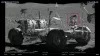
They built the rover, that little car that they ran on the moon. And Boeing said they had no documents either. They'd all been destroyed. All been destroyed.
You're looking at the rover, and you can see all the equipment on the front. It could not double over in half. All right, Frank, now you told me that the rover was not folded over when it fit into the LEM. We'll get to that later, but I want to show you this here now.
You can see here in the NASA drawings that the wheels are folded up and it is folded over in the middle. In fact, it looked something like that. Folded over and the wheels fold up. And this is three feet from here to here, so this is about two feet long.
You can see here that this is how it would have had to have fit into the section of the limb where it fit. This is the design, and this is four feet. This makes this about, oh, at least two, over two feet. This, Frank, is how it was folded up in the side of the limb.
And that's how it looked folded up. Only you dispute this. You say that it was not folded like this. You said it was folded on a 90-degree angle.
And that's going to be very important coming up. Let's talk about it. All right, now, this is NASA's concept, where the front and the back of the rover were folded over onto the chassis. What you say happened, Frank, was that the front was folded on a 90-degree angle like this, and the tires stuck out the front and the back.
It would have looked like this, with the tires sticking this way and this way, and you would have had to fit it into the side of the limb. This would have been 8 feet long. The limb section was only 5 feet long, and when I spoke to Grumman, They said they never enlarged that size at all. They would have had to have increased the size of the Saturn rocket by three feet to fit this in.
This is how it looks in the rocket ship. The limb is in this section. These sections pull apart, and this nose here, this probe, attaches to the limb here. It does a somersault in space.
So I went to Houston to photograph it because I doubted that it could fold in half and fit into the five foot section and you agreed with me, Frank. You said it folded on a 90 degree angle. All of these pieces, first of all, all these things that stick up in the air like that, the antennas and everything, have to be put on after it's been folded. Right, I'm talking about the metal, the white boxes there.
Okay. The seats fold down forward so they're flat. Right. Okay.
Well, you can see the hinges. want to talk about the stuff in the front yeah well i'm talking let's talk about the whole thing okay this stuff in the back right is this is a tool module that's set on there so that comes off they put that iron on the moon yeah yeah that comes from that other equipment remember i pointed it out okay okay all that stuff is in there all your tools and everything so that's all that's flat okay all right the seats are where your batteries are right you're sitting on the the batteries okay so the seats fold down flat okay right and now right behind or in front of each of these wheels there's a there's a hinge point right across okay so then this piece folds up this way 90 degrees right that takes the whole back end up off the ground right and then the back part just in front of the wheels folds the other way so it folds over is this back piece fold flat over the seats? No.
Okay. It just holds 90 degrees. Does the front, okay, and the front does too. Now, another thing.
The astronauts had this camera made for them specially to photograph stars. Now, had stars been photographed on the moon, the astronomy buffs here could have said, absolutely, we went to the moon because they know how to orient that kind of thing. And all the astronauts have ever said is they never saw stars even when they took pictures of the earth there were no stars in the picture and yet the earth is reflected light and the stars should have been bright like headlights of cars because there's no atmosphere sky totally black but there's no stars and even in some pictures the earth is about the size of the moon which it should have been at least four times bigger and so the people who are your critics Frank say that was a phony shot somebody should have thought of that anyway uh i asked you on the phone i said where are the photos hundreds of them should have been taken should have been in manuals books everywhere they should have been proud of them you said maybe in some scientific journals you couldn't tell me the journals that would have proven you went to the moon frank but there's no stars in any nasa photos so we can't prove it that way young set up an ultraviolet camera to provide the first astronomical observations from the moon so i said well what are you what do you got that proves we went there i got no paperwork from grumman or boeing there's nothing in the archives there's uh stars don't exist and we'll get into some other things and you said that The rooster tail of the rover when it was running along the moon's surface proved it.
With Duke acting as photographer and Young as driver, they put the rover through a full test. Man, you are really bouncing. Is he on the ground at all? He's at 10 kilometers.
He's got about two wheels on the ground. Okay, turn sharp. I have no desire to turn sharp. Here's his sharpie.
Hey, that's great. is a big rooster tail out of all four wheels and as he turns he skids the back end breaks loose just like on snow come on back john hey the deck is running then i'll tell you andy's never seen a driver like this okay when he hits the craters and starts bouncing it's when he gets his rooster tail he makes sharp turns so i checked that out and we'll see that further in the film And I found that that was the absolute proof, Frank, that was taken on Earth. And the theory is, when we get there, so you'll understand, is that Einstein's theory. And remember, the moon has gravity. The moon has gravity.
Like Earth, it's one-sixth the Earth, but it's gravity. And you can see in the NASA videotape that I'm about to show that everything looks pretty heavy. I mean, once they got that limb into gravity, it would have operated just like Earth gravity. and been subject to the same effects. So when the rover spits dust out of the back, the law is, the physics law is, that as fast as that dust or dirt, whatever it is you were spitting out of the back wheels of that rover, should have fallen to Earth at the same speed that it went up, because there's no atmosphere to stop it.
And yet what we're going to see, Frank, is that it goes up and then it hits a wall of atmosphere. And it stops and it trails off. You can see it. It should have made a perfect arc going down as fast as it went up.
But it doesn't. And you can see trails of it as it goes up, hits the atmosphere, and stops. Goes up, hits the atmosphere, and stops. That was done on Earth.
With Duke acting as photographer and Young as driver, They put the rover through a full test. Man, you are really bouncing. Is he on the ground at all? He's at 10 kilometers.
He's got about two wheels on the ground. Okay, turn sharp. Sharp. Here's his sharpie.
Hey, that's great. He's a big rooster tail out of all four wheels. All right, Frank, let's study this carefully. It's very important because what we have here is no atmosphere and one-sixth gravity.
This rooster tail should probably have gone up 60 feet in the air, and yet it only goes up maybe less than 10 feet, and it creates waves. You'll see them go up, waves. It doesn't make an arc like it should. The theory being, see that wave?
That's because it hits atmosphere and stops the sand, the dust. Those particles should have kept going because nothing should have stopped it, but it hits resistance, and you can see it go, and they don't go up very high for no gravity. So let's take a look at this again. I mean, this is a very important point.
This whole car, this whole rover problem, the side of the limb was only 5 feet high, and yet when this car was folded on a 90-degree angle, it would have been anywhere from 8 to 11 feet long, Frank. It could not have fit in there. and later we're going to see when they take the lamb in Apollo 15 out I mean the rover out of the lamb in Apollo 15 you don't actually see them doing it you obscure the photography so you can't see them take it out of the side now watch here we're gonna have those waves a body in motion tends to remain in motion unless stopped and the only thing that could stop this soil would be atmosphere and that right there those waves are where it hits the atmosphere and stops frank i want to know what nasa scientific principle says that that's wrong how on the moon could it create a wave like that the dirt should have gone all the way through in a perfect rainbow arc watch again it's very important See those waves coming back in?
Waves, lines, like on a graph, telltale signs that it's hitting a wall of thick atmosphere and the dust is being suspended in it. They should not be there. You have to explain to me how they could possibly be there in no atmosphere to say that you were on the moon and this was your definite proof, you said. You hung up on me at this point. you were exasperated and said you wouldn't talk to me anymore because i didn't believe that this was real let's take one more look at it like on a graph there's a wave the dust particles go up and get stopped this was your proof and this is my proof that it was taken on earth so there's my problem uh i'm willing to say we went to the moon frank if we can get past all the technical problems we're about to see.
If I can see some paperwork, if I can see anything that proves it. And the video we're about to see, the official NASA video, appears to be all a fraud. Warning, have a spike on it. April 11, 1970, launch day.
The crew of Apollo 13. Jim Lovell, commander and veteran of three previous missions. He had orbited the moon Christmas 1968 on Apollo 8. Fred Hayes, his first time up, lunar module pilot.
Jack Swigert, command module pilot. Three days ago, he was on the backup crew. Now he replaced Ken Mattingly. Mattingly had been dropped from the mission because he had been exposed to German missiles.
Notice the blue sky outside the window. It should be pitch black in outer space. One of the big problems was consumables. There would be enough to eat and drink But in space there are other factors Oxygen to breathe Electrical power to keep the spacecraft alive Water to cool the equipment and keep it operating To conserve the electric power and cooling water Now look at the white light coming in through this window You can't have white light without atmosphere It should be pitch black And see the blue light coming down in the lower right hand corner Coming in from that window and blue light coming in from this window.
Here are the consumables, cooling water, electric power. The LEM water gun was leaking, and we shut that off. I guess it leaked about a quart of water, I would estimate. But it took me about two days to get my feet dry.
So I noticed this tunnel coming down from the top of the ceiling of the LEM. What could it be? The next point, Frank, that we'll see in the picture is you said that this hatch right here opened toward the back this way. And you can see right here, Frank, that it opens toward the left-hand side.
I don't know why you told me it opened toward the back, except that in the Apollo 13 shot we're going to see that it opens toward the back, and I claim that the Apollo 13 video here was all a fraud. Now you can see the tunnel coming down from the ceiling about a foot. You can see the hatch door, the white silver thing in the back. One of the most important pieces of evidence that we found was this drogue and probe here.
This is the front of the command module right here. This here part is called the probe. It attaches to the limb and pulls the two together in space. This is the opening to the LEM tunnel and I measured it.
It's only 27 inches across, although NASA says it's 32 inches across. And there's metal connector boxes in there. In the end, it was only 24 inches of clearance. This is an artist's concept of what it looked like inside.
The astronaut is in the command module, and the probe and the drogue is in the LEM, and they have to go between the two. He has to take that equipment out of there. And so when I measured it, it was 27 inches across, and with the boxes inside, the drogue connector boxes, which you'll see, it only had 24 inches of clearance and 24 inches. A man in a blown-up space suit trying to get through that tunnel, he would have torn his suit.
It would have been a very tight squeeze, but you'll see in their simulator it wasn't. What you see here is the drogue. This is the part that fits into the tunnel of the LEM before they open the tunnel. This is the probe attachment that fits into it from the command module.
Pulls the two together. This is the command module, which we just showed you, And you can see here the latches attached to this metal ring around the outside. Very important. So in Washington, I videotaped it, and you can see a box inside there that connects the probe.
And it looked like it was only about 27 inches wide. So I tried to get over there and measure it, but Alan Nadell would not allow me. When I got this close, he forced the cherry picker away and said, You cannot measure that hatch. I wanted to get that hatch, and it's really important that I get the size of the width of that hatch, and we do have a few minutes to get it.
Is there any reason why I can't? The next day, Pete Conrad and Alan Bean entered the lunar module, leaving Dick Gordon in the command module. This tunnel is much too wide. The real tunnel is only 24 inches.
I measured it. And the top hatch, you can see it comes down. I reached inside in Houston here, Frank, and I got the camera in. You can see that it is attached to the left and that it's only about an inch down from the ceiling.
That inch is very important. You couldn't waste 10 inches of space, and yet in the simulator in Apollo 13, you will see that the tunnel comes down about a foot. It's not the same tunnel. and that this attaches to the left-hand side, not to the rear. Therefore, the Apollo 13 shots had to be taken in a simulator and not in the real limb.
And you can see that this hatch opens to the left. There are too many rivets and no connecting latches in this tunnel. If you want my opinion on how they handled the situation when it happened, they handled it exactly like we'd expect them to. They were about as well on top of it as anybody could be with knowing what we knew. new which isn't very much on it we actually had a third little sleep restraint which fred does then blue light in outer space the astronauts faced another problem their own exhaled breath the lithium hydroxide chemical to take carbon dioxide out of the air was not sufficient in the lunar module they would have to the hatch doors open to the rear the canisters from the the command module to fit the hoses in the lamp on the ground and adapter was fashioned from materials the crew had available in the lamp cardboard from a checklist plastic bags and tape after checkout in an environmental chamber the directions for construction were sent up to Aquarius at this point in time I think the partial pressure of carbon dioxide was reading about 15 millimeters and we constructed two of these things and put them online and I think within an hour the partial pressure I believe this is astronaut Lovell here with his hand on that funnel shape instrument coming down from the ceiling and he dives down seven feet there should have been a bell there to stop him at about three feet In a situation like that, there's only one thing you can do.
You just keep going, and you just keep thinking up where you can get more consumables. And so that's exactly what we did. On April 17th, they prepared for reentry. Let's talk about hypergolic fuel, which was used in the LEM.
Unsymmetrical dimethylhydrazine and nitrogen tetroxide came out of these side thrusters. These propelled the LEM horizontally along the surface of the moon, and yet we never see the dark red opaque smoke coming out of these rocket thrusters or the one on the bottom. We should have seen that because the smoke burns dirty. So I asked you about that, Frank, and you said?
It had hypergolic fuel, and so hypergolic fuel is opaque when it burns. It's opaque. It has smoke. There's no smoke.
No smoke in hypergolic fuel? I mean, the combustion is very thorough, okay? I mean, the two chemicals combine so well. Frank, the chemicals don't combine well.
They burn terribly dirty and opaque. If you look at it, there's a real problem with seeing it, but you don't see any except at the initial start of a blast, you know, when it fires, before the mixing gets complete. And that's what you see in here, actually. No, I'm talking about underneath there, too.
Well, it was the same ones. The same fuel was used for these as for the others. Uh-huh. So you're saying that hypergolic fuel does not create a black smoke at all.
Clear. The fuels we used, hypergolic, let's talk about it. Hypergolic is a chemical term that just says, you don't need an igniter. Right, and so the ones you used didn't create black smoke.
We can go down. Okay. Yes, sir. You were taking advantage of me there, Frank.
You knew I meant red opaque smoke. But you did say that when these rockets blasted off, the beginning smoke should have been opaque, dark, because it didn't have complete burning. And yet we do not see that in these three blast-offs, Apollo 15, 16, and 17. No black smoke at all, and it should have been there.
Heavy, thick, particulate matter. even in no atmosphere it would have been there frank armstrong michael collins edwin buzz aldrin it's 250 degrees in the sun on the moon how could this footstep have clumped the soil and stuck together without moisture the next day july 20th marked the beginning of a new era mike collins alone in the command module called columbia watched as neil armstrong and buzz Aldrin undocked the lunar module called Eagle. As the Eagle rotated slowly, Collins inspected it carefully. For now, it was time for the descent to the surface of the moon and into history. Fifty thousand feet above the moon, Eagle's descent engine ignited and began the deceleration for landing.
As they descended, Armstrong and Aldrin watched the craters and mountains of the moon passed beneath them at this point the Eagle rolled onto its back to give the landing radar surface acquisition now the crew was flying blind until the slow-pitch maneuver brought the lunar horizon to their view down to an app here they're going horizontally along the moon's surface being pushed by those top rockets. They should have had rockets on the bottom of that limb pushing the mast where the jet thruster is and as they're coming down you see no opaque smoke coming out of the rocket thrusters either the top ones or the bottom ones and we do not see a cloud of dust coming up here. It should have been a horrendous 10,000 pounds of down thrust should have covered that soil there but we don't see it we still see the pockmarks right there in the soil it should have put up a tremendous amount of smoke and and soil now look at this shadow of the limb it's exactly its own length and notice there's only a couple of white spots within the black of the shadow now here's the famous picture of the limb on the moon's surface with no crater blown beneath it at all, nothing.
The rocks and pebbles are all still there. That definitely upsets people who investigate the moon. What should have happened was this NASA photo of a tremendous dust storm. It should have obscured everything.
Now look at this shadow. The limb is exactly its own length here. And look at the internal shadow, the white spots. I want you to roll your film back after this and check the shadow out again because you're going to see some very...
Now, see that shadow? See how it changed? The white light in the middle? That could not possibly have happened within seconds.
And we're getting a picture on the TV. There it is again, the wrong shadow. Look at your original shadow. That one small step for a man should have been made on rock and not on soil that clumped.
It should have been blown away, and there should have been a crater beneath that rocket. Notice how well lit he was in that shadow. And look how the shadow of this astronaut is almost three times his length. The LEM shadow was one.
And it was time for Aldrin to join him. He's lit up like Disneyland on the dark side with no atmosphere. How come? And as we watched them plant the flag of the United States in the lunar soil, we perhaps wondered what dream dreamt today by what impractical dreamer will be tomorrow's reality watching their loping skating stride it was as though we peered through a lens that distorted time itself so they went about their tasks of exploration aliens on a distant world and strangely enough they looked as if they belong there and here's that famous photo again they're on the moon you can see that the uh the ghost in that picture has no camera he should have been totally clear and he's about 18 feet away and the camera is being taken from a down angle above the astronaut that's impossible with a camera on the chest of the man taking the picture it was now time to leave the dusty lunar plane stow the experiment samples and photographs to be returned to earth next jettison the now useless equipment clean house in the eagle and rest for the next day's liftoff and rendezvous all right i found a strange phenomenon in this take off the foreground at the lower left hand side never seems to move although they're taking off straight up they shouldn't be taking off on a horizontal line now watch that crater and down at the lower left hand corner in the light it doesn't move it doesn't change in size just the top seems to be moving and they should be taking off up to 50 000 feet straight up not on some type of horizontal now you can see how clear the lower left hand corner is up and away from it stays clear it seems to stay basically the same distance away the top just seems to be flowing into the center of this picture you can still see it absolutely is clear absolutely the same distance away down on the bottom and they should be going straight up and what is that white thing that just went across then following rendezvous procedures developed through gemini and apollo eagle drew nearer and nearer to columbia alone in columbia mike collins watched the eagles climb its flashing beacon of friendly signal for hours he had kept his vigil now his companions were returning Control thrusters firing.
Eagle and Columbia moved together for docking. The last movement of their lunar duet. Pete Conrad. Richard Gordon.
Alan Bean. Apollo 12 lifted off in the driving rain. Pete Conrad reports the yaw program is in. The next day, Pete Conrad and Alan Bean entered the lunar module, leaving Dick Gordon in the command module.
When I get down to the bottom of the ladder, I can do a surveyor. It's a seal, but that's a log, which will be the side of the crater. Now, Pete Conrad collected a preliminary geological sample. Notice the length of his shadow.
It's more than three times his length at this point. But I can walk quite well. I'll tell you, it's good. How Al Bean left Intrepid to join Conrad on the surface of the moon.
How did they get this kind of lighting on the dark side of the limb with no atmosphere? How does the sun have rays with no atmosphere and perfect seeming in each photo? Five miles above the moon, Dave Scott and Jim Irwin looked out the window of their lunar module down toward Al Worden in the command module, which had completed its separation maneuver. Beneath them, the 15,000-foot peaks of the lunar Apennine Mountains.
Soon they would fly low over those peaks on their way to a landing in a little valley in the mountains of the moon. Out their window, they could see the sinuous meanderings of the lunar canyon known as Hadley Rill as they brought their lunar module, called Sign Falcon, toward its landing and the beginning of what would be one of the most significant chapters in the history of scientific exploration. Here they're moving horizontally along the ground in very precision, slow motion. The 10,000-pound thrust rocket below them is holding them up from falling because they weigh many tons, and the top thrusters have to push them.
Those rockets, those top thrusters should have been on the bottom pushing that mass, but they're not. That's a very big question in the development of the LM. I want to see how they figured the top rockets wouldn't have tipped this over. And now they've stopped it so precision, and it's coming down.
And you can see this pudding effect of the moon's surface. And you see these light rays starting to come. But they're not dust because they don't cover anything. You can still see the pudding underneath.
It isn't covering, and it isn't coming from the rocket center, which is in the center of your picture. It's coming somehow from the front, and nothing gets covered up. And there's no corona of dust thrown out here from the rocket, and there's no fuel. As Scott stood describing the craters and mountains, we on Earth perhaps did not yet realize the scope and extent of the coming mission.
Aboard the lunar module was a small dune buggy-like car called the Lunar Roving Vehicle, or just plain rover. The astronauts would travel miles in collecting samples and placing and conducting experiments. There are no jagged peaks. There are no large boulders apparent anywhere.
The journey of Apollo 15 had begun four days earlier, July 26, 1971. The crew, Dave Scott, spacecraft commander and veteran of Gemini 8 and Apollo 9. Jim Irwin, lunar module pilot, who would explore Hadley Rill and the Apennine Front with Scott. Al Worden, command module pilot, who would remain in lunar orbit operating an extensive array of cameras and experiments and making observations.
Hello, he's with cargo and what a fantastic sight. Oh, this is really profound. I'll tell you, this is absolutely mind-boggling up here. Well, imagine that a foreign planet must be a weird...
Watch them take the rover out here. You see those wheels flop? That would have probably broken them. All the photo or video of this is fuzzy and obscured.
It's all we have of NASA trying to show this rover coming out of the side of a limb. And for sure, it was not folded on a 90-degree angle. Next, the astronauts tried out the rover. During this test drive, one failure showed up.
The rover was designed to steer through both its front and rear wheels. In use, the absence of front-wheel steering would hardly be noticed. Then they loaded the equipment they would need for their geological survey and boarded the rover for their first exploration. Roger.
They were headed toward St. George Crater, located on a mountain slope above Hadley Rill to the south of the landing site. There would be a stop to collect samples of a smaller crater called Elbow. They would also drive core tubes into the lunar soil to collect contiguous specimens from beneath the surface.
But now it was time to return to the lunar module. They're traveling, and notice this mountain on the upper right, and notice the sun is coming from the right. You may have to reverse your video a couple of times to see this, but you're going to see this exact same landscape again. and the sun will be coming from the right when you see this landscape again but they'll be going back the other direction this is their only demonstration that gravity is one-sixth and it fails miserably watch this spectacular demonstration lovely they should have thrown a ball in the air and it should have gone up 60 feet why didn't they do that I'm sitting here and I can see Mount Hadley, and the linear patterns in it are really remarkable. Then they began the physical sampling of the Apennine Front, stopping at four craters in their traverse.
Come on. Let's go to work. Guess what we just found. I think we found what we came for.
Crystal rock, huh? Yes, sir. You better believe it. 196, a special bag.
It's a gold mine. And there might be diamonds in the next one. Flexion bag, probably before you go much longer. It's coming very loose there.
Yeah, Joe, so we don't forget it. Roger, we sure don't want to lose that one. Roger, Joe. Now their day is over, and they're traveling home, but the sun is still coming from the right, and the mountains are still exactly the same as they were.
This appears to be a stage set, somewhat like a movie, a cowboy movie, where the horse is moving, and the background is different. This appears to be high noon on the moon, 250 degrees in the sun. They should have cooked and baked inside that limb. And Eastman Kodak told me that film melts at 150 degrees.
None of the film taken on the moon at this type of temperature should have survived. It should have been crisp like in an oven and curled and melted. 171 hours and 37 minutes after they had lifted off the planet Earth, Scott and Irwin would lift off its sister planet, accompanied by a musical salute they themselves would provide from a small tape recorder on board. April 16, 1972.
Apollo 16, man's fifth lunar landing, sat silently on the pad awaiting its mission. Inside the astronaut quarters, its relaxed crew ate Sunday breakfast. John Young, a veteran of three previous space flights, was commanded. Ken Mattingly, command module pilot, would conduct orbital experiments around the moon, while Charles Duke explored the lunar surface with Young.
April 22nd. Young and Duke would find themselves strapped into a small electric car called the rover, bouncing across the lunar plateau known as Descartes. Good day, Charlie. Good.
Ten clicks, Tony. I think we're just on that one. As Young and Duke rode the bucking rover to the lunar formation called Stone Mountain, NASA geologist Farouk El-Baz rode on a blackboard on Earth. There is nothing so far removed from us to be beyond our reach or so hidden that we cannot discover it.
Rene Descartes. As John Young would later remark, Apollo 16 would certainly help prove that Rene Descartes was right. Almost like a freshly plowed field that's been rained on. The subsequent maneuvers all went without a hitch.
Then the next day, April 20th, Young and Duke undocked the lunar module preparatory to landing, leaving Mattingly in the command module. The next maneuver was for Mattingly to burn the main engine of his spacecraft to put it into a circular orbit. The first step in the problem-solving technique stabilized the situation in the safest manner. Get the two spacecraft, which had separated, close enough together to dock, if necessary.
Here they are landing, and you can see the pudding effect of the soil. Now you see those strange, what I call special effects light rays. If that were really sand, it would be covering up all of that, which is beneath it. But it doesn't.
It doesn't fill in holes. It doesn't cover mounds. And it looks like light rays photographed underwater, not dust being shot away at a 10,000-pound thrust rocket engine. And you can see here, nothing gets covered up.
Nothing changes when it lands. There it is. the original plan had called for young and duke to get out and explore shortly after landing however the near abort had lasted six hours the tired astronauts would sleep april 21 mission commander john young stepped onto the descartes formation 11 58 a.m eastern standard time after unloading the rover from its storage bay in the lunar module they planted the flag It's perfect with the loom and the rover and you and the old guy. If a 165-pound man with an 80-pound backpack on the moon weighed about 40 pounds and one-sixth gravity, this proves that white men can't jump on the moon either. There we go.
Young set up an ultraviolet camera to provide the first astronomical observations from the moon. On the moon, the astronauts continued with the other experiments. Young placed a series of sensors in the soil, then fired explosive charges mapping the lunar subsurface much as geologists on earth use explosives to search for oil they continue to sample the area and activate the experiments then they returned to the rover and prepared for their first trip away from the landing site in search for geological samples their first traverse would take them about one kilometer west of the landing site. They would make two stops to collect samples and conduct experiments.
Now this is the most interesting thing, Frank. There's the rover on the top of the hill. Notice the rock in the center. It looks like an alligator with its mouth open.
And look at all the other rocks. You're going to see them again. Note the rover on the top of the hill. Young used a portable instrument to measure the local magnetic field.
He would later record the most intense magnetic field ever found on the moon far higher than scientists ever suspected there would be one more stop before they got back to the lunar module to close out this EVA with Duke acting as photographer and young as driver they put the rover through a full test got about two wheels on the ground. Okay, turn sharp. Sharp. Sharpie.
Hey, that's great. He's a big rooster tail out of all four wheels, and as he turns, he skids the back end, breaks loose just like on snow. Come on back, John. Hey, the deck is running, and he's never seen a driver like this.
When he hits the craters and starts bouncing, it's when he gets his rooster tail. He makes sharp turns. Then, it was back to their lunar base. Activate experiments and close out eva one april 22nd a lunar surface temperature in the sun should be around 135 degrees today today they were headed a little over four kilometers south to climb their rover up the side of stone mountain really going up a hill i'll tell you their first station a crater 700 feet above their lunar module and there it is again frank the same mountain the same alligator rock different time different day no rover in the background this has to be your biggest embarrassment this was a stage set somewhere in america they should have caught this but they didn't if there's ever proof that you faked all of this this frame alone to do it somewhere in the american desert it's all showbiz today men first left the protective atmosphere of earth to walk in the vacuum of the moon and we may wonder will our lives ever be the same will future generations look back from the earth from another planet from another star and say this was the beginning but those future generations frank are going to look at that moon and they're going to say why didn't they ever throw a ball in the air and make it go 60 feet six times what we could have thrown it on earth that would have proven there was no gravity and why as jules verne suggested in his epic about going to the moon didn't you put reflectors up there.
Reflectors would have been seen by observatories and astronomers from the earth till the end of time. Why didn't someone do that? So I started thinking about that and I started thinking about the space between the moon and the earth. Outer space.
And that got me to the Van Allen radiation belt. So I went to the World Atlas by Rand McNally, and this is what we found. We found that the Earth is covered with layers of atmosphere. That's the difference between the Earth and the other planets in the universe, and the atmosphere protects us.
The ozone layer is what keeps the ultraviolet rays from the sun from killing all the organisms on earth and destroying the earth entirely then there's the stratosphere it covers a certain amount of space and the mesosphere and you can see those squiggly lines that's radiation from the sun that radiation is deadly it will kill the the reason that there's no life and that scientists look at other planets and are amazed when they find life is because the radiation from the sun will kill all life, all organisms. Solar flares come up from the sun and they radiate through the entire universe and they will kill anything, including men who go into outer space. But what protects us, according to a man named James Van Allen, who discovered this layer right here, the magnetosphere, is this layer. It's about 560 miles up and it stops that radiation from coming into the earth but if you go beyond that layer you get into a soup of radiation that will kill and if you're running around on the moon or in a spaceship not protected by lead you'll most likely die and in the years of 1969 to 1972 that was some of the biggest solar flares in the history of solar flares that we were covering according to Rene Ralph Rene's book NASA mooned America he did some extensive research on that and found that solar flares at that time were enough to fry the astronauts so I started wondering why the astronauts wives would allow them to go to the moon unprotected chromosome damage sperm damage cell damage would definitely be a problem when they got back and that sent me to the US Patent Office where I found this drawing this was a 1969 patent by a man who had studied the problem extensively now that was the year we went to the moon and hit in his working paper he analyzed the problem of radiation in outer space and came to the conclusion we'd need something like this lead contraption to protect men not only there but around the spaceship or they would be fried by radiation and most likely killed definitely periods of vomiting but and that's never talked about by NASA and when the spaceship comes back the lunar module comes back into Earth we never hear about them testing it for radiation contamination or any of the tests on these men for radiation contamination so the question is why would they consider sending a man to the moon or to Mars now without some discussion about the protection you would need to go beyond the Van Allen radiation belt billion years ago life first appeared in the scenes of an infant earth over 400 million years ago living creatures left the protective waters to begin life on land.
About two million years ago, the earliest man walked upright on the land. 204 years ago, James Watt made improvements to the steam engine and began the age of technology, forever altering the course of man. 66 years ago, two men named Wright again changed the pattern of life on this planet I have a few notes here I want to add in the final analysis it appears to me that the major media and the scientific community at the time of the Apollo flights abrogated their duty to ask critical questions I suspect that the politically charged atmosphere of those times that is to beat the Russians to the moon by the end of the 60s caused NASA problems. It is possible that NASA hadn't solved those technical problems by the end of 1969, but they couldn't admit it or their funding would be cut.
All those billions would dry up. In the end, did they have to fake it? So I'm asking you to go to your congressman, go to your senator, take this tape and show it to them and demand a public discussion on this issue. And finally, I want to thank Frank Hughes, who gave freely of his time, and curator Alan Nadell, who did not.
Well, I've been glad to help you and to give you an hour of my time and an hour of free staff time to use all of our equipment, and we really wish you the best of luck with your project.
