Now playing: All videos by ISKCON Gurukula Schools









Faith and Fear -- Child Abuse in ISKCONs Hare Krishan Gurukul Schools 1977-2000

- Hare Krishna Youth & Gurukul
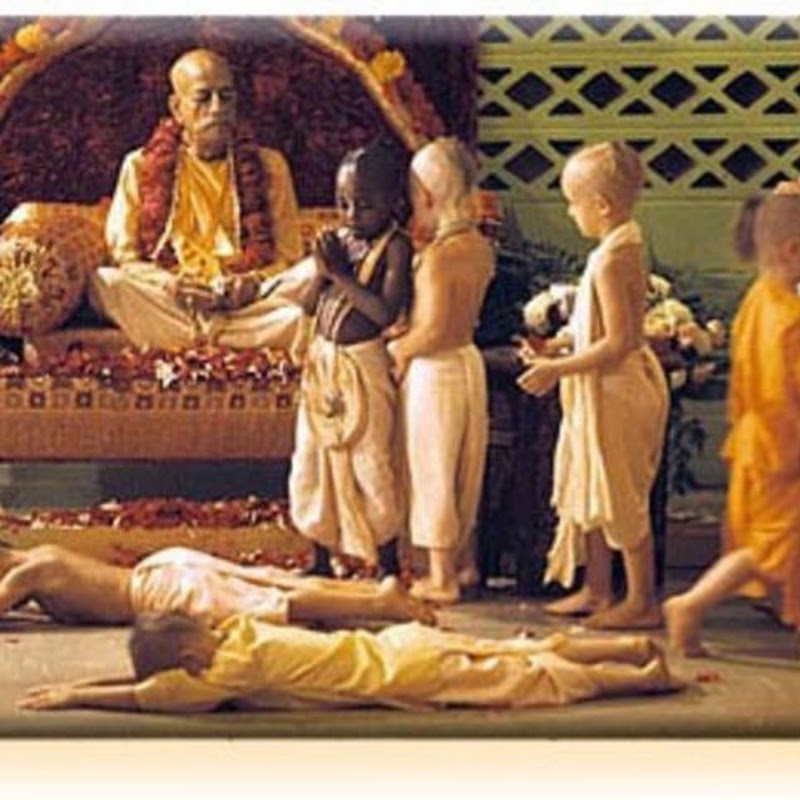
- A factual documentary on the massive child abuse in the ISKCON Hare Krishna children's gurukul schools between 1977 and 2000. Produced by KCTS Seattle and broadcast on national television in the USA. Five victims of ISKCON child abuse tell there stories intermingled with historical footage from ISKCON's gurukuls and statements by scholars and experts on the field of child abuse. This documentary was produced at the time when around 125 ISKCON gurukul students were suing ISKCON through the attorney Windle Turley. This documentary is not anti-ISKCON but presents a very fair and reasonable view of the situation faced by children in ISKCON's gurukuls.
Some of the people in this video blame Srila Prabhupada for the massive child abuse perpetrated on the children of Krishna by his so-called disciples. It is not Srila Prabhupada or his teachings that caused this abuse, the actual cause is the rejection of the teachings of Srila Prabhupada by his so-called followers. In every way ISKCON has turned the teachings of Srila Prabhupada upside down. The treatment of children in ISKCON gurukuls is one of the most tragic examples of this.Most of us, if we know anything at all about the Hare Krishnas, we know two things. First, there's that chant of theirs. Are you flying Conan M or United today? Excuse me, ma'am.
I had to ask you this. Excuse me, sir. And then, of course, there's that stuff at the airport. We're monks.
You've heard of monks? Yeah. The ones with funny haircuts? Yeah.
And this book is talking about a methodology, a practice of lifestyle that can help you to recognize the one God and to help you become more conscious of Him in your daily life. So this book is discussing how we can actually implement practices in our daily life that help us become more and more conscious. You may already be doing some of them, but this may give you a few more ideas. Honestly, I can't take anything.
I've got so much stuff to read. I give you something which is so small, you won't even feel it. Excuse me, sir. Keep smiling.
Hey, nice suit. Religious faith, typically so very personal for Hare Krishnas, devotion is inescapably public. If you need a gauge, it costs us five to print. People try and get five, ten, a thousand.
Can you give even a couple? Five dollars. Sure. Okay, there you go.
Hey, that's very kind of you. If you sort through just about any religion, you'll find benefits, you'll find burdens. For Krishnas, the benefit of eternal salvation can come at an extraordinary cost. It's not just that they stand out in a crowd.
Their ancient faith carries some serious recent baggage. Baggage that raises shocking allegations about children and abuse. baggage that could soon trigger an historic dismantling of an established religion across North America. In 1988, a documentary filmmaker headed into the hills outside Wheeling, West Virginia. This is the Hare Krishna community of New Vrindavan.
Nestled on 200 acres deep in the wooded hills, it is a community devoted to worship. This is the hill that we used to go play on. and there was always cows on that hill, so we would go and play with the cows up here. There was a swing set right there. So there were a lot of happy times for you here?
This was, like, my happiest times. Her name is Lakshmi, short for Lakshmana. She was named not by her parents, but by their guru, in honor of one of the many wives of the Hindu god Krishna. they're all songs about all the different demons that would come and kill krishna come and try to kill krishna and krishna would kill all the demons and protect his friend and you still remember them i still sing them lakshmi now in her mid-20s was five years old in 1979 the year she first started school at a rustic farm near the hari krishna's golden palace in West Virginia. Early on she loved to draw.
Like I really believed that Krishna was real and I really believed all these stories and so even though I don't believe them now they they bring back a feeling to me from when I was really young from when I was really innocent before things got really bad. See like a cow seeing a cow like cows were our best friends. Cows were sacred and like they were the mother, and I still feel that when I see cows. There is something beautiful in it.
A family in Vrindavan is bound together by the same love, but with a different focus. So we try to keep everything in this community centered around the worship of God. Our whole lifestyle means, Krishna consciousness means consciousness of God. Chris Carlson is Lakshmi's dad.
He was a talented artist who struggled to raise his young daughter the right way. Somehow or other I have to educate her to give her the chance to understand that there's more to life than simply eating, sleeping, mating, and defending. Lakshmi also had a stepmom. Her Sanskrit name was Sumati.
My relationship with Lakshmana is to try to help her understand that she is a servant of God and that by chanting Hare Krishna and by serving the deities in the temple and serving her spiritual master, these are the things that will really make her happy. Before stepmom Sumati, there was her birth mom, Anna Keys. And I'd spend many, many hours with her drawing and reading and taking her to the park. And she was the apple of my eye.
I didn't feel a need to have any more children. She was just a perfect child, you know, and we just loved each other so much. We were inseparable. But by the time Lakshmi was seven, mother and daughter were separated.
And therein lies our tale, a tale of innocence and betrayal, a tale shared by dozens, perhaps hundreds, of Krishna children whose memories of their childhood were anything but happy. It's hard for me to go back to that time. right now like because i was there for so long and i was in so much pain for so long that's hard for me to open that door back up and go back into it but um there was never a moment in my childhood when i wasn't terrified it all started in the 60s love in the streets a war in vietnam george harrison mixing rock and roll with the mantra from krishna they thought their parents lives for the most part were unsatisfactory to them some of them thought their parents lives were actually failures they wanted to find a different way of life so you know we had many people who joined communes of one sort or another people who found ways to kind of opt out of the society whether that was drug-induced, dropping out of the society or not.
Others began to look for real alternatives to that society, and Krishna consciousness became one such alternative, at least for some. But the Krishnas were very different, in many ways the antithesis of the 60s. No sex, no drugs, no rock and roll. When I first went to a Hare Krishna temple, and they told me about these four principles, No meat, no intoxication, no gambling, no illicit sex.
I looked the guy right in the eye, and I said, what do you do? I was going through some pretty dramatic, traumatic changes in my life. I just separated from my first wife. I was with this girlfriend.
It was chaotic. Some couple had come up from San Francisco, and they introduced this chanting of Hare Krishna you know, that they had, you know, seen in Haight-Ashbury or wherever. So this was like, whoa, this sounds like really far out. You know, that would be a really good thing to join.
Hippie life was getting pretty repulsive. They had been burnt out in the counterculture. They were just, you know, too much drugs, too much sex, too much out of control, wanting something stable in their lives and having some meaning in their lives. I knew I had been seeking a guru for a while. so Krishna sent me there and I was there and after meeting some of the initiates I knew that that the Swami really had to be into something this was great this was it was tough at first I mean you were just for first six months you're a little bit like you know in a day their parents didn't know what to think he was shocked when I became a hippie so to him it was just another thing I was into some weird thing well i guess they were all very worried about me they were very worried but they knew i had good intentions anna keys raised a catholic had drifted away from her faith as a teenager that's what led me to the hari krishnas later on you see because of my search for god i needed him back in my life so i was willing to do anything and everything in order to get back on track cynthia greenwood also raised catholic was impressed by those who joined there were doctors there were lawyers there were mostly university people attending university at the time and it was just so charismatic and it was just so some somehow caught you and held you and then it was too late once you got through the you know the shock and the mental agitation Then I was quite blissful.
When kids ditch their religious upbringing, shave their heads, wrap themselves in robes, and give up most of their worldly possessions and passions, you've got to figure that someone with a whole lot of appeal is pulling them in. That someone was a man from India named Prabhupada. We're talking about somebody who really is an extraordinary person. Sociologists talk about people with charisma.
You know, Prabhupada was certainly one of those people with charisma. If anyone knows a lot about Prabhupada, it's Professor Burke Rochford of Middlebury College. Since the early 1970s, when Rochford was a graduate student at UCLA, he's been intrigued by the Hare Krishnas and by the amazing life history of A.C. Bhaktivedanta Swami Prabhupada.
He was educated in English schools. He was a manager in a chemical firm, a man of great business sense and wisdom. And he was devoutly religious, a high caste Hindu who spent much of his life in India studying under a guru. That guru was a member of a small charismatic Hindu denomination known as Hare Krishna.
Hare Krishna is a modern manifestation of a very ancient Vaishnava Hindu tradition. Anuta Madhav is a member of and spokesman for the Governing Commission of Modern Day Krishnas. The Vaishnava tradition is based on the Sanskrit writings of India that go back at least 5,000 years. It's one of the dominant denominations, if you will, in India.
500 years ago, there was a great saint named Chaitanya who revitalized the tradition with a particular emphasis on the Hare Krishna chanting. Chaitanya dismissed most Hindu denominations as stuffy and elitist. He figured everyone, regardless of caste, should feel free to celebrate the love of God, often pictured as blue-skinned Krishna, by enthusiastically dancing, singing, and chanting. He was a revolutionary.
He was disliked by the establishment at the time because he was offering this whole process to people that were disqualified previously because they weren't Brahmin, they weren't born in the right family, didn't have the right education. In 1896, Prabhupada himself was born a Brahmin, yet he too eventually embraced the Hare Krishna's populist message very few took to this this practice as strictly as he did but Prabhupada's enthusiasm wasn't shared by his wife and children he had great difficulties in his marriage for many many years it was a not really a marriage of love clinical psychologist dr. Arnold Weiss of Los Angeles spent many years studying Prabhupada and his North American devotees at the age of 50 he became a sannyasi which is the renounced order of life basically monkhood after you raise a family and provide economically physically and socially for the family and for the children you then at that point leave that life and go as a missionary but Prabhupada was reportedly stunned when his guru gave him an assignment leave India he was told and spread the word of Hare Krishna throughout the Judeo-Christian stronghold of North America.
He knew nothing about the West. When he was sent to the West, he told his spiritual master, how can I go? I know nothing about the culture. Coming to America really without sponsorship, at the age of 69 years old, with very, very little money in his pocket, finds himself on the Lower East Side of New York in Tompkins Square Park, where he just went each day, sat under a tree in Tompkins Square Park, and chanted.
That's it. That's how it started. In 1966, a year after arriving, Prabhupada incorporated his religion using the rather optimistic title the International Society for Krishna Consciousness, known commonly these days as the acronym ISKCON. He begins attracting some of this musician bohemian crowd.
They gathered in a cramped storefront, an old gift shop in New York's Bowery District. Some small number of that crowd that are attracted to him, a few of them take initiation from him in New York. So he has a base then in New York. One of Prabhupada's earliest followers went to San Francisco, where he was organizing rock and roll shows.
He wrote to Prabhupada, asking him to come out west. It's there where all this really takes off. The summer of love, Haight-Ashbury, a groovy-looking old man, bald, barefoot, preaching about Godhead and enlightenment, had settled smack in the middle of thousands of potential converts. Here's this Indian guru sitting there who's talking about these things that they really didn't really understand on the one hand, they couldn't understand his accent on the other hand, but they knew somehow that this man was bringing them a kind of spiritual knowledge that they ought to know about, and it was just far out.
My mission is to preach the philosophy of Lord Chaitanya chanting Hare Krishna, Hare Krishna, Krishna Krishna, Hare Hare, Hare Rama, Hare Rama, Rama Rama, Hare Hare. Within a year and a half, he had 200 converts. Most were young and with nowhere else to live, moved in to the Hare Krishna temple. That means that they now, that Prabhupāda begins to ask them that they live according to certain principles, that they not eat meat, that they not intake intoxication, that they not be involved in illicit sex, that they not gamble, that they begin chanting rounds.
If you're not a Hare Kṛṣṇa, it's still likely you've heard the Hare Kṛṣṇa chant. Hare refers to Rādhā or the feminine aspect of God, and Kṛṣṇa is the name of God that means the all-attractive. So when we chant this prayer, Hare Krishna, that people see us chanting often, this is actually, it's a meditation or prayer that's asking God, My dear Lord, O energy of the Lord, please engage me in your service. For devout Christians, the ultimate goal is eternal life in heaven.
For devout Hindus, including the Hare Krishnas, the ultimate goal is to escape eternal reincarnation. If one is a lover of God, whatever their religious faith or practice, if they develop love for God, they go to the kingdom of God. And if we have other desires, then God allows us to have another body. It's called reincarnation or karma.
We get another body, material form, to allow us to fulfill our desires. Man proposes and God disposes. By the mid-1970s, devotees were having children. Inevitably, those children needed teachers and classrooms.
Boarding schools, a familiar choice for offspring of wealthy Americans, were also favored by Prabhupada. That's how he had been schooled in India. The elite had their children go to overnight schools where they could sleep and be fed and taken care of. And he brought that idea to this country where he felt the same thing could be done.
Prabhupada often said, and others often repeat, that your own spiritual advancement is enhanced by being in an environment with other devotees. In fact, it's true. The schools were called Garukulas. This one was in Los Angeles.
In most parochial schools of any denomination, religion plays a big part in the lesson plan. Hare Krishna Garukulas were no exception. Who was Krishna exactly? I know.
All right, tell me that. He's a great person. Now we have got him. All right.
Who was Krishna? He's God. He lived 5,000 years ago on this planet. Why did he come here?
Why did God come here? To save all, to kill the demons and save his devotees. Prabhupada openly encouraged parents to send their children away. He wanted every boy and girl to live full-time in a curricula once they turned five years old.
As soon as I was almost going to turn five, they were like, oh my God, we have to find a school for her. So the leaders had told us that it was like, you know, sending your child to public school is just as bad as sending her to the slaughterhouse. You may as well just slaughter your child right now. I just felt it was the right thing to do.
I felt I loved this person so much, I wanted to see her get the best. And I felt that was the best thing to do. They drove all around, like Canada and the U.S., looking for the best school for me. And everybody kept telling them, oh, New Vrindavan's really good.
So they brought me there, and they dropped me off and went back to Toronto. At New Vrindavan in West Virginia, Loxme learned almost immediately what Garukala life had in store. Everything comfortable or pleasurable was forbidden. like everything comfortable like that's why we slept on sleeping bags like on a hard floor we didn't have socks a lot of the time we didn't have like those were just comforts that were material and they didn't want us to identify with anything material all devotees including young schoolchildren were expected to awaken each morning in the dark several hours before sunrise rise most of the time I would slink down into my sleeping bag and pull the covers up over my head and then they would in order to get me out they would take it from the bottom and hold it vertically and bash me out onto the ground and then drag me across the floor and fling me into the cold shower for the next three hours starting around 4 a.m. everyone in the temple chanted prayed and listened to sermons it was sometimes cold and stomachs were always empty there's nothing good about waking up 3 2 30 in the morning and having to pray for hours everybody had their weird way of chanting in the adults like some people would be you know quietly doing it others would be like loudly screaming that the chance and would be up against the wall banging their head And I remember you get to this phase where you're sitting down, and you're hungry, you're tired, and you're fed up, and you have to chant these freaking mantras.
That's what I remember feeling. And you go into this daze. Then you go home, clean the ashram, and then we got breakfast, which by then, you know, we're starving, starving. And then if we had done anything bad, the whole program, like anything within that four-hour period or whatever, from the time we woke up then we didn't get breakfast so you know which was often often in the classroom lessons in reading writing and arithmetic usually with a krishna twist the world outside the hari krishnas was demonic that's the way we were told i mean and they especially like to use the karmi the meat eaters that anybody who didn't believe in the hari Krishna's was a car me and chances were good that they were a meat-eater and chances were that if you somehow got into their midst they wouldn't really have too much of a hesitation eating you either the one movie that we used to get to watch that had car me's in it which were non devotee demon people was the movie the day after and we watched it a lot that's the movie where it's middle america has just experienced a nuclear attack yeah bombs yeah and that was the movie they let you see yeah that was the only movie that we watched that had non harikrishna people in it it was like see look at these people they're talking about all this trivial stuff and the nuclear bomb can come at any time and kill you are you getting an education i knew sanskrit well i could uh yeah I could write, and I could read.
Did you know that men had walked on the moon? I had heard that, but we were taught that it was a lie. Did you know that the Earth was round? No, they didn't really teach that either.
All of the social sciences were all, you know, the creation of Krishna. Everything was taken back to, like, Vedic kind of mythology. They didn't believe in teaching, you know, geology. The mountains are created by God.
The Garukulas had rules, plenty of rules. Break one, and your teacher acted swiftly. Everything that you could do was wrong. Like, if you didn't do everything perfectly, and you didn't...
I mean, it was like, this is the routine, and you do it exactly like this, otherwise you're bad, it's wrong. I remember urinating in my sleeping bag, and having my face pushed into it, and the stinging of my urine in my eyes, and the smell of it. If you wood-soil your underwear, and they've caught you, you know, before you sort of hid it in the laundry, it would be, it would be worn on your head, so you would not only, you know, learn yourself through humiliation, but other people would learn to wipe themselves properly. She always found, like, really sadistic little punishments for them, like, oh, you stole the cookie?
Okay, you have to sit down with this huge bowl of sugar and eat the whole thing, otherwise, you know, like, just weird stuff, you know, making kids eat until they were puking and stuff. And then we'd be let into the room to be beaten with a stick. And then they would ask, like, Do you remember all the things that you've done? And you would answer in the affirmative that you do, and you'd be let out.
Having to eat things off the floor if they spilled. If I spilled a glass of milk, I'd have to get up on all fours and drink off the floor. There was a few sellers, but one of them was in the Seattle Temple. It was the scariest one underneath the temple building. she locked me in this basement that was just the earth exposed like no walls like she locked me down the trapdoor and it was really terrifying girls learned early on that they faced a different future than boys women have not proven themselves very capable of managing things you know day-to-day affairs and money so as far as management of the temple and planning the preaching efforts and guiding our society worldwide the women that don't do those things so well but they're very expert in other areas and especially having babies in the vedic literature it's very clearly stated this is the fulfillment for women i mean you're told constantly that you have a much smaller brain that you're not as intelligent that your main purpose is to serve men when you ask oh why can't the woman do this or why can't because that was your karma you came as a woman that's a terrible karma to come as a woman women were basically just these besides being lesser of intelligence and class and whatever else they were temptresses we would then be punished for appearing alluring or even if we were just you know doing our own thing and dancing because we were the we were the ones respond as women it was responsible for men's reactions to us so from the age of eight or nine years old all this time that i'm getting molested it's my karma it's my fault if life in north american curriculas seemed brutal well ben Ben Bresick may have had it even worse.
Now living in Florida, Ben treasures time alone with his son, the kind of parent-child contact he never knew himself growing up. Oh, beautiful. Yeah, right? Lick it out a little bit.
I never remember living with my mother. My mother sent me to school in 72, I was born in 69, and that was the last time I lived with my mother in my entire life. Like many Hare Krishna boys, Ben was shipped off to a boarding school in India. The running water was gravity-fed from the roof.
It was completely bacteria-filled. We had dysentery. We didn't have flushable toilets. The living conditions were extreme, that's to put it bluntly.
We didn't have any glass in our holes, there was bars, it was a prison. is like going back to like middle-aged europe prabhupada said when we were sent to india we should learn to be happy begging for our food on the street nirmal hickey now also living in florida shared many of ben bresic's childhood traumas well i've cried i've cried more than i would ever want to know i've cried like a lot a lot years i've cried spent crying they were building a 10 million dollar temple out of granite right there 100 feet from where we lived not not not like somewhere else right there and there was a couple hundred students there that didn't have enough food medical care they were giving us shots for malaria and stuff with used needles i mean i had a needle break inside my arm there's no excuse for that every day we'd have to recite the ten offenses and before we ate every time we'd eat we'd have to recite in their the language that they use and in english this prayer that's about our food my dear lord this material body is a lump of ignorance the senses are networks of past leading to death somehow or other i have fallen into this ocean of material sense enjoyment of all the senses the tongue is the most voracious and difficult to control but you have given us this food to help us overcome the tongue so now let us take this food and in so doing glorify your lordships they just didn't care about us children they didn't care they were more interested in building temples and propagating or trying to build their empire big to attract followers yet again former students blame their teachers but in India much of the alleged abuse was sexual it was the teachers it wasn't anybody else that one of the teachers in India was so flaming I mean he dressed in dresses he wore dresses he was it was obvious I mean and then there was these older Indian kids that were there and they were like bringing kids in their room at all hours of the night you know with the door open i was anally molested i i gave oral sex to men um any type of any type of possible one guy stuck his foot in my anus i mean one teacher i mean i'm just telling you that any level of sexuality can be i was raped in my sleep while i was sick by men i mean you know had no bigger people than me i was just a kid i could not even move there's no chance of fighting or whatever i just took it as it may ben knew it was painful but he didn't know he was being victimized he was isolated from parents from law enforcement from western culture as he grew older he tried to complain and they said that i was a habitual liar and that i was a demon trying to overthrow their movement at the age of 10 they said that I was just a bad kid and in reality I was a kid that was dying normal had been suffering for years when he was six he spent three lonely months in a hospital after falling into a vat of boiling milk at this Krishna boarding school in France no follow-up care never brought to the doctor to look at the burns again after that deeply depressed normal considered suicide. I went on the roof and I was like standing up there on the rail like putting one foot off the edge like you know sort of waiting for somebody to come up and like talk me down hope I guess subconsciously anyway nobody none of the teachers came up there I told them I was going to kill myself and they just sort of like go ahead.
It only served to make Nirmal angrier yet by the mid-1980s, the little boys who had been such easy targets were growing up. The kids that they had been used to abusing were getting big. That was not easy. It was threat.
I mean, a couple of us were contemplating, you know, revenge. And I was just a child and I had no, there was no reason why I had to suffer through that. I came from a decent family in this country. There was no reason why i had to be subjected to those tortures i was not born in india i didn't have to go through that if children in garugulas were suffering where were their parents neither my mother or father actually took an interest in what was happening in the group i didn't ever see them in there i never ever saw them having any kind of like altercation with the teachers or asserting their right as a parents maybe they didn't know because they weren't involved in our lives i mean they were completely brainwashed meditating and praying to krishna that's what's the hardest thing and then it was really messed up is that your parents are so into this cult that they don't even see what's going on with their children i remember walking down the road with my friends which you know we walked everywhere those were some moments where we could talk a little bit sometimes and I I used to say to my friends like you ever think that maybe like all of our parents just got together and like tried to create this experiment to see what it would be like to raise kids like this in truth many parents were simply immersed in the strict requirements and routines of their faith after hours of prayer chanting and chores most devotees were expected to head out into public for something called Sankratan, a daily duty of proselytizing and fundraising.
They had teams of devotees that would go out every single day and make maybe three to four or five hundred dollars a day. Some devotees worked crowds at big city airports. Others endured grueling weeks of travel from small town to small town. I remember being in a van and And have, you know, sleeping in the van and then having to go and take a shower in a gas station.
You know, like just with a bucket of water and, you know, something with a drain. For those who were the renunciates, who were the leaders, distributing Prabhupada's books and this missionary activity was the central activity. That was the activity of the movement at that particular time. The leaders wanted to segregate the children from the parents so that the parents could work full time.
And so suddenly an institution that started with the purpose of educating children suddenly was there primarily because it provided the ability of a movement to give child care to children that weren't entirely valued by the leadership of the institution. And it just got worse and worse and worse, and there was nowhere to go. My parents couldn't save me. Nobody could.
It was just like I was here. I was in hell, and I just had to accept it. For some Krishnas, breaking the bond between parent and child was more than they could bear. Cynthia Greenwood is Maya Charnell's mother.
And I saw her and I talked to her once in an ashram situation where the kids were talking about the flying dates, which were the big cockroaches. But other than that, that I saw her only from a distance. And I remember her being so small and she had a shaved head. she was so she was so small and we got a phone call and it was the teacher saying that she had been in the hospital for a week because they lanced a boil on her leg and her leg had gotten the size three three times bigger than it actually was we didn't know no one told us you know and here this poor little girl is in the hospital and we don't even know about it because they didn't even bother calling us and did that not ring a bell to you to say my gosh what are we doing with this why you know who are these people with my daughter uh yeah not at that point no obviously then the bell didn't ring because in fact gurukula teachers were instructed to keep parents and children apart the leadership even even prahupada himself thought that the ropes of affection between the parent and the child were a detriment to their ability to kind of develop within spiritual life any relationship here is false there's no reality to any relationship a parent child bond is false it means nothing so consequently very often parents were not only not encouraged but often very actively discouraged from taking an active role with their children at least during that period that they were in the guru my mother was not allowed to hug me to kiss me to hold me when they came to the hospital i didn't know who they were like they were smiling at me and i'm like who are those people looking at me and then i was like oh my god that's my parents my mom got pulled aside and i got pulled aside i was told that i should know better that i had to teach my mother to learn how to be detached it's exactly the word that he used detached you have to teach your mother detachment affection means nothing you're better off not having love for your child detaching so right off the bat you say you love a child that means you give them affection you prepare them for school you make sure they're not sick when they say they love their children they say i'm preparing this child to surrender to give up their life to their guru have no material possessions for their entire life to have no ambition so you're talking about a whole different thing right off the bat if parents couldn't or wouldn't intervene what about the teachers an ashram teacher had 15 or 20 children that they were fully responsible for you know fully responsible for you know with young children that means wash cooking maintaining young children on a daily basis and i think that But many of them, as one might expect, found that extraordinarily difficult to accomplish.
They weren't cut out to be, you know, teaching children, and a lot of them just walked off the street and they were hippies, or they were just, they needed a place to crash, they needed a place to stay, and they're not good at Sankirtan, they're not good at cooking. Well, let's make them a teacher. It was something that was seen as very low-status work. The real business of the movement was distributing these books.
You had not been able to accomplish the real business of the movement, and so you found yourself in a situation of tending children in an ashram. Sadly, word got out among predatory men in the dark world of pedophilia. The children in Hare Krishna Garukulas were an easy mark. There were diabolical people who physically harmed people, young children, young boys, young girls, who sexually abused young boys, particularly, and also young girls.
But most teachers were not pedophiles. Inexperienced, underappreciated, and overworked, many simply lashed out in frustration and exhaustion. In much of this physical abuse, at least, I think it was just circumstance that set people off who really should have never been there. It's amazing how people my age would want to do that to children, like people my age you know and seemingly you know in the hippie movement the you know love and peace type of uh era would want to you know create so much terrible horrible acts to children i mean it's it's amazing that the hari krishnas should face allegations of sex abuse is a paradox illicit sex is among the religion's gravest sins and any kind of sex one of its biggest preoccupations.
You know, there was a constant kind of concern about this question of sexuality. And I think that in some cases they saw the power of it, and I think in ways were overly repressive of their own children because they themselves were so fearful of their own sexuality and their own urges in that particular way. I mean, we didn't talk to girls, period. I was scared to look at it.
The teacher would stand back of the whenever we were around in the same place as the girls He would stand between our line of sight and if we've tried to look at a girl He'd be like glaring at us with all the anger that he can muster They were so against sex that I think they became like hyper aware of sex Because I remember this one lecture and they would compare. Okay. Why would you want to kiss somebody? You are after all a skin bag imagine if you were to fill a plastic bag with pus and stool and urine and then would you kiss that bag that's what kissing another person is I ended up getting together with girls in the boarding school when I was probably seven and it was just I think other girls would usually always start it with me and later I've realized that it's probably because they were getting molested why they were even like thinking so sexually but we would do sexual things together and it was that was when we hugged each other and but it was very like we knew that it was sinful and bad and but it was just pretty much all we had one of the aspects of this community is that the men and women are segregated as much as possible attitudes about sex began with attitudes about marriage for men celibacy was the highest calling marriage was a sign of spiritual weakness the leadership themselves were celibate male monks and they were they were preaching against marriage they were preaching against family so that these these gurukulas themselves were kind of if you will for many of the renunciates a kind of product of people spiritually falling down that they couldn't control themselves they couldn't maintain celibacy so they they took another route they got married they had children Chris Carlson is no longer a Hare Krishna he says his marriage to Lakshmi stepmom in the early 1980s was a sham what does that mean you were separate you were living separate what does that mean we didn't live together she lived somewhere not that somewhere so why call it husband one people were placed together that a man and a woman wanted to get married and the authorities sought to kind of make a match now how was that match made well often in a very haphazard kind of way I didn't even want to get married at the time and when Chris told me he wanted a child I told him I'm too young on a keys was Chris Carlson's first wife and Lakshmi's mom now in the Hare Krishna movement you can only have sex when you want to have a child right and then you chant on your beads for about maybe 12 14 hours before you can even think about about that right so but lucky me i got pregnant every time right so i had three children i tried four times in 12 years so this is nothing spontaneous this is nothing based upon you know some kind of principle of enjoyment this is based on a principle of that a very serious one of that you you are trying to bring a child into this world and that that is your one and only purpose if the rules about sex were sometimes confusing it may explain in part why the early whispers about abuse were overlooked it's nothing to them sexual abuse means nothing it's having sex with a woman is as bad as having sex with a child it's all the same to them sex is sex that's what prabhupada said no matter what you do it's sinful so it seems like that's one of the reasons why there's so much abuse in child molestation because it's all wrong i mean no matter what you do it's wrong so then you lose the degrees of morality back at the west virginia temple chris carlson finally began hearing rumors about child abuse and i was like Oh, my God.
I've got to get out of here. And so that's when we were like, yeah, we're going to Minneapolis. Yeah, you bet. We're going to go.
We'll start a temple in the North Pole if we, you know, we just wanted to exit. I remember, like, pretty much forcing my dad to take me with him. This is Lakshmi at 12 years old. She is horrified that classmates her same age have been forced to marry men twice their age. rather daringly she shares hints of rebellion with a visiting filmmaker we go to someone practically every night where weekends where do you go every night like just places in town here within the community right here where just saying like to the movies and stuff like that and looking back in retrospect now that was my saving grace because I listened to my daughter she saw things.
Kids see everything. And she knew what was going on. And she kept, you know, lend me your ears, Dad. I got something to say.
And I'd be like, no way, no way. But then it started to make sense. One day, Lakshmi left the Gurukula for good. Suddenly, she found herself surrounded by non-devotees in public school.
It was terrifying. It was, I mean, we had been taught that everybody who wasn't a Hare Krishna was demons. And I really believed that still, even though I felt like, well, it's demons like everywhere. So, but I was really scared of the other kids.
But Lakshmi, deeply scarred, quickly drifted. She turned to alcohol, crack cocaine, even heroin, and lived on the streets of Minneapolis. You know, we would just wake up in the morning or in the afternoon and panhandle till we had enough money to buy alcohol and I was really good at panhandling and so I'd panhandle most of the money and get alcohol and acid and whatever we could and and just get as inebriated as we could so we didn't have to think or feel anything. The abuse of Hare Krishna children was at its worst in the late 70s and throughout the 1980s.
Those dates are important because much of it happened after 1977 the year Prabhupada died it's like the loss of an ancient king in a kingdom in the old days you lose the king you lose direction his authority holds everyone together his authority keeps everyone from bickering his authority prevents the differences between people from manifesting when When he's gone, differences manifest. Prabhupada dies in 1977. Eleven successor gurus followed. There's a real question even to this day as to whether they were appointed by Prabhupada or whether they appointed themselves, if you will, as gurus.
But what we do know is that of those eleven, the majority of them have fallen down in one way or another. There's one of them that ended up marrying a 12-year-old girl. He was one of the gurus. There's another one that was making porn movies before he even joined, and he was into pedophilia.
Everybody knew about that. They had everything they needed. They had nice food, they had nice living conditions, and they would almost flaunt it. Okay, they were building the temples out in New Vrindavan that were leafed with gold.
We were building these huge projects in Mayapur, gigantic temples, and that's where a lot of money was funneled through. Some gurus, including the leader of the West Virginia temple, were imprisoned amid a wave of drug dealing, extortion, and contract killings. Book distribution went down. The gurukulas closed in the mid-1980s.
Suddenly the temple president taps you on the shoulder and says, Prabhu, you're going have to move outside of the temple because we can't support you anymore okay we don't have the funds to do this by 1990 it was increasingly common for people to dismiss the hari krishnas as a misguided cult it is a cult you know uh there's a lot of brainwashing going on and uh you know i believe that um anything that's got mind control over people is a cult Cult is a very pejorative term that is directed oftentimes without much information. We tend to point to people who are different than us as being so far different that they're not as good as we are. In India, Christianity might be considered a cult, but Hinduism is considered to be a majority religion. In this country, Hinduism may be a cult and Christianity a majority religion.
I think one thing that a lot of people don't understand is that not too much different from the Catholic tradition we have monastic orders or people that live in a renounced or like a monk and then we have the majority of our members are members of a congregation that live and work nine to five jobs just as most people do and go to temple on a weekly basis or some people once a year for the most important holidays Krishna children, though, are exposed to intense rituals, stark imagery, and violent parables of terrors like flesh-ripping deities. Catholic children brought up in Catholic school are taught that they will burn in eternal hell, that the devil will be torturing them. They learn this at a very, very early age. They become frightened.
Is that any different? I don't think so. As scandals spread, thousands of Krishna faithful abandoned the movement, but it never faded away. Recent immigrants from India and East Asia now make up almost 50% of the North American membership.
While Krishnas still chant in public and solicit small donations from strangers, they also run a chain of profitable vegetarian restaurants. Krishna chic is still occasionally part of pop culture, as when Madonna appeared on MTV. Even Madison Avenue uses the Krishna image to sell snack food. The Krishnas are active in interfaith organizations and have even worshipped in the National Cathedral in Washington, D.C.
The Interfaith Conference of Metropolitan Washington. And lately they've increased their missionary work outside North America, particularly in places of turmoil like South Africa, Bosnia, and Eastern Europe. A Krishna hospital recently opened its doors in India. Throughout the 1990s, young adults who had been raised in Garukulas began to hold reunions.
People like Acharya Beka shared chilling stories about teachers who demanded sex from little boys. If you refused, you know, to do anything with him, either he would hit you or, you know, he'd be violent, you know, angry and if you still wouldn't do anything you try and force you obviously if you wouldn't then what he'd make you do is sleep in the bathroom floor with nothing but unlike other guru Kala graduates Becca blames his teacher not the entire Krishna movement to me that wasn't the religion's fault that someone did that to me because religion is a philosophy despite years of suffering Becca is still a Krishna so as Drapery's a patio who says she never once saw or experienced sexual physical or emotional abuse I think actually taught me a lot of discipline and responsibility that has rolled over to my whole adulthood now I mean getting through high school in college and starting a career that I wanted.
I attribute a lot of that to the Gurukul discipline. But at those Gurukula reunions the tales of horror began to surface. By the mid-1990s the top brass in ISKCON dropped their curtain of silence and openly confronted the mounting charges of abuse. It's terrible, it's heart-wrenching, it's horrific, it's saddening we could do so many words including the words it's true unfortunately many individuals affiliated with our organization at that time abused children any type of abuses is horrible and unacceptable and abuse of children is is the worst sexual abuse of children it's unfathomable how this can occur.
Anuta Madass and the rest of the Krishna's governing body agreed to commission an independent investigation. Most of the former students allegations were confirmed and then made public in a report by Professor Burke Rochford. And I think people were within the movement were facing the tragedy of what had happened and we're seeing this as a way for the movement to finally acknowledge, recognized and began to do something to deal with this issue which in ways they have have they done it perfectly have they done enough I think not but nonetheless the fact of the matter is that this is the way that this particular story has come out we have profound moral responsibility to help our young people there are kids amid growing pressure is Khan agreed to put some money where their mouths were in 1996 we established an organization children of Krishna specifically to help with grants and education help young people and 1997 a task force was established to assure that all the children were safe at the same time is gone tried to change the focus scholars have shown that abuses they tend to oftentimes target religious organizations, people that are sexual predators, because they know that there will be children that will be there that will be accessible to them.
They know that general religious people tend to be more trusting. I suspect that there are very few people in the United States and throughout the world who haven't picked up a newspaper and have read about, in their own countries, about a particular church or particular denomination where there has been allegations of child molestation on the part of priests or other clergy. That's something that is more commonplace than I think people would want to admit to. And no one should think, because I'm not Catholic or I'm not Hare Krishna or I'm not Native American, that my kids aren't at risk or this can't happen in my institution, because everybody's at risk and everybody should be very, very, very careful.
These days, the center of Krishna activity in North America is in the reclaimed swampland of Alachua in north-central Florida, on property donated in large part by a great-grandson of Henry Ford. I used to wear these really thick glasses. Not far from the Alachua temple, Nirmal Hickey leads a crusade against the Krishnas. Using the Internet, Nirmal built a network of former Garukula students who reject ISKCON's offer of money for counseling.
It's too late for that. It's way too late for that, you know. It's just beyond that. Nirmal is in a wheelchair, a quadriplegic, an injury sustained when he fell out of a tree at a Hare Krishna farm when he was 16.
I've never experienced this before. I can't move any of my body. I can't. That's what I was thinking.
I was thinking, I didn't know about broken neck. I didn't know what a spinal cord was. I didn't know anything like that. Two devotees in a house adjacent to the tree brought out a ply board, like a half inch.
They didn't want bad publicity. Plus there was a whole part of the philosophy that said, this was a thing we heard like every day more than once, you're not your body. So, you know, don't be attached to your body. It doesn't mean anything.
If Krishna loves you, he'll take everything away from you to make you surrender. That was the line. And so for whatever reason, they didn't brace my neck. They rolled me onto my side.
They carried the plyboard, and they put it in the back of one of the temple cars. Nirmal and other former students turned to Dallas lawyer Wendell Turley. In 1997, Turley convinced a Texas jury that years of sexual abuse by a Catholic priest should cost the Archdiocese of Dallas $119 million. dollars. He later settled with the church for $23.4 million.
I can't speak for what's in the mind of all the hundred plus victims that we represent, but I see it like this. Mostly these now young adults need vindication and they need validation. They were made to believe that they were to blame for the bad things that happened to them. In June 2000, Turley filed a civil complaint against the International Society of Krishna Consciousness and the estate of Prabhupada, seeking $400 million in damages.
We need to impress upon institutions, even religious institutions, that you're not immune from the obligations and responsibilities you have to children. You have to look out for their welfare. And in the United States, First Amendment or not, you cannot mistreat and injure children, even if you do it in the name of your God. There have been some, I think a minority for sure, but who are very angry with the plaintiffs in this particular case because the suit itself has implicated Prabhupada.
We have alleged that he did know about some of the sexual abuse. We've alleged that he knew about the physical beatings. We have alleged that he knew about some of the general conditions under which these children were being kept, particularly during the mid-70s. Prabhupada was very clear that the most important principle of taking care of children is that there be a loving, protective environment.
In India, there's a culture, historically, that is more tolerant of physical discipline. Prabhupada said, no, you can't physically discipline our children. He was very clear about that. Now, as far as sexual abuse and so on is concerned, that was never sanctioned by Prabhupada.
He wanted the very best for his people as he did for himself. But he was only human. It was just so far a general could do to controlling the privates in his army. I do think he was responsible.
How so? Well, he set up the system. He's the one that told the parents to send their children off to Gurukulas. I think the responsibility falls on Prabhupāda, really, that it was his system, he devised it.
We were his servants. We did what he wanted with our children. We thought he had a divine vision of how they should be raised. Geoffrey Hickey could be a key witness.
He was the man in charge of all the Garukulas during much of the abuse. And I think a lot of people point their fingers at me, saying because I was the Minister of Education, it should have been my responsibility to see that these things didn't happen. I was doing what Prabhupāda wanted. His instructions are clear.
Jeffrey Hickey is also the father of Nirmal Hickey. Jeffrey is often consumed with guilt. For sure. Looking back on my decision to become a follower of Bhaktivedanta, I can see that it was a reckless decision.
It was a risk that I was taking. Right now I just want to see them pay. I want to see them pay. I want to force them to pay.
He's going after the organization. I wish he'd go after the individual perpetrators. No one's doing that except our own organization. But you know things, unfortunately, bad things do happen in people's lives and do I feel suing for $400 million is going to solve their problems?
No, I don't. There's no question that if this suit is successful, ISKCON as an organizational entity and the properties that are associated with that organization in all probability will be long gone. I don't really care. I don't care if they tear it down because I think that people need to be taken care of.
I don't think there needs more churches to be built. I think that's excessive. As bad as abuse is, I don't think that a new kind of abuse to a new generation of families is the way to address the needs of victims. I think these kids should be able to be free, and I think that this money could help them. and I don't and as far as shutting down the Hare Krishna movement it was started under a tree what the heck they need you know you don't need a marble building to be religious or spiritual they need to be held accountable and the only way to hold them accountable is the law you know would be wonderful that everything they ever did to me I can do to them just in one space of like two hours in court there's too much evidence and too many people and I mean no one can deny I what's happened the former children of Krishna realized that somehow they have to get on with their lives some do better than others even today even people always tried to be kind to me and so forth and like talk to me and it's it's very hard to accept that when you've when you've been treated so harshly it's very hard to accept and so I met new people and it was just a very frightening experience and even you know at my age now it's still frightening experience just dealing with people there's a lot of fear there's a lot of fear sitting here talking to you you know because i i know that this is going to be watched by people that i once loved a lot of us have been traumatized more of us have been traumatized than we realize most of us get on with our lives push our traumas away or find ways in which we heal them many people don't.
Those that don't heal them, repeat them. But must that healing include the end of the Hare Krishnas? I'm sure many out there are thinking, you know, well, we knew they were deviant, we knew that they were involved in something very sinister, and I guess they're getting their just desserts now. And if they get sued out of existence, that's all well and fine.
But I think we have to realize that, you know, there are larger kind of religious questions here, that if the Krishnas can go down, then I think there are questions that are going to be raised to the extent that abuse is taking place in other churches and other denominations, it raises the question of what's going to happen there. So it's not a minor case. It ends up being a significant case. They're our kids.
Whatever happens with a court case, these are our kids. And this is going to affect members of our faith for the next hundred years. They're going to look back and talk about the pain and the suffering that some of our kids underwent. So we absolutely have profound moral responsibility.
So ISKCON may go down, and if Turley is successful, there's no doubt that it will go down. But you cannot underestimate the fact that we're talking about people of deep faith, and that something will emerge behind it. And what it will look like and how it will operate may look very different than ISKCON, but nonetheless it will exist because there are people of deep faith that continue to exist. And so those who embrace Hare Krishna remain confident that their faith will not be extinguished.
Those who now reject Krishna survive its darkest demons by grasping to the thin hope that the future will be brighter. I'm not sure what I'd like to do in the future. My dad wants me to get an education, a good education right now so that I can go out and be something big in the world, but I don't know what it is. Hare Rama, Hare Krishna, Hare Krishna Krishna Krishna Hare Hare Hare Rama Krishna Krishna Hare Rama Krishna preshtaya bhutale srimate bhaktivedanta swamiti namine namaste sarasvati deve puravani pracharinen nirviseśa śūnyavādī pāścati adeśātāri nirviseśa śūnyavādī pāścati adeśātāri